
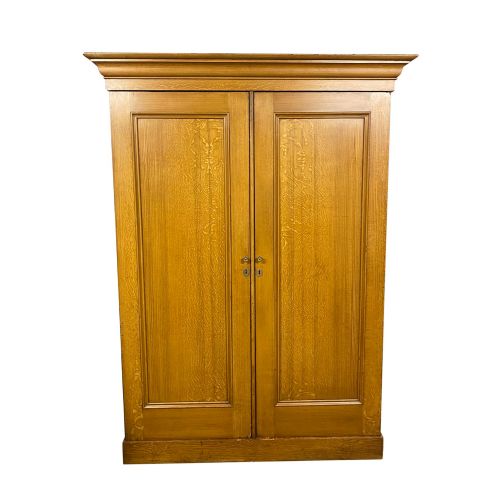
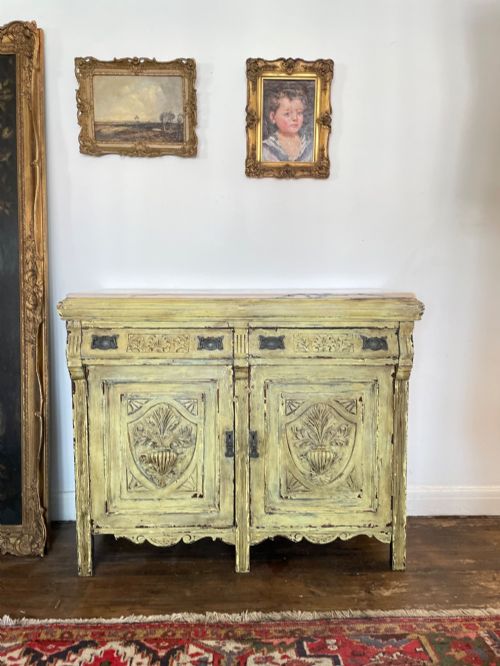
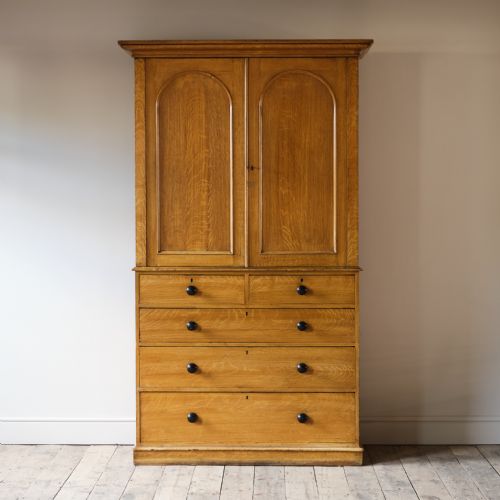
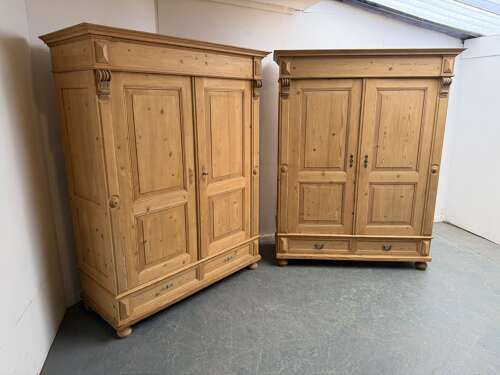
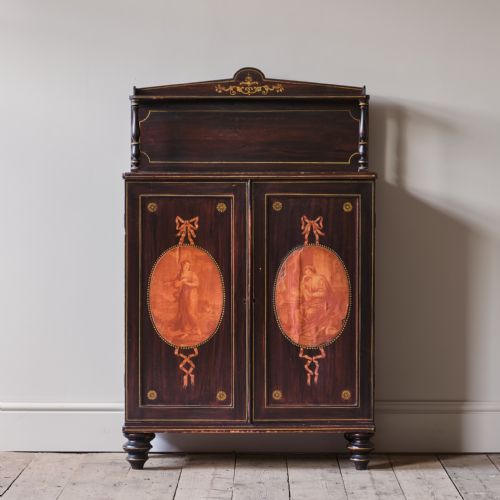
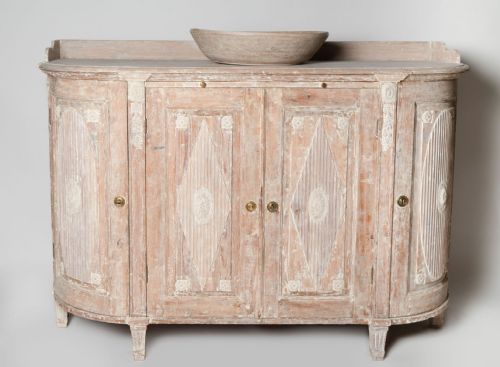
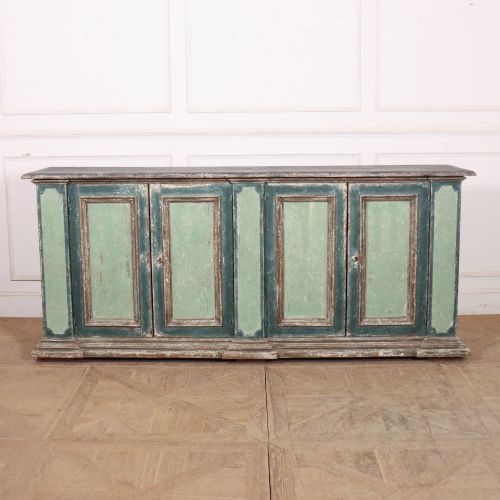
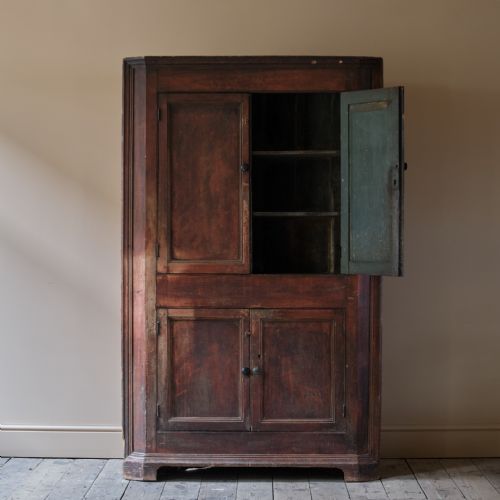
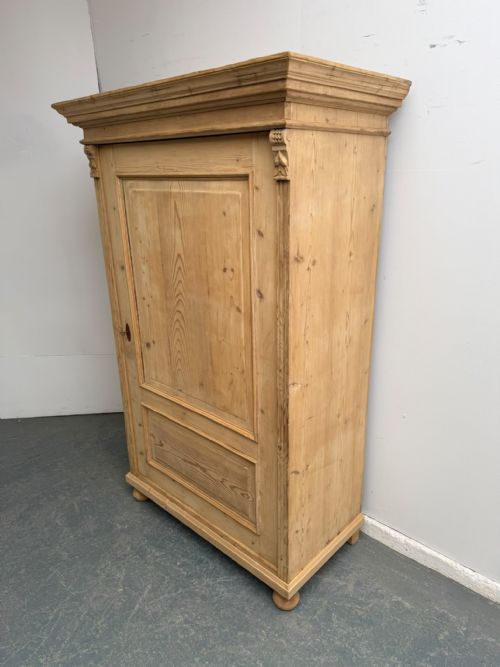
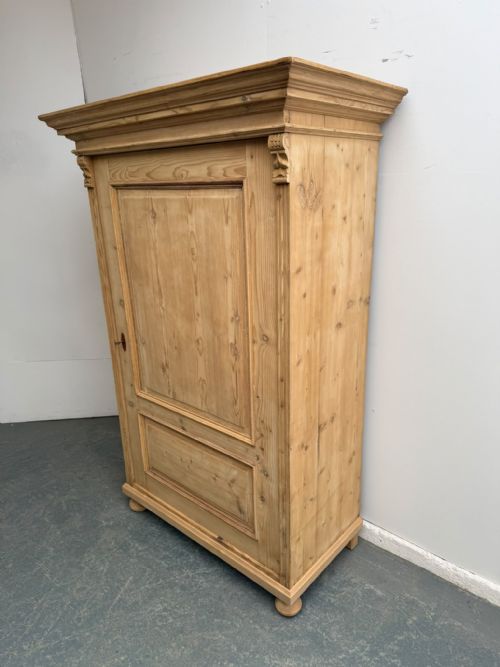


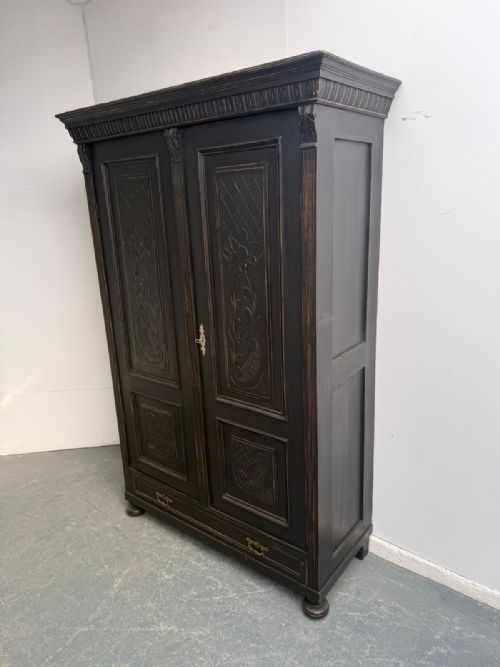
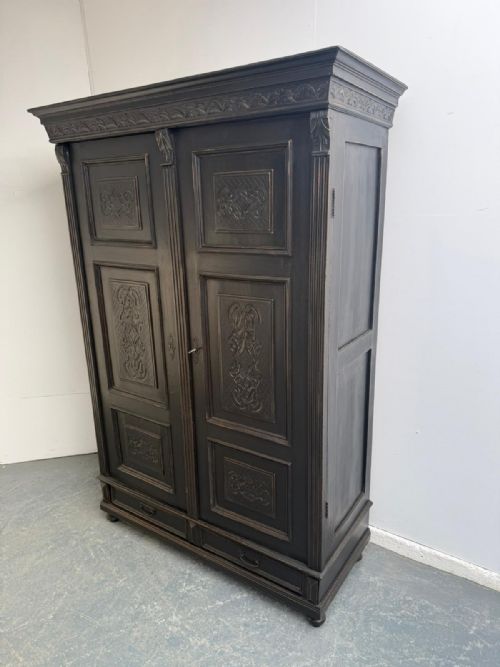

Painted Panel Cupboard
A painted panel cupboard brings colour and character into a room, offering practical storage disguised beneath layers of historic pigment.
Painted Panel Cupboard
A painted panel cupboard is a form of storage furniture defined by its decorated wooden doors and structural panels. When you search for this phrase, you encounter diverse regional domestic furniture ranging from tall wardrobes to low corner units.
The pieces appearing on this page stem predominantly from the 18th century, Georgian, Victorian, and Regency periods, with origins spanning English country houses, French provinces, and Scandinavian workshops.
Pine and oak form the bulk of the domestic storage units, frequently enhanced with surface decoration that ranges from simulated wood grains to bold monochrome finishes.
Materials and construction
Makers built these pieces primarily using solid timbers like pine, oak, and walnut, often joining panels into frames to accommodate seasonal wood movement. Knockdown variants utilised clever peg or wedge joints so large wardrobes could be dismantled for transport.
Surfaces received decorative treatments involving applied oil paints, scumble glazes, or simulated finishes designed to mimic costlier exotic woods such as rosewood. Iron hinges, brass handles, and occasionally ormolu mounts completed the hardware of these cabinets.
Some provincial wardrobes arrive with travel scars intact, bearing the secret pencil marks of historic joiners who numbered the knockdown panels for assembly.
Distinctions in quality
The standard of a painted panel cupboard rests heavily on the survival and integrity of its original surface decoration. Pieces retaining untouched historic paint or deliberate faux finishes command greater interest than those stripped or repainted in later eras.
Structural joinery also dictates quality, particularly in larger knockdown wardrobes where sturdy panel construction ensures the doors hang true without sagging. Finer examples display careful hand-carved detailing on the timber frames surrounding the central painted panels.
The Painted Panel Cupboard Glossary
- Scumble
- A translucent layer of darker paint dragged or combed over a lighter base colour to simulate the grain of wood.
- Knockdown
- A piece of furniture designed to be taken apart and reassembled easily, common in large historical wardrobes.
- Fielded panel
- A wooden panel with bevelled edges that sit recessed within a surrounding frame, adding depth to a cupboard door.
- Demi-lune
- A half-moon shape characteristic of certain side cabinets and commodes from the late nineteenth century.
- Housekeeper's cupboard
- A large storage piece, usually pine or oak, historically used for linens and provisions in large country houses.
Painted Panel Cupboard: Frequently Asked Questions
What is a painted panel cupboard used for?
These cabinets serve as versatile storage solutions for clothing, linen, and dry goods within domestic spaces. Their decorative doors allow them to function as focal points in hallways, bedrooms, and living areas.
Historically, larger versions stood in country house utility rooms or chambers to store household textiles and provisions safely away from dust.
How do I care for historic painted surfaces?
Dust surfaces gently with a soft, dry cloth and avoid applying modern chemical polishes that can soften old oil paints. Keep the furniture away from direct heat sources and strong sunlight to prevent the timber from splitting and the paint from flaking.
Maintaining a stable room temperature helps preserve both the structural integrity of the pine or oak and the historic pigment layers.
How can I tell original paint from later decoration?
Original paint typically exhibits natural wear patterns, minor cracquelure, and subtle fading consistent with age and use. Examining the edges of hardware and joints often reveals underlying layers that confirm the chronological depth of the finish.
Later overpainting usually appears flat and uniform, lacking the cumulative patina built up over centuries of domestic life.
Where were these cupboards made?
The pieces originate from domestic workshops across England, France, Sweden, and Hungary, reflecting distinct regional furniture traditions. English examples often showcase utilitarian pine or oak, while continental pieces frequently display lighter palettes or Gustavian styling.
Local timber availability and prevailing interior fashions dictated whether a maker chose a simple monochrome coat or an elaborate faux grain.