





Painted Opaque Glass
Painted opaque glass brings rich Victorian and Bohemian colour to a room through enameled scenes, floral motifs and gilt detail.
Painted Opaque Glass
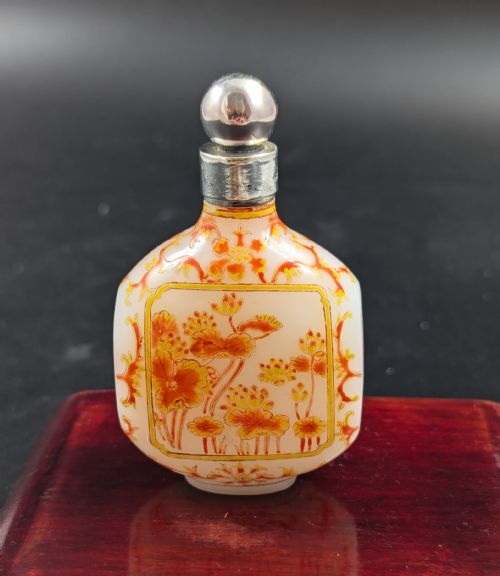
When you search for painted opaque glass, you are looking at decorative vessels created across the eighteenth and nineteenth centuries. The pieces on this page include vases, mantel lustres, tankards, oil lamps, decanters and snuff bottles spanning various periods.
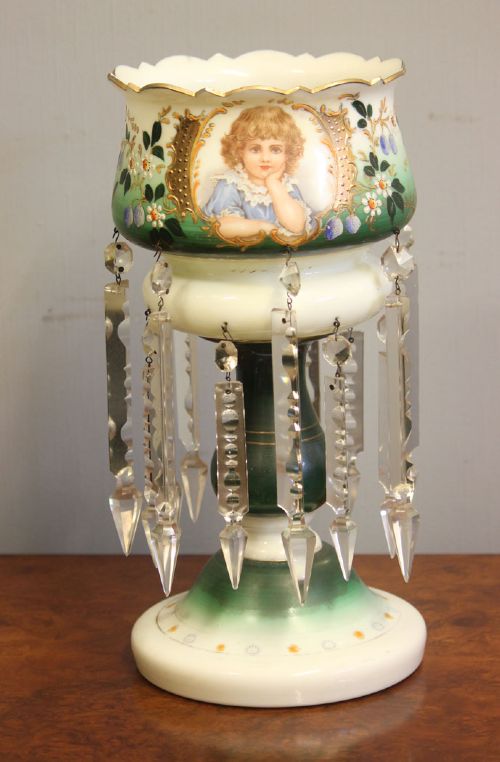
You are most likely to meet Victorian and Bohemian examples, often rendered in white or pale blue opaline glass. These objects range from tall bulb vases to pairs of mantel lustres designed to sit on a shelf or table.
The origins stretch from British workshops to continental Europe and beyond, taking in styles from neoclassical designs to Qing dynasty influences. Each piece serves primarily as a decorative accent that showcases period painting techniques.
How they were made
The makers relied on glass as the primary body, shaping opaque and opaline varieties into vessels before applying decoration. Artisans then used enamel paint to build up flowers, classical scenes and panels.
Gilding and gold leaf often complete the surface, highlighting rims, collars and painted details. Some items incorporate crystal elements or distinct glazing techniques such as vitrified finishes.
Painted Opaque Glass Retail Price Guide 2026
Typical asking prices for painted opaque glass among the pieces listed under this phrase on Sellingantiques today, from the lower quarter to the upper quarter. They describe what is for sale here now, not the wider market.
Materials appearing across the inventory include opaline glass, enamel, gold leaf, crystal and gilt.
What varies in quality
The finesse of the hand-painted enamel work separates simpler pieces from finer examples. Precision in floral motifs and the clarity of classical scenes indicate the skill of the original hand.
The application of gold leaf and gilding also marks the difference between standard production and top-tier work. Preservation of the painted surface without excessive rubbing determines the desirability of a piece.
Richardson·Guyue Xuan
The Painted Opaque Glass Glossary
- Opaline glass
- A pale, translucent or opaque glass developed in France and popular during the nineteenth century. It often has a milky appearance and takes enamel paint particularly well.
- Mantel lustre
- A decorative glass vase fitted with hanging glass prisms, designed to catch the light on a fireplace mantel. These pieces frequently feature hand-painted floral panels.
- Enamel
- A vitrescible composition applied to the glass surface and fired to create permanent colour. It forms the raised or flat painted details seen on period vessels.
- Gilding
- The application of gold leaf or gold powder to accentuate parts of the glass. This technique frames painted panels and edges rims.
- Bulb vase
- A vessel specifically formed with a constricted neck to support a growing bulb. In opaque glass, these serve purely decorative purposes when not in use for plants.
Painted Opaque Glass: Frequently Asked Questions
What is painted opaque glass?
Painted opaque glass refers to decorative nineteenth-century vessels made from solid-colour or milky glass decorated with enamel paint and gilding. These objects include vases, lustres and decanters.
They reflect styles ranging from Victorian floral designs to Bohemian neoclassical work and French classical themes.
How do I clean painted glass?
Clean painted opaque glass gently using a soft, dry cloth to remove dust from the surface. Avoid harsh abrasives or chemical cleaners that might damage the enamel or gilding.
Water should be used sparingly and only when necessary, keeping moisture away from any painted panels.
Where were these pieces made?
These items originated across various European centres, with significant production in Bohemia, France and Britain. Specific regional styles often appear in the motifs and glass colours.
Bohemian workshops frequently produced white and coloured vessels, while British makers such as Richardson created distinct vitrified finishes.
How do I date a piece?
Dating relies on stylistic clues, the form of the vessel and the nature of the enamel work. Victorian and nineteenth-century examples often display specific floral or classical revival motifs.
Marks on the base or attribution to known styles help narrow down the period of manufacture.