


Painted Oak Longcase Clock
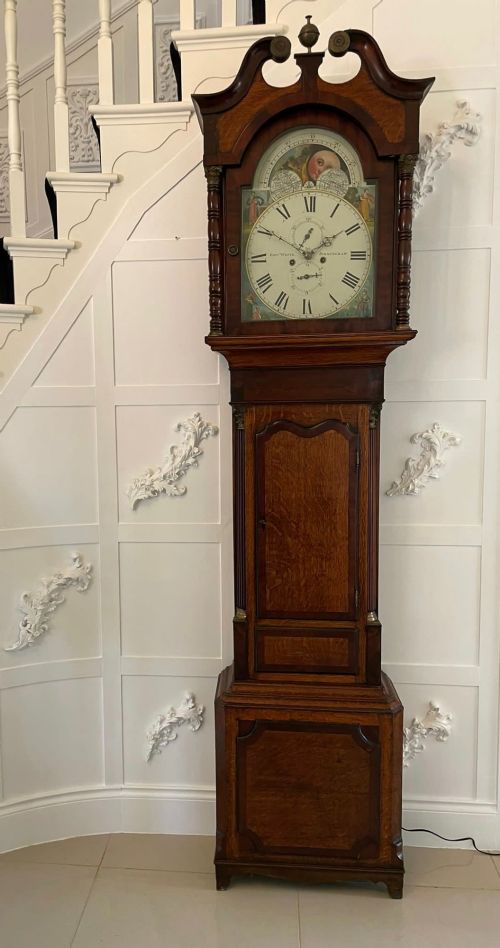
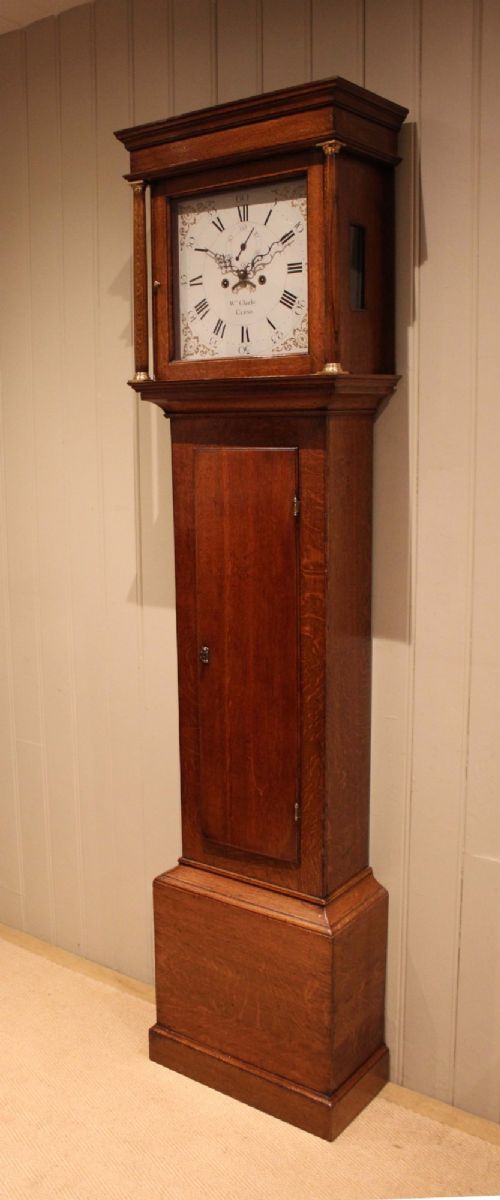
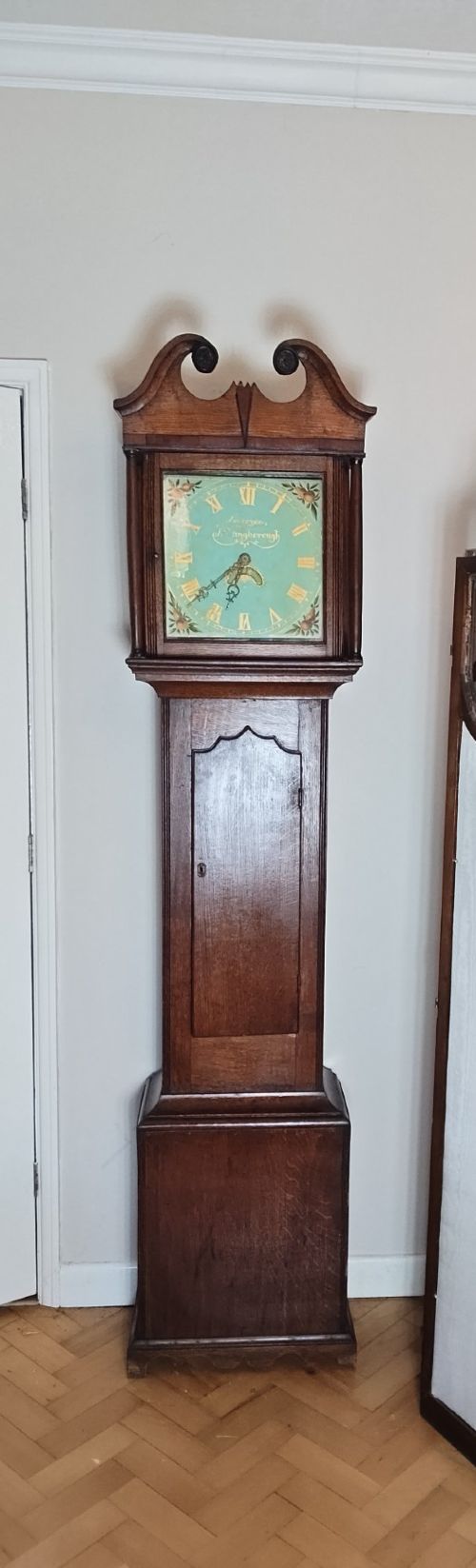
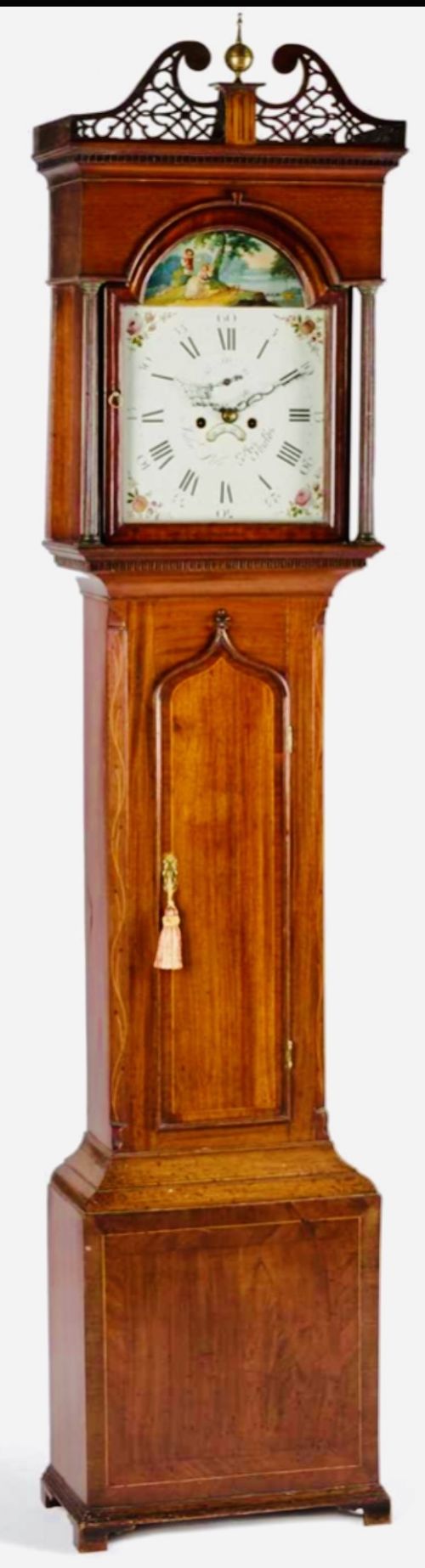
A painted oak longcase clock brings together sturdy country timber and a decorative dial.
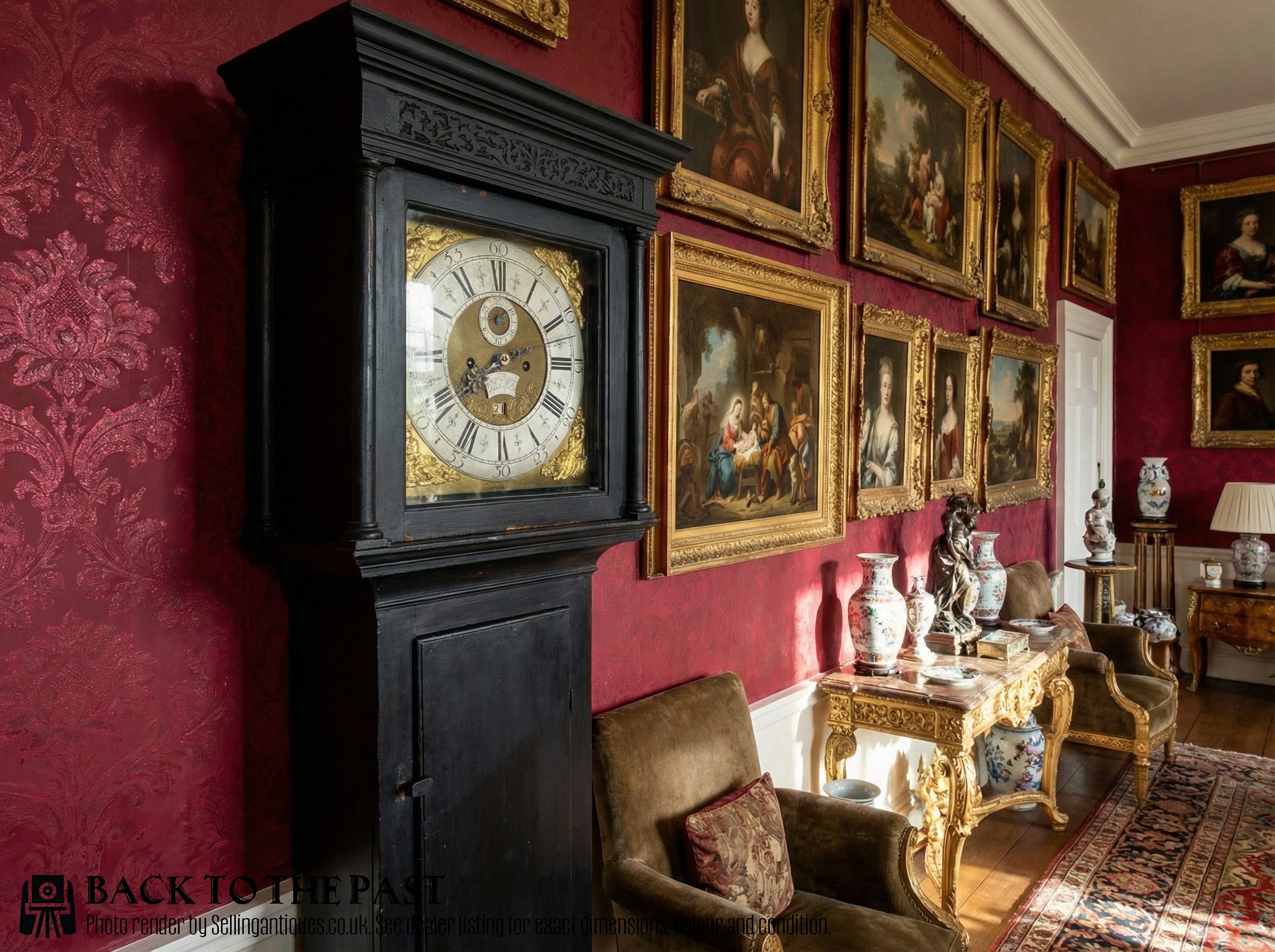
Painted Oak Longcase Clock
A painted oak longcase clock is a tall floor-standing timekeeper encountered most often in Georgian and 19th Century forms. These pieces combine local cabinet-making with regional dial painting.
The evidence shows examples spanning the 18th Century, the Regency period, and Victorian eras. Makers from Wales, Scotland, and English towns such as Birmingham, Nottingham, and Nantwich produced them.
Buyers look at grandfathers and long cases built from oak, sometimes paired with mahogany banding, housing either thirty-hour or eight-day movements.
Materials and construction
Carinthian or local timber provides the structural carcass, with oak forming the primary body and occasional mahogany banding adding contrast to the case. Iron, brass, and glass components complete the internal mechanical assemblies and dial covers.
Dials feature hand-painted surfaces using paint and metal sheets, often displaying rolling moon phases, floral motifs, or gilt figures. Cabinetmakers joined the timber cases by hand, housing either simple thirty-hour weights or complex eight-day movements.
Listings feature oak paired with mahogany banding, alongside painted iron dials displaying moon phases.
Quality differences
The distinction of the maker's signature on the dial shifts an ordinary regional clock into a documented piece of provincial craftsmanship. Case preservation and the presence of original brass and iron hardware further define the upper tier.
Thomas Webbe of New Quay·Edward White Birmingham·David Craig Ford Path head·Richard Prew Of Tewksbury·Richard Alexander Devizes·James Coster Of Henley·John Salmon Nantwich·Grocott Holywell·Nicholas of Birmingham·Walker of Nantwich·Benjamin Rogers·W Prior Skipton·Richard Northen·Hudfon Of Nottingham·Rob Parry Pwllheli
The Painted Oak Longcase Clock Glossary
- Longcase clock
- A tall pendulum clock enclosed in a wooden case standing directly on the floor. It is commonly known as a grandfather clock.
- Moon phase
- A dial mechanism tracking the phases of the lunar cycle through a rotating painted disc. Collectors prize this feature for its visual complexity.
- Eight day
- A clock movement requiring winding once a week. These mechanisms typically utilise two weights hung on cords or chains.
- Thirty hour
- A simpler clock movement requiring winding daily. These pieces usually operate with a single weight.
- Arch dial
- A clock face featuring a curved upper section above the main chapter ring. This space often houses the moon phase or decorative painting.
Painted Oak Longcase Clock: Frequently Asked Questions
How do I wind an eight day clock?
Insert the winding key into the holes on the dial face and turn it clockwise until resistance meets you. Take care not to overwind the movement.
Allow the weights to descend fully before resetting the cycle, ensuring the pendulum hangs plumb to keep accurate time.
Where should I place a longcase clock?
Position the clock against an interior wall away from direct sunlight, heating vents, and dampness. Wood and painted dials react poorly to environmental extremes.
Ensure the floor is level so the pendulum swings evenly without catching against the sides of the trunk.
What is the difference between thirty hour and eight day?
A thirty hour movement uses a single driving weight and requires daily attention to keep running. These mechanisms suited simpler household budgets.
An eight day movement uses two weights and complex gearing to run for over a week between windings, typically found in larger or finer town-made clocks.
How do I date a painted dial clock?
Examine the style of the painted numerals, floral spandrels, and signature typography on the iron dial face. Dial painting became widespread during the late Georgian period.
Cross-reference the maker's recorded working dates if inscribed on the dial or movement backplate to narrow the decade of production.