

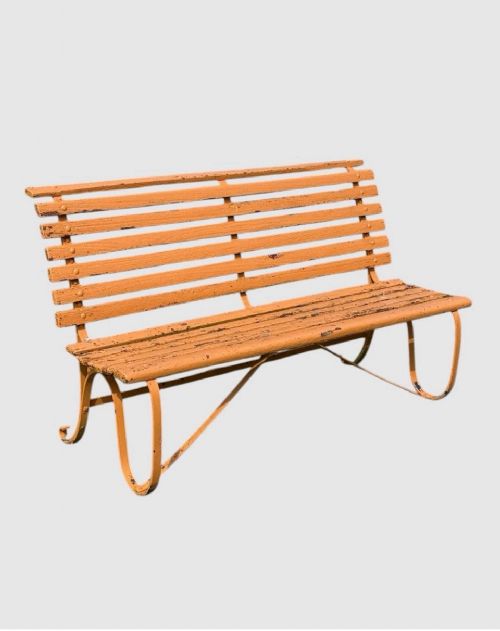
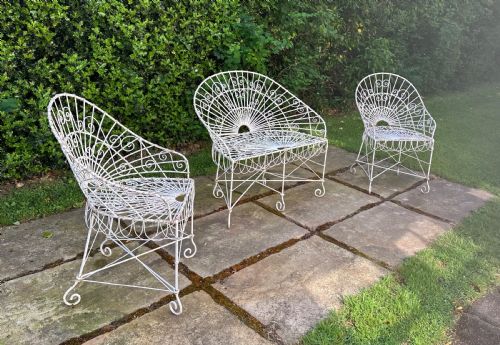
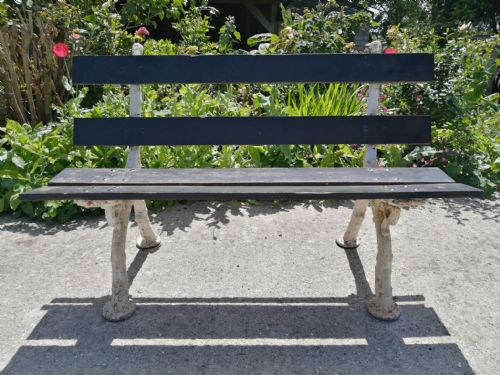


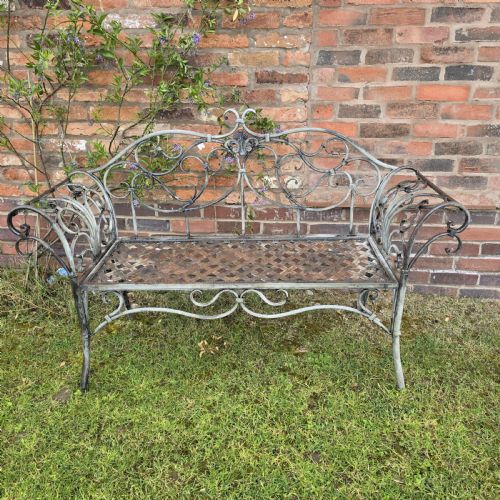
Painted Metal Garden Bench
A painted metal garden bench brings enduring structure and patinated charm to an outdoor terrace, lawn or conservatory.
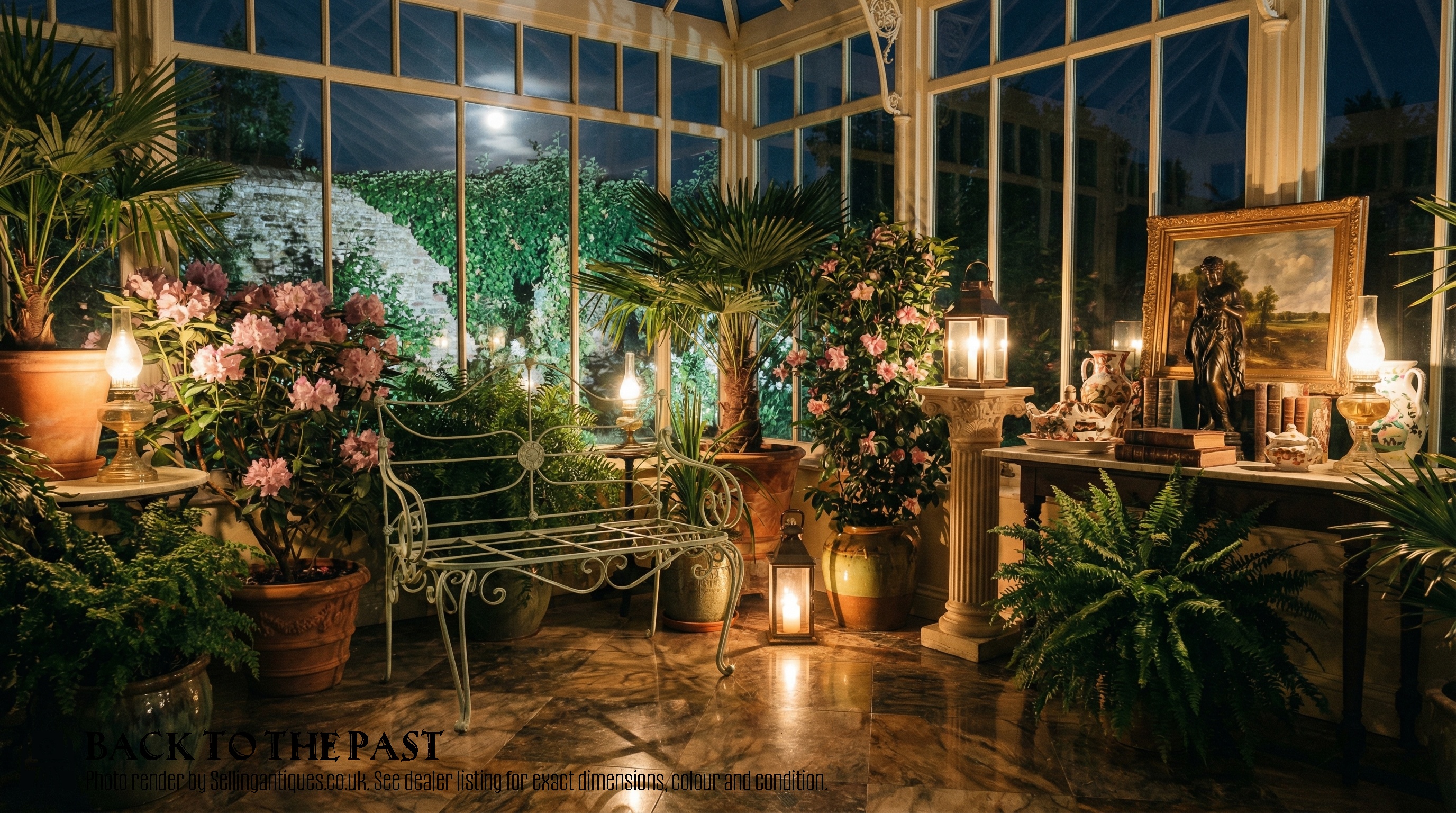
Painted Metal Garden Bench
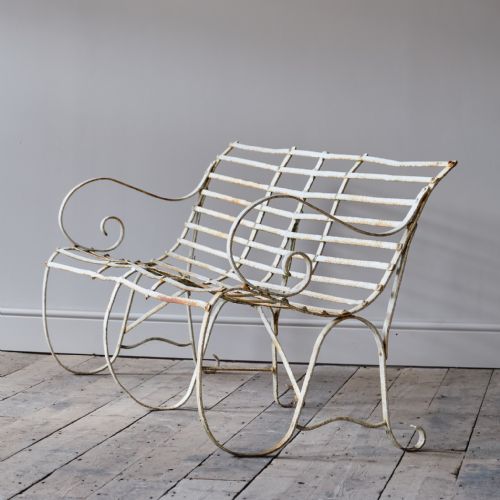
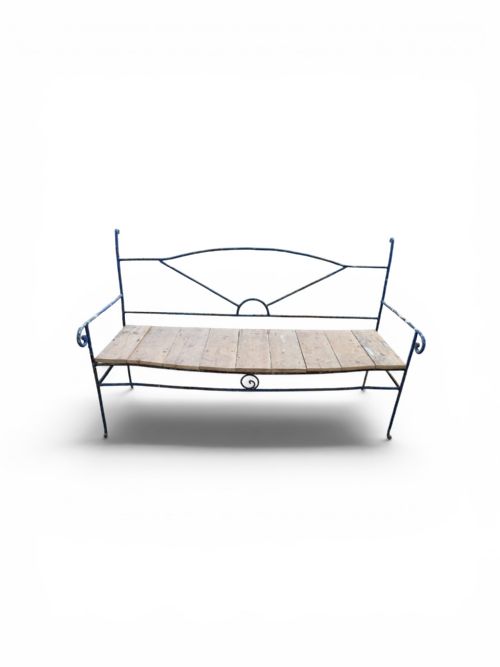
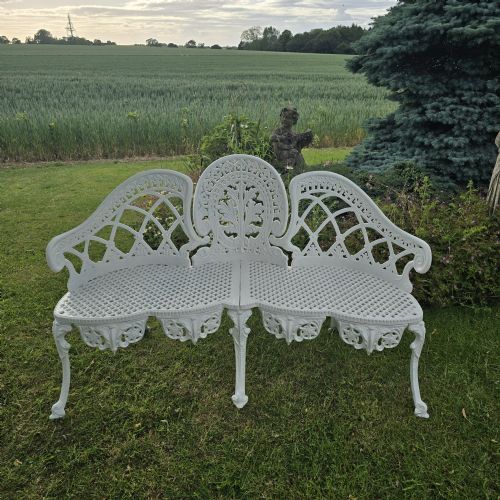
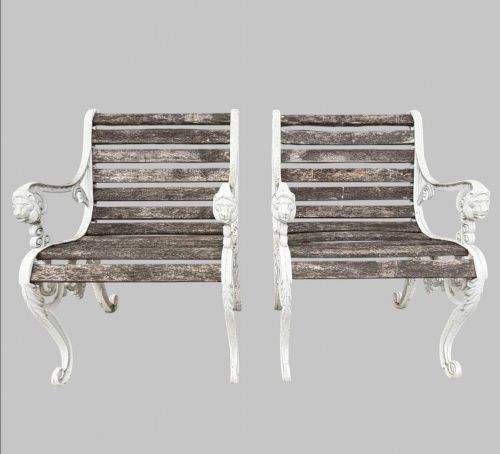
When you search for a painted metal garden bench, you encounter robust outdoor seating forged from cast iron, wrought iron, and wirework. These practical architectural pieces span the Victorian, Edwardian, and Regency eras, as well as the interwar period.
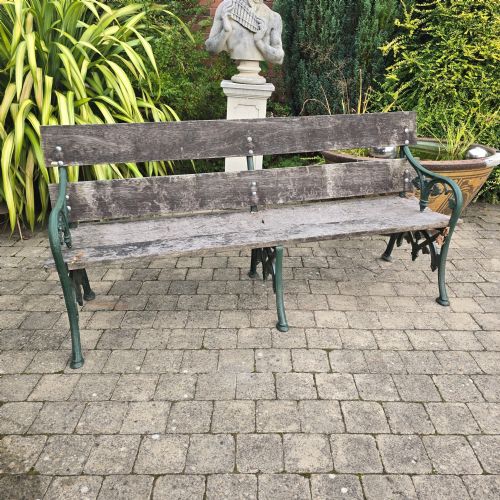
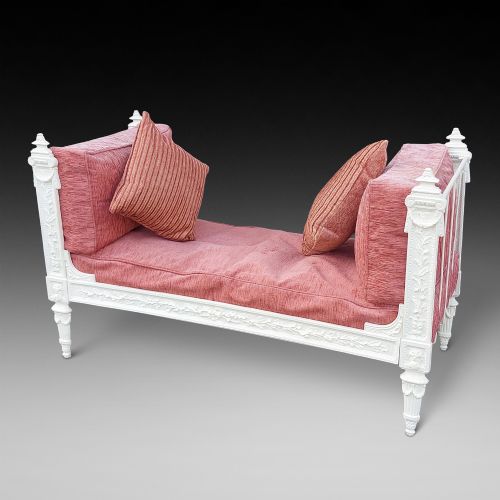
You are most likely to meet Victorian and 19th-century examples featuring decorative strapwork, scrolling supports, or rustic faux bois designs. Many survive alongside matching garden armchairs, daybeds, and arbours.
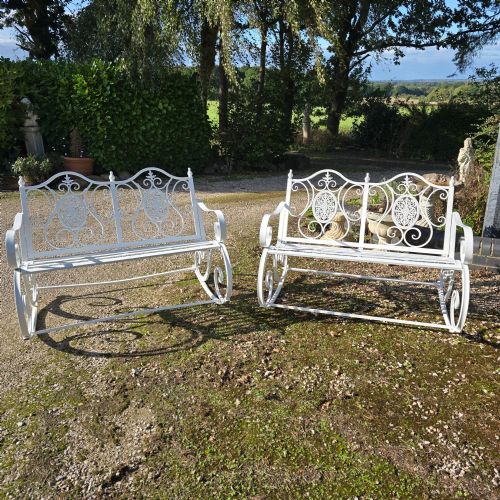
French country and regional styles also appear frequently on this page, offering lighter wirework or folding metalwork frames. These seats serve as functional focal points that acquire deeper character through weathering and layered paint.
What varies in quality in a painted metal garden bench
The sophistication of the casting or hand-forging dictates the refinement of a painted metal garden bench. Crisp detail in motifs such as foliage, strapwork, or faux bois separates standard utilitarian seating from finer foundry work.
The integrity of the original metal frame and the survival of historic painted surfaces determine the overall character. Examples bearing layers of untouched original paint hold distinct visual depth compared to modern restorations.
Painted Metal Garden Bench Retail Price Guide 2026
Typical asking prices for painted metal garden bench among the pieces listed under this phrase on Sellingantiques today, from the lower quarter to the upper quarter. They describe what is for sale here now, not the wider market.
Listings feature wrought iron, cast iron, and timber materials across Victorian, Edwardian, and Regency styles.
Coalbrookdale
The Painted Metal Garden Bench Glossary
- Cast iron
- Iron poured into a mould to create rigid, highly detailed decorative forms. It forms the heavy structural and ornamental components of many Victorian seats.
- Wrought iron
- Iron heated and hammered by hand into flexible shapes, straps, and scrolls. This material offers high tensile strength for slender structural frames.
- Strapwork
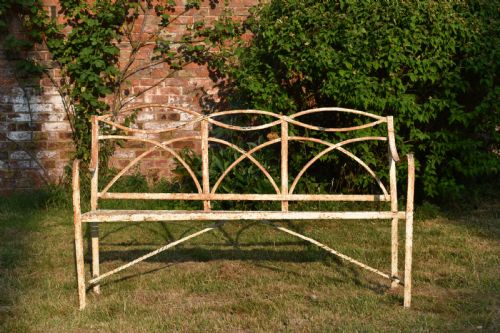
- Flat bands of metal arranged in geometric or interlaced patterns across the backrest. It is a defining characteristic of Regency and Victorian garden seating.
- Faux bois
- An artistic imitation of wood grain rendered in cast iron or concrete. This rustic style was popular in the 19th century for garden furniture.
- Wirework
- Metal rods and wire interwoven to create light, open frames for arbours and seats. It is typical of Edwardian and turn-of-the-century garden design.
- Verdigris
- A green patina formed naturally on copper and brass surfaces through atmospheric oxidation. It provides an aged aesthetic on certain antique metal pieces.
Painted Metal Garden Bench: Frequently Asked Questions
How do I date a metal garden bench?
Dating relies upon stylistic markers such as Victorian strapwork, Edwardian wirework, or Regency scrolls, alongside construction techniques like early casting methods.
Material evidence, including the presence of timber slats and the composition of underlying paint layers, also helps establish the era.
Can these benches stay outside all year?
Most historic metal garden benches are built to withstand outdoor conditions, having endured decades or centuries in gardens and parks.
However, delicate wirework or pieces with exposed timber elements benefit from winter storage in a conservatory or shed to preserve the paint and structure.
How should I clean an old painted metal bench?
Gentle washing with warm water and a mild soap removes surface dirt without harming aged layers of historic paint. Avoid harsh chemical strippers or abrasive pads that might disturb the patinated finish.
Preserving the original surface texture maintains both the visual character and the historical integrity of the piece.
What is the difference between cast iron and wrought iron?
Cast iron is brittle yet rigid, allowing foundries to produce intricate relief patterns and heavy decorative components. Wrought iron is fibrous and ductile, making it suitable for heating and bending into structural scrolls and strapwork.
Many antique benches combine both materials, using cast iron for decorative ends and wrought iron or timber for the seat framework.