


Painted Marriage Chest
A painted marriage chest brings bright folk traditions into a modern room, offering generous storage alongside centuries of applied art.
Painted Marriage Chest
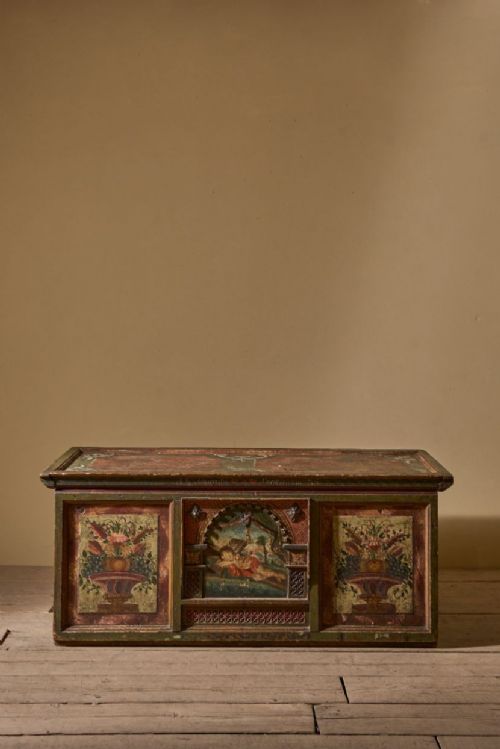
A painted marriage chest acts as a primary storage vessel commissioned or gifted for a wedding, frequently taking the form of a pine coffer, trunk, or dome-top box. The examples gathered here span centuries of regional craftsmanship, with a notable concentration of nineteenth-century Swedish folk art alongside Hungarian, Italian, and Spanish pieces.
Buyers encounter substantial proportions built for domestic utility, often designed with hinged lids and robust internal compartments to hold linens and dowry goods. Scandinavian workshops produced many of the dome-top and flat-topped variants seen here, while continental European examples introduce distinct regional palettes and structural details.
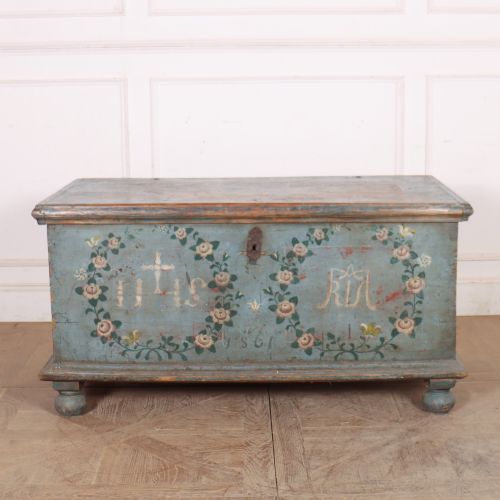
The surface decoration defines these objects, ranging from floral motifs to geometric panels applied directly to the timber. Whether catalogued as a blanket box, mule chest, or cassone, each piece serves as a surviving record of domestic life and rural artistry.
Materials and construction methods
Pine serves as the primary structural timber across the vast majority of these chests, joined with traditional methods to withstand daily household use. Wrought iron fittings, including strap hinges and carrying handles, reinforce the corners and lids of heavy storage boxes.
Decorators applied paint, tempera, and mineral pigments directly to the wood, often sealing the finish to protect the underlying folk art. Italian examples introduce walnut and gilt decoration, while pine remains the dominant canvas for Scandinavian and Hungarian pieces.
Several chests carry painted wedding dates alongside initials, quietly preserving the names of couples married over two centuries ago.
Distinctions in quality
The survival rate of original surface paint dictates the primary tier of quality, separating untouched folk decoration from later overpainting or heavy restoration. Crisp execution in floral and figurative motifs shows the hand of a skilled regional artisan rather than a hurried domestic repaint.
Structural integrity, including the retention of original wrought iron hardware and sound timber joints, separates working storage boxes from fragile survivors. Pieces that retain their dated inscriptions or historical provenance offer a clearer window into their original rural context.
The Painted Marriage Chest Glossary
- Coffer
- A large wooden chest used for storing valuables, linens, or personal possessions. These sturdy boxes typically feature hinged lids and elevated bases.
- Cassone
- A traditional Italian large chest associated with marriage customs of the Renaissance and later periods. These items frequently display elaborate carved or painted surfaces.
- Tempera paint
- A permanent, fast-drying painting medium consisting of coloured pigment mixed with a water-soluble binder medium. Folk artists frequently utilised this for vibrant box decoration.
- Dome top
- A curved lid construction designed to shed water and increase internal capacity. This profile appears frequently on Scandinavian storage pieces.
- Mule chest
- A traditional chest form featuring one or more drawers beneath the main storage compartment. They bridge the design gap between simple coffers and full chests of drawers.
Painted Marriage Chest: Frequently Asked Questions
What were painted marriage chests used for?
These chests functioned as essential household storage for a bride's linens, clothing, and domestic goods brought into a new marriage.
Families often commissioned them to mark the wedding day, recording dates and initials directly onto the painted surface.
How do I care for antique pine furniture?
Keep painted timber pieces away from direct sunlight and steady heat sources to prevent the wood from drying out and the pigment from fading.
Dust gently with a dry cloth and avoid applying modern chemical polishes that might damage historic painted surfaces.
How can I tell Swedish folk art pieces apart?
Swedish folk art chests often feature characteristic dome tops, distinct floral scrollwork, and pale pine construction dating to the nineteenth century.
Many include painted dates or maker initials that help anchor their regional provenance within Scandinavian traditions.
Where should I place a large coffer at home?
A large coffer functions well at the foot of a bed, in a hallway, or as a living room coffee table with internal storage.
Ensure the space allows adequate clearance for the heavy lid to open fully without striking walls or surrounding furniture.