




Painted Majolica Plate
A painted majolica plate brings vivid tin-glazed earthenware into a room, offering centuries of pigment-rich colour and bold narrative design.
Painted Majolica Plate
A painted majolica plate is a ceramic vessel defined by its opaque tin glaze and rich polychrome or blue-and-white pigment decoration. These pieces span centuries of European pottery traditions, stretching from early Dutch and Spanish works to 19th-century revivals of Italian Renaissance styles.
On this page, buyers most frequently encounter charger plates, large decorative platters, and wall chargers originating from the 17th, 18th, and 19th centuries. Forms range from deep bowls and broad chargers to standard plates designed for display.
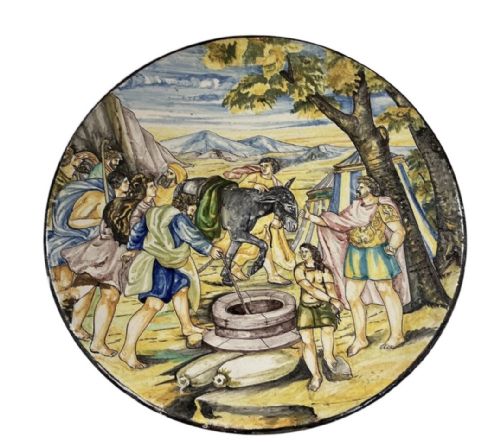
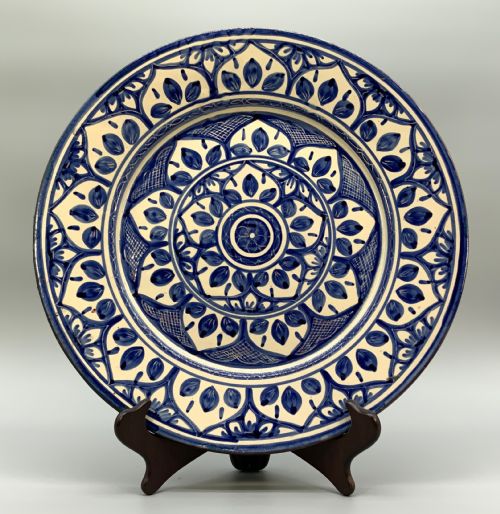
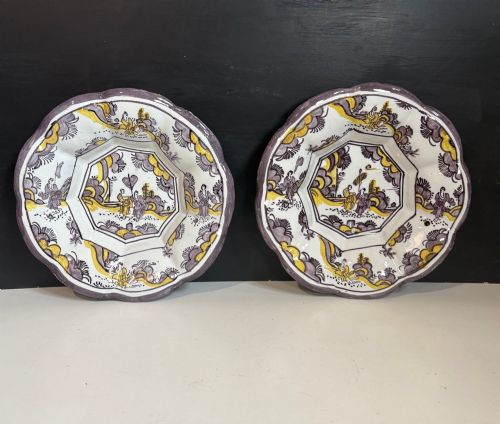
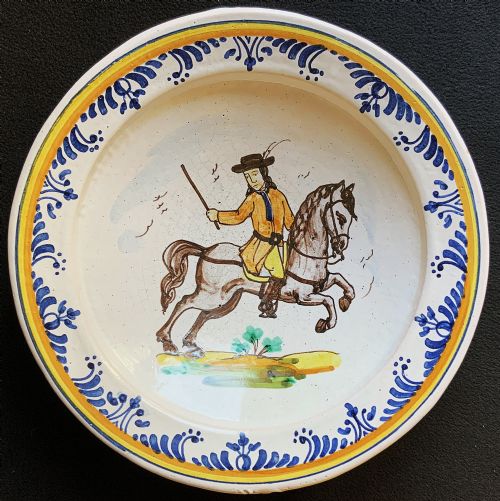
Regional expressions vary widely across the inventory, featuring Dutch Delft, Spanish faience, Moorish Revival motifs, and Italian maiolica schools. Each piece reflects the specific decorative vocabulary of its period, from classical historical scenes to folk art patterns.
Materials and construction
Makers formed these pieces from terracotta and earthenware, shaping them into plates and chargers before applying an opaque white tin glaze. This tin glaze provided a smooth, reflective white ground that accepted metal-oxide pigments directly on the raw surface.
Painters applied pigments such as cobalt blue, copper green, and antimony yellow straight onto the absorbent tin glaze before the final firing. This technique allowed the colours to fuse permanently with the glaze, capturing brushwork with crisp precision.
Painted Majolica Plate Retail Price Guide 2026
Typical asking prices for painted majolica plate among the pieces listed under this phrase on Sellingantiques today, from the lower quarter to the upper quarter. They describe what is for sale here now, not the wider market.
The listings span five distinct centuries, uniting 17th-century Delft with 19th-century Italian revival pieces under the shared medium of tin-glazed earthenware.
Assessing quality and execution
Quality rests primarily in the ambition and control of the painted surface, distinguishing confident masterwork from stiff repetition. Skilled painters achieved fluid narrative movement in historical scenes and precise botanical detail in floral patterns.
The density and purity of the tin glaze also determine the success of a piece, separating smooth, luminous surfaces from dull or pitted finishes. Firing success dictates how cleanly the pigments held their edges without running into the white background.
The Painted Majolica Plate Glossary
- Majolica
- A type of earthenware decorated with opaque tin glaze and painted in colours. It encompasses Italian maiolica and broader European tin-glazed traditions.
- Charger
- A large ornamental plate intended for display on a wall or sideboard rather than daily dining use. These pieces often feature expansive painted scenes across their wide centres.
- Tin-glazed earthenware
- Pottery coated in a lead glaze made white and opaque with the addition of tin oxide. This surface serves as the canvas for painted decoration.
- Istoriato
- A style of ceramic decoration featuring narrative subjects derived from history, mythology, or literature. Painters covered the entire surface of the plate with detailed figurative scenes.
- Polychrome
- Decoration employing multiple distinct colours rather than a single monochrome palette. These pieces utilise various mineral pigments to create rich, multi-coloured pictorial designs.
Painted Majolica Plate: Frequently Asked Questions
How do I hang a heavy charger?
Heavy ceramic chargers require dedicated wall-mounting hardware that supports the entire base rather than relying solely on rim pressure. Adjustable brass wire hangers with protective rubber sleeves distribute the weight evenly across the edges.
Ensure the wall fixing secures firmly into masonry or studwork to bear the substantial weight of centuries-old earthenware safely.
Can I use these plates for food?
Historic tin-glazed earthenware is unsuited for modern dining because historical glazes may contain lead and porous ceramic bodies absorb moisture. Modern detergents and cutlery will also damage fragile centuries-old painted surfaces and glazes.
These pieces should remain strictly decorative objects, displayed on stands or walls to preserve their historic pigments.
How do I clean old earthenware?
Dust these surfaces gently using a soft, dry artist brush or a microfiber cloth to lift particles without abrading the glaze. Avoid submerging antique earthenware in water, as moisture can penetrate hairline cracks and destabilise the historic body.
Professional conservators should handle any stubborn grime to prevent accidental loss of original pigment.
What is the difference between delft and majolica?
Delft generally refers to tin-glazed earthenware produced in the Netherlands and England, often celebrated for blue-and-white or polychrome tin-glaze work. Majolica encompasses the broader Italian maiolica tradition and its later 19th-century revivals across Europe.
Both share the fundamental technique of painting on an opaque tin glaze, but regional styles and colour palettes distinguish their origins.