





Painted Library Shelving
These painted library shelving units bring structured order to a room, offering robust timber construction paired with classic painted or ebonised finishes.
Painted Library Shelving
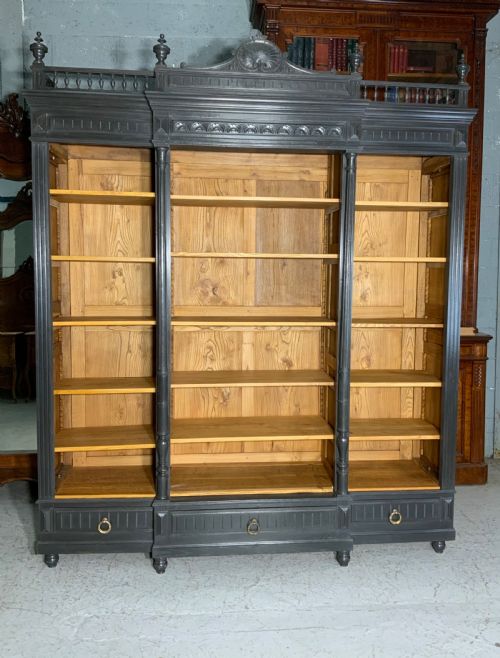
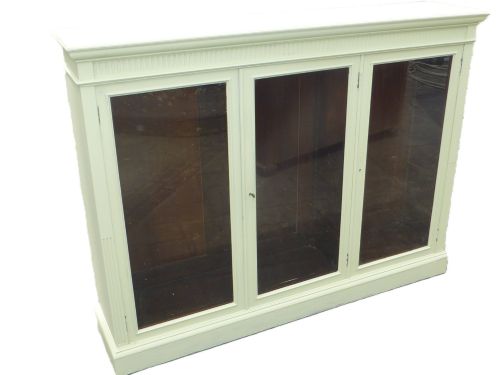
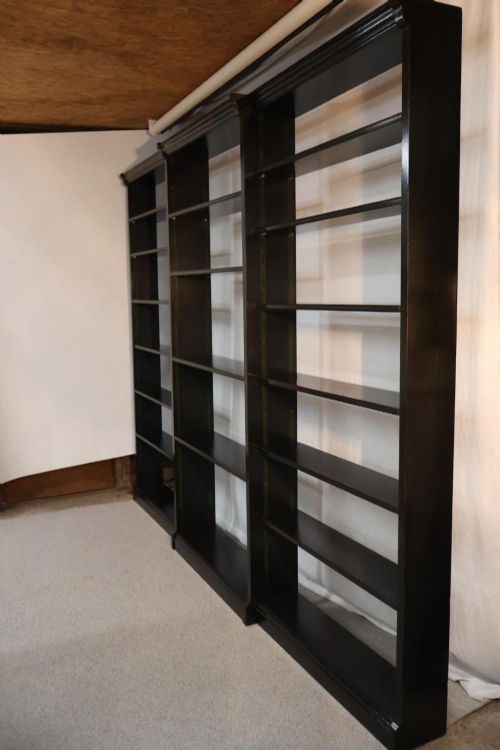
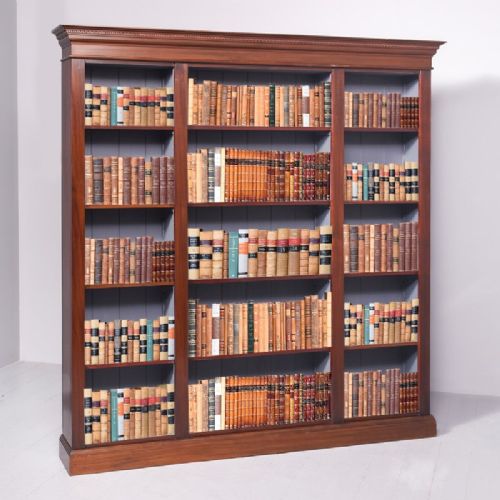
When you search for painted library shelving, you encounter tall bookcases, breakfront open bookshelves, and glazed cabinets designed to house large collections of books. The pieces available span the 19th Century, Victorian period, and into the 1930s.
You are most likely to meet open bookcases and breakfront cabinets executed in softwood, pine, mahogany, and ebonised wood. These items originate from English, French, and Swedish workshops, often displaying styles from Victorian to Georgian Revival.
The assortment includes glazed variants with adjustable shelves alongside open shelving units fitted with brass mounts. Each piece serves the primary domestic function of book storage while offering distinct aesthetic periods.
How they were made
Carpenters constructed these bookcases primarily from solid timber foundations like pine, softwood, and mahogany. Surfaces received painted finishes, ebonisation, or decorative effects such as faux burr walnut to mimic luxurious veneers.
Functional elements involved careful joinery to support heavy book loads, alongside brass mounts for structural enhancement or decoration. Glazed variants incorporated fitted glass panels to protect volumes from dust.
Painted Library Shelving Retail Price Guide 2026
Typical asking prices for painted library shelving among the pieces listed under this phrase on Sellingantiques today, from the lower quarter to the upper quarter. They describe what is for sale here now, not the wider market.
A solitary school art department cabinet from the 1930s stands ready to store unusual treasures instead of textbooks.
What varies in quality
The standard of timber preparation and the finesse of the painted or ebonised surface finish dictate the tier of a piece. Finer examples display meticulous attention to proportion, particularly in breakfront configurations and classical Revival styling.
Hardware details, such as quality brass mounts and smoothly functioning adjustable shelving mechanisms, separate standard utility cabinetry from more ambitious architectural furniture.
The Painted Library Shelving Glossary
- Breakfront
- A cabinet or bookcase whose central section projects forward from the flanking wings. This architectural arrangement creates depth and visual rhythm in a large library.
- Ebonised
- Timber treated with a dark stain or finish to imitate expensive ebony. This technique gained immense popularity during the Victorian period for formal cabinetry.
- Glazed
- Fitted with glass panels to enclose the shelving area. It protects valuable book bindings from environmental dust while maintaining visibility of the collection.
- Adjustable shelves
- Shelving supported by pegs or racks that allow the vertical spacing to be altered. This mechanical flexibility accommodates books of varying heights.
Painted Library Shelving: Frequently Asked Questions
How do I style painted library shelving?
Position the bookcase against a principal wall in a study or living space to anchor the room. Balance heavy volumes on lower shelves with lighter decorative objects higher up.
Allow the painted or ebonised finish to complement existing architectural woodwork and neutral wall colours. Ensure adequate clearance around breakfront projections to maintain the proportions of the room.
What woods were used?
Makers utilised a variety of timbers including softwood, pine, and mahogany as foundational materials. Ebonised wood and faux burr walnut finishes were also applied for decorative effect.
These materials provided the structural strength necessary to support heavy rows of books. Painted surfaces frequently covered pine or softwood carcasses.
How do I date a bookcase?
Dating relies on observing stylistic markers such as Victorian proportions, Georgian Revival details, or 1930s institutional forms. Construction methods and types of timber preparation offer further clues to the era of manufacture.
Compare the specific hardware, such as brass mounts, with documented periods to narrow down the decade. Design influences like French Provincial or Napoleon III also point to specific stylistic eras.