
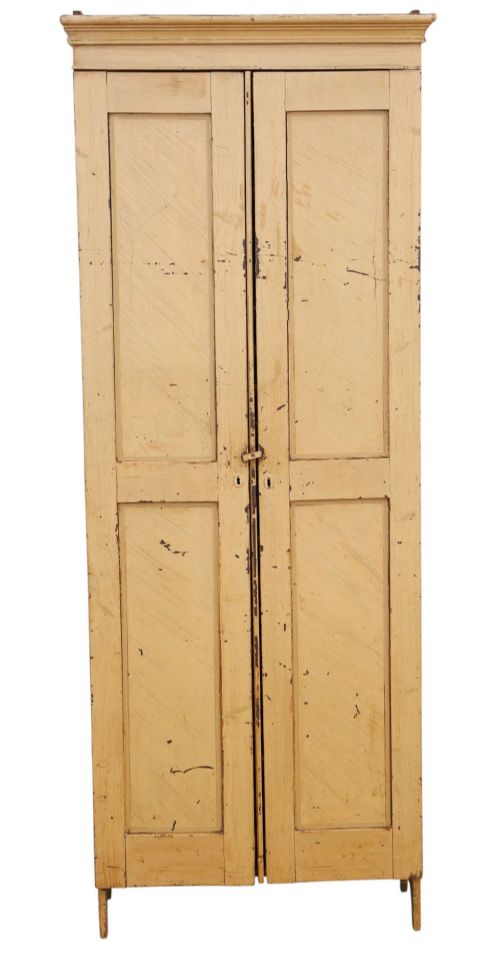
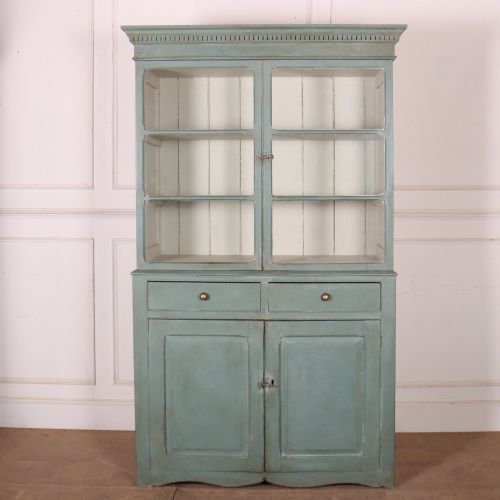
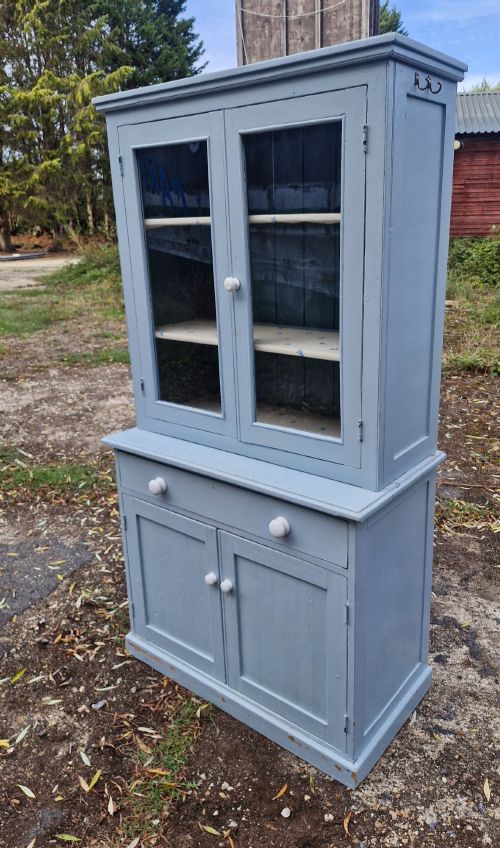
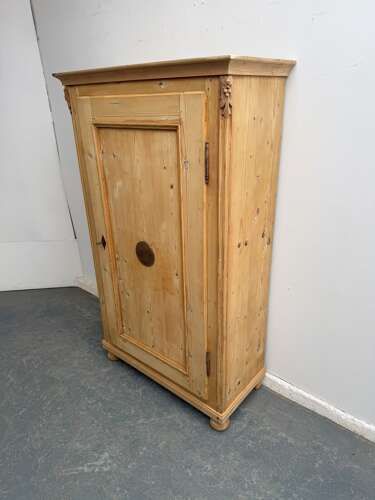
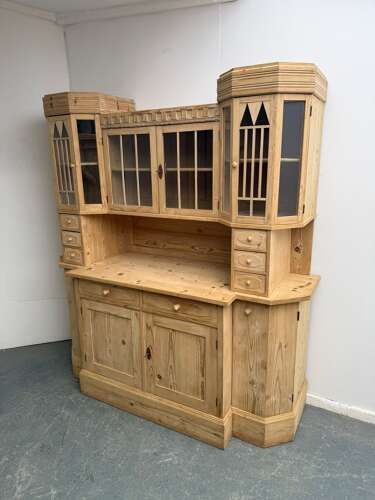
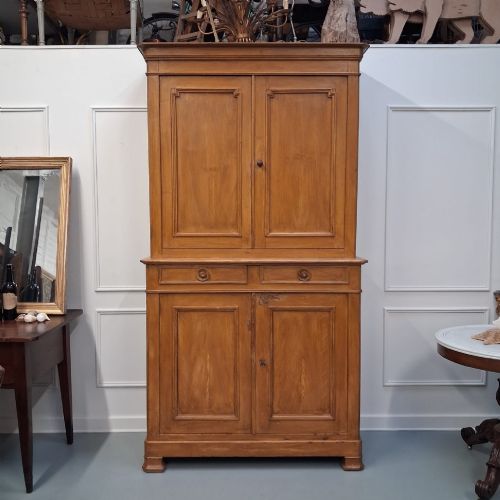
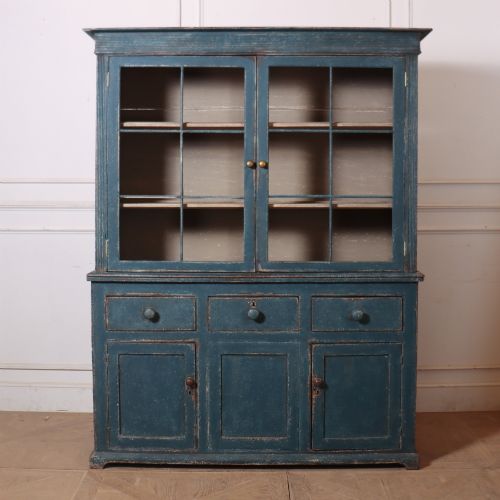
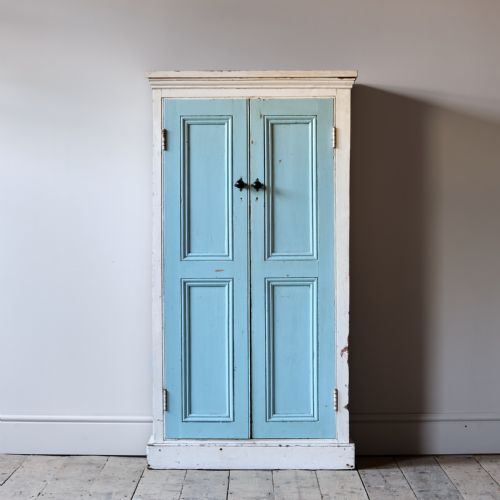
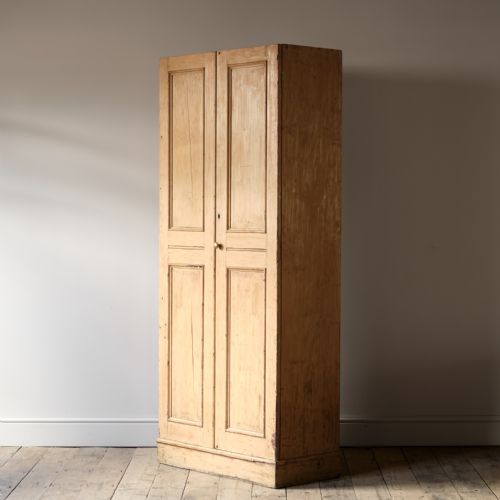
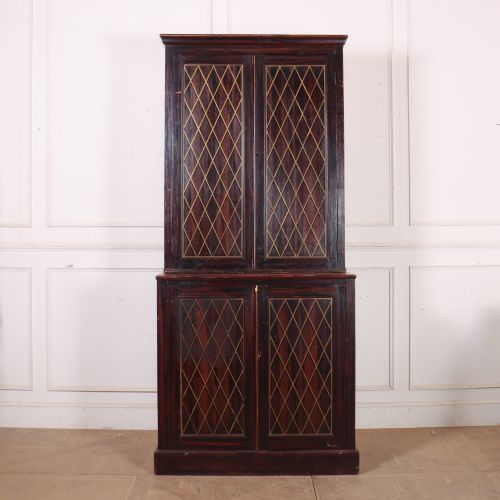
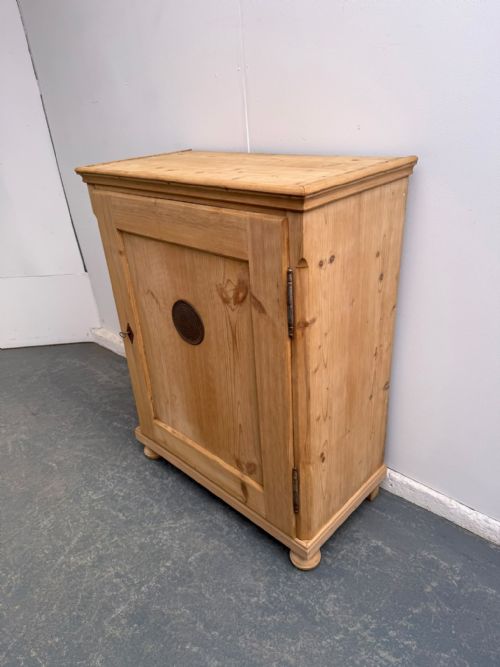
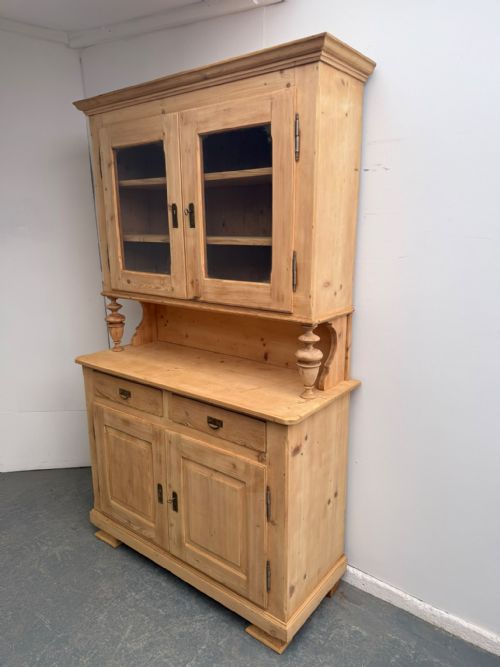

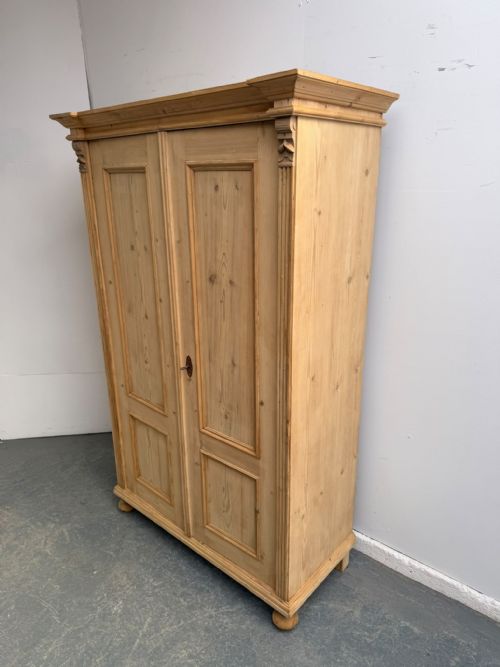
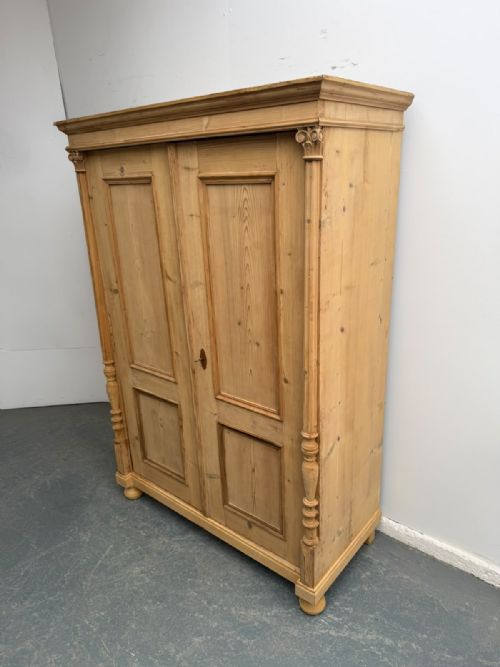
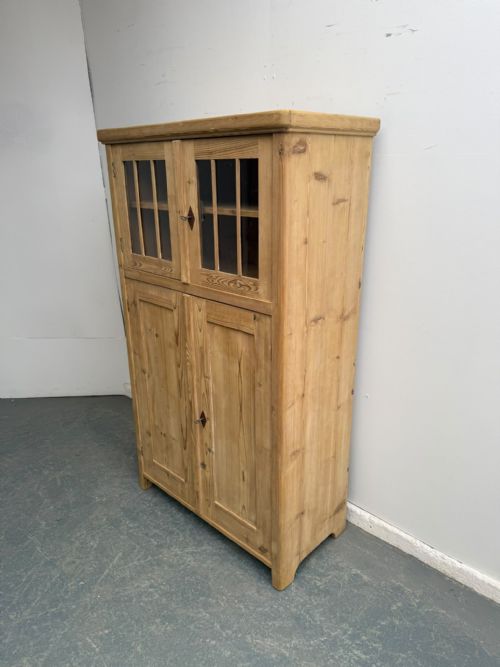
Painted Larder Cupboard
A painted larder cupboard offers generous domestic storage in pine, carrying the character of country houses and rural kitchens through period paint finishes.
Painted Larder Cupboard
A painted larder cupboard provides utilitarian storage for food, linen and kitchen provisions, emerging in formats ranging from tall single-door units to substantial four-door configurations. The pieces found here predominantly date from the Victorian period, the nineteenth century and the Georgian era, encompassing regional English, French and Scandinavian examples.
Buyers encounter variations including housekeeper cupboards, kitchen dressers, food cupboards and tall storage cabinets. Many retain original or later paint layers in shades of cream, grey and green, applied over solid timber carcases.
Materials and construction
Construction relies heavily on solid pine planks assembled with traditional joinery, often incorporating iron or brass hardware such as hinges, handles and latches. Ventilation panels, glazed doors and beaded or fielded panels appear across different regional forms to aid in the preservation of foodstuffs.
Surfaces receive layers of oil or water-based paint, sometimes applied decades after manufacture, which now exhibits natural patina, wear and chipping. Internal shelving configurations vary from fixed boards to adjustable arrangements designed for household utility.
Painted Larder Cupboard Retail Price Guide 2026
Typical asking prices for painted larder cupboard among the pieces listed under this phrase on Sellingantiques today, from the lower quarter to the upper quarter. They describe what is for sale here now, not the wider market.
Materials documented across the inventory include solid pine, iron, brass, glass and painted wood.
Distinguishing quality in storage furniture
Quality rests in the integrity of the timber frame, the retention of original ironmongery and the presence of untouched period paint surfaces rather than modern refinishing. Proportion and scale dictate desirability, with tall narrow formats and symmetrical two-part carcases commanding particular attention.
The sophistication of internal fittings, such as specialised shelving for bread, cheese or linen, elevates a piece above standard domestic utility. Carved details and well-executed joinery demonstrate the hand of skilled regional makers.
The Painted Larder Cupboard Glossary
- Housekeeper's cupboard
- A large storage piece traditionally used in country houses for linens and dry goods, usually featuring multiple doors and internal shelving.
- Fielded panel
- A central wooden panel with bevelled edges set into a recessed frame, adding depth and structural stability to cupboard doors.
- Vented cupboard
- A storage unit incorporating pierced metal, wire mesh or wooden slats in the doors to allow air circulation for perishable food preservation.
- Pine
- A softwood commonly utilised for vernacular furniture due to its availability and workability, taking paint and wax finishes readily.
- Bread and cheese cupboard
- A regional storage variant constructed with specific ventilation to keep provisions cool and dry before the advent of refrigeration.
Painted Larder Cupboard: Frequently Asked Questions
What is a larder cupboard used for?
These tall cupboards served as the primary food and provision storage in historic kitchens before fitted units existed. Shelves held dry goods, preserves and everyday utensils away from pests.
Today, modern homes utilise them in kitchens or utility rooms for pantry items, crockery and household supplies, combining practical capacity with period character.
How do I date a painted cupboard?
Dating relies on construction methods, timber characteristics and hardware styles. Hand-cut nails, pegged joints and timber shrinkage point towards eighteenth and nineteenth-century origins.
Paint analysis also helps, as layers often reveal whether a finish is original to the Victorian era or applied during a later country house refurbishment.
How do I care for antique pine?
Maintain painted and waxed pine by keeping pieces away from direct heat sources and severe humidity fluctuations, which cause timber to warp and paint to flake. Dust gently with a dry cloth.
Avoid harsh chemical cleaners that strip historic paint layers or damage the underlying patina built up over centuries of domestic use.