


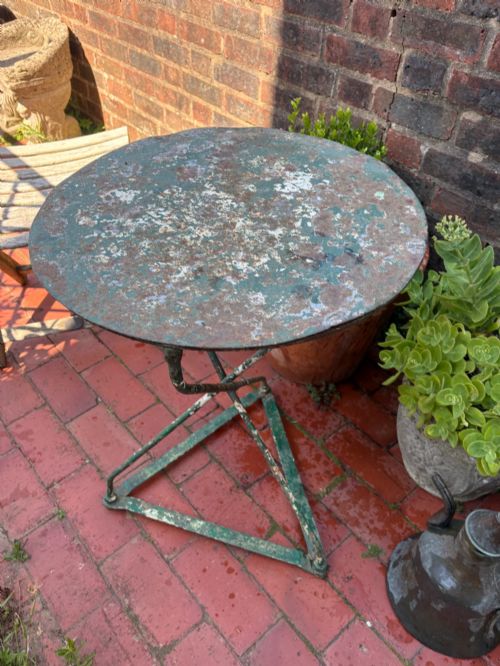


Painted Iron Side Table
A painted iron side table brings industrial strength and classical French grace into a room, offering a sturdy surface with undeniable character.
Painted Iron Side Table
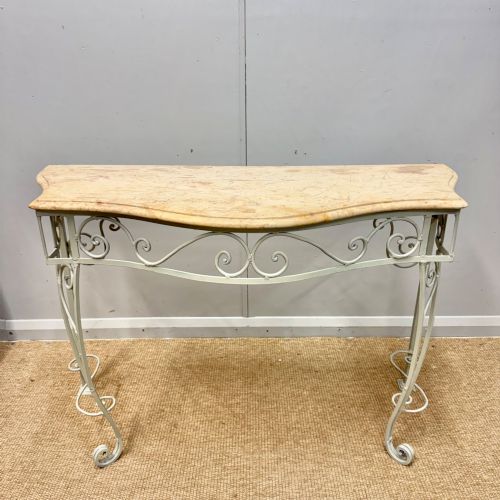
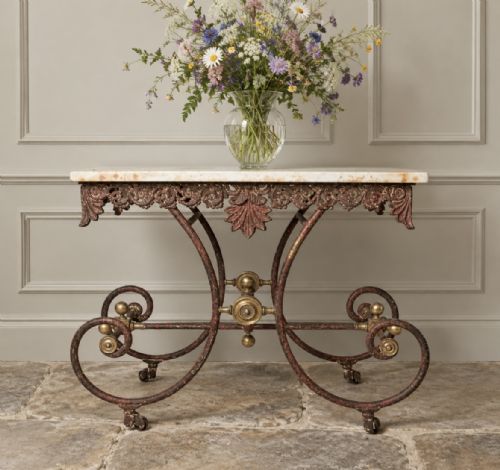
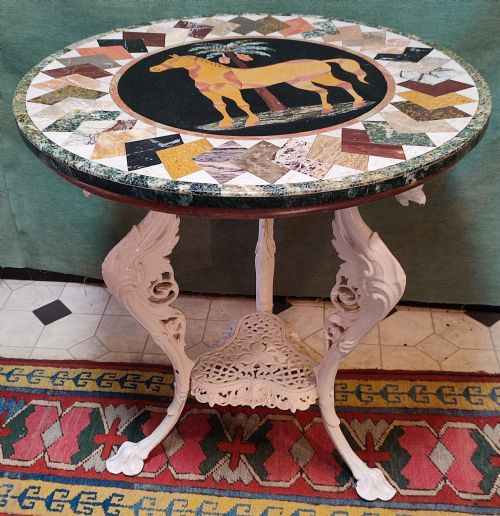
When you search for a painted iron side table, you encounter robust occasional furniture shaped by 19th Century, Victorian, Edwardian, and 1920s hands. These pieces range from console tables and garden tables to bistro tables, drinks tables, and gueridon round tables.
You are most likely to meet French provincial and garden examples on this page, alongside sturdy British pub and drinks tables. The forms frequently combine metal framing with marble, wood, oak, or steel tops, finished with historic layers of paint.
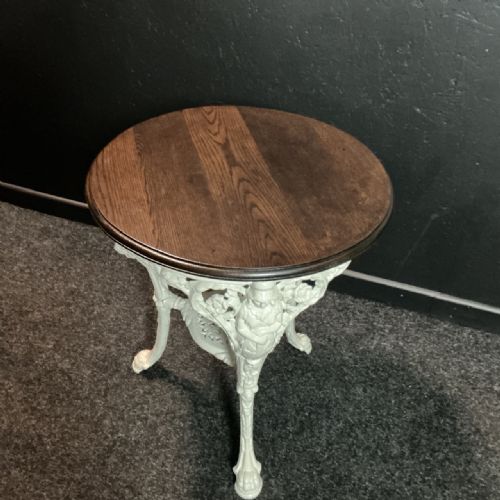
The inventory encompasses specific regional designs such as French arres café tables, strapp work garden tables, and Britannia pub tables. Each object serves as a compact surface that balances utilitarian ironwork with decorative flourishes.
How they were made
Maker workshops shaped these items using cast iron and wrought iron for the structural bases and pedestals. Metal components were often paired with contrasting materials like marble, brass, wood, and enamelled glass to form the tabletops.
Surface treatments rely on traditional paint layers applied over the metal substrate to protect against rust while adding colour. Skilled smiths shaped the iron through forging and casting, integrating decorative curves and supportive bracing.
One piece repurposes a papier-mâché tray directly onto an iron stand, proving Victorians loved an inventive tabletop conversion.
What varies in quality
Quality rests in the harmony of the proportions and the weight of the casting or forging. A finer piece displays crisp detailing in the ironwork and a harmonious integration between the base and the tabletop material.
The character of the aged paint surface significantly influences the overall appeal. Original or patinated pigment layers carry greater depth than later commercial repainting, preserving the authentic history of the metalwork underneath.
The Painted Iron Side Table Glossary
- Gueridon
- A small round table supported by a central pillar or multiple legs. Originating in France, these tables often feature decorative metal bases and stone tops.
- Britannia
- A heavy cast-iron table base featuring the seated figure of Britannia, commonly utilised in 19th Century British pubs. These sturdy frames support round wooden or marble surfaces.
- Console table
- A table designed to stand against a wall, frequently supported by ornate brackets or legs. In ironwork forms, these provide a narrow surface for display.
- Strapp work
- Metalwork constructed from flat strips of iron riveted or joined in geometric patterns. This technique provided lightweight yet rigid support for outdoor furniture.
- Marble
- A metamorphic rock prized for smooth tabletops. French and Edwardian examples frequently paired white or coloured marble slabs with heavy iron bases.
Painted Iron Side Table: Frequently Asked Questions
Where should I put a painted iron table?
These tables suit hallways, living rooms, and conservatories where a compact surface is useful. Their robust construction also allows them to function outdoors in sheltered garden spaces.
The combination of metal and stone or wood creates a strong focal point in smaller areas. They work well as bedside surfaces, plant stands, or occasional spots for drinks.
How do I clean a marble top?
Wipe the surface gently with a soft cloth dampened in warm water and mild soap. Avoid acidic cleaners or harsh chemicals that can etch or dull the stone.
Dry the marble thoroughly after cleaning to prevent water spots. Treating the stone with a suitable sealer periodically helps protect against stains.
How do I identify a 19th Century piece?
Look for construction markers such as hand-forged wrought iron joints, traditional casting seams, and aged patination on the paint. Victorian and 19th Century examples often display heavier metalwork and authentic wear.
Materials like heavy cast iron, early brass accents, and period marble slabs provide further clues to age. Comparing the form against documented pub and garden furniture styles helps confirm the era.