


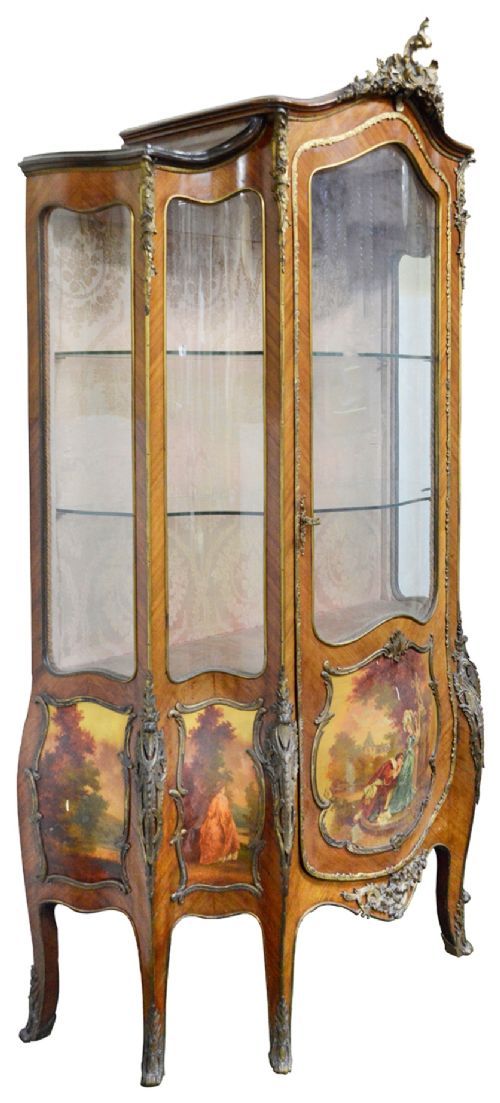


Painted Glass Front Cabinet
A painted glass front cabinet brings colour and refined display space to a room, uniting delicate artistry with practical storage.
Painted Glass Front Cabinet
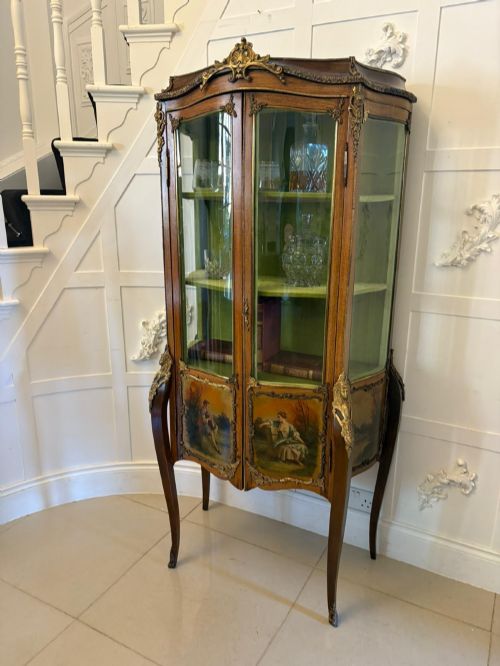
When you search for a painted glass front cabinet, you are looking at glazed display furniture that uses decorative painted finishes to elevate the piece above plain timber work. The examples seen here span the Victorian, Edwardian, and 1930 periods, drawing on French Rococo Revival, Louis XV Revival, Dutch Rococo, and Chippendale Revival styles.
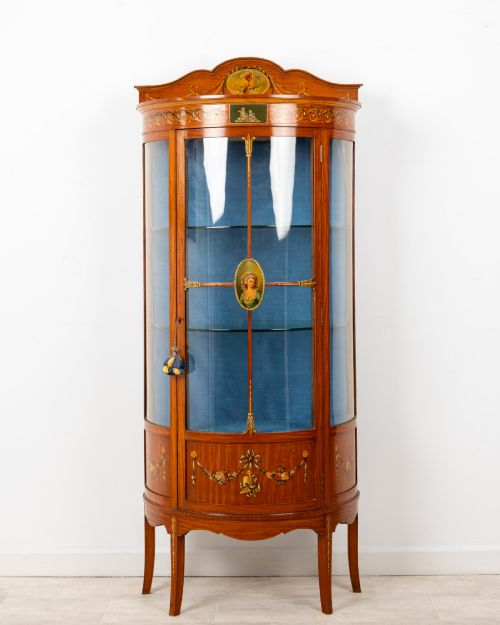
You will most frequently meet pieces described as vitrines, display cabinets, or bookcases and cabinets. They range from bow front and concave glass shapes to breakfront and oval free standing forms, alongside a decorative Chinese influence piece.
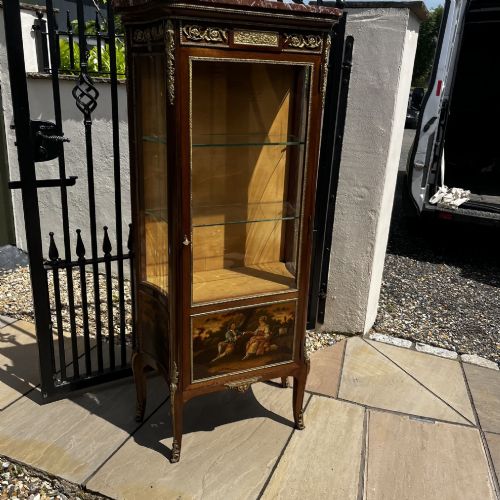
The materials recorded across these listings include glass, ormolu, kingwood, satinwood, fabric, brass, mahogany, and paint. Some pieces utilise pine prepared for wax or paint, while others showcase elaborate Vernis Martin decoration.
How they were made
Cabinet makers built the primary carcass using timbers such as mahogany, satinwood, kingwood, or pine, applying paint directly to the surfaces or employing specialised Vernis Martin decorative techniques. Glazed front panels and doors allowed light into the interior to showcase contents against fabric-lined or wood-backed shelving.
Many of the revival pieces incorporate cast brass and ormolu mounts to accent the curves of the framework. Structural variations include bow fronts, concave glass, and breakfront layouts that required precise carpentry to house curved glass panes securely.
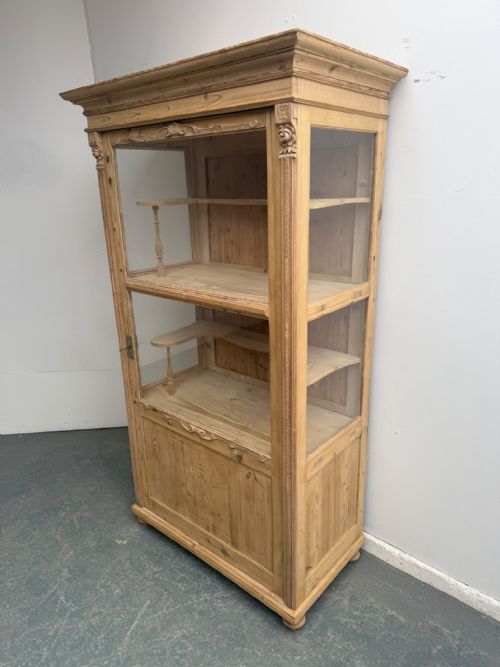
One plain pine cabinet waits patiently on this page for a completely new life under someone's paintbrush and wax.
What varies in quality
The distinction between standard examples and superior pieces rests on the complexity of the timber preparation and the execution of the painted and gilt decoration. Cabinets featuring fine satinwood, intricate Vernis Martin work, and heavy ormolu mounts represent the more ambitious end of the manufacturing scale.
Construction details such as adjustable shelving, fitted glazed doors, and sophisticated contouring like concave or bow front shaping elevate the overall standard of the furniture.
Edwards & Roberts
The Painted Glass Front Cabinet Glossary
- Vitrine
- A glass-fronted display cabinet used principally for showing porcelain, curiosities, or books. These pieces often feature glazed sides as well as a glazed front to maximise ambient light.
- Vernis Martin
- A simulated Japanese lacquer finish developed in eighteenth-century France and revived on later cabinets. This technique uses successive layers of varnish to create translucent painted pastoral or decorative scenes.
- Ormolu
- Gilt-bronze mounts applied to furniture for decorative accent. On these cabinets, ormolu typically highlights the corners, feet, and framing around glass panels.
- Breakfront
- A cabinet design where the central section projects forward from the flanking wings. This architectural arrangement creates depth and breaks up the linear facade of large bookcases.
- Bow front
- A convex curved cabinet front that swells outward in the centre. This curved form requires specialist glazing and joinery to achieve a smooth visual sweep.
Painted Glass Front Cabinet: Frequently Asked Questions
What is a painted glass front cabinet used for?
These pieces function primarily as display furniture for books, ceramics, and prized ornaments. The glazed doors keep dust away while allowing visibility from across the room.
Inside, adjustable shelving and sometimes fabric backings help frame the items on display. They suit reception rooms and studies where decorative storage is required.
How do I identify a Vernis Martin finish?
Vernis Martin is recognised by its lustrous, translucent painted surface, often depicting figures or floral motifs in a French decorative style. The finish mimics Asian lacquer through multi-layered varnishing.
Cabinets with this technique usually date from the nineteenth century revival periods and carry sophisticated ormolu mounts.
Are these cabinets purely French in style?
While many pieces draw heavily on French Rococo, Louis XV, and Louis XVI revival aesthetics, the selection also includes Dutch Rococo, Chippendale Revival, and Chinese influence designs. British cabinet makers frequently adopted these continental and international motifs.
Materials like satinwood and mahogany appear across different stylistic traditions.
How do I care for a painted cabinet with glass?
Maintain the painted and polished wood surfaces with soft, dry cloths and avoid placing the furniture in direct sunlight or damp conditions. Glass panels can be cleaned with standard glass cleaner applied sparingly to a cloth.
Care should be taken around ormolu mounts and delicate paintwork to preserve the original decorative finish.