
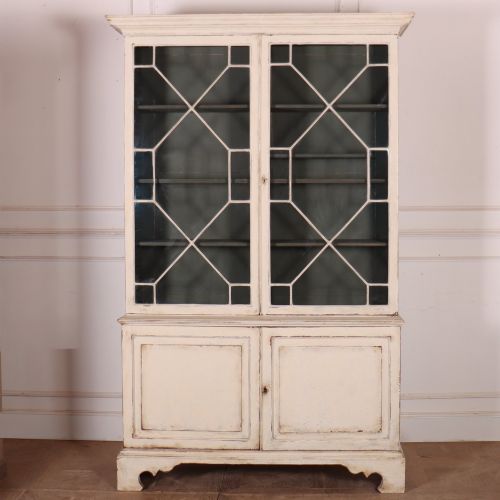
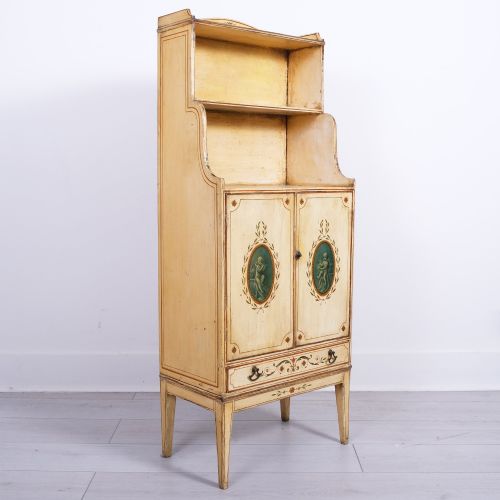


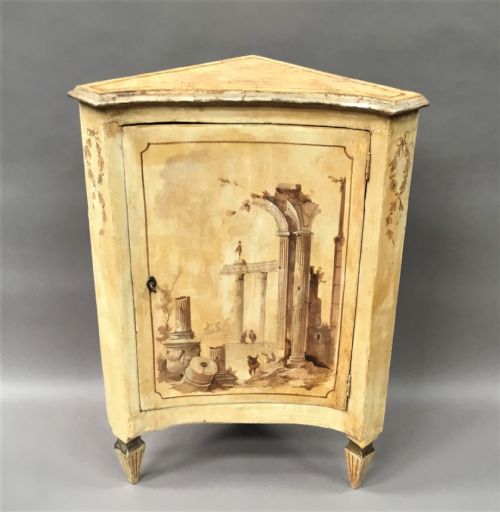
Cream Painted Cabinet on Stand
A cream painted cabinet on stand brings painted timber and period proportion into a room, offering both display space and storage.
Cream Painted Cabinet on Stand
When you search for a cream painted cabinet on stand, you look for storage furniture finished with pale or cream paint, often associated with eighteenth century pieces and later revivals. The examples found here range from eighteenth century forms to items from nineteen hundred and nineteen thirty.
These items take various storage shapes, including corner cupboards, bookcases, and standing cabinets. You are likely to meet pieces showing English country, Georgian, and Chinoiserie styles alongside French provincial influences.
How they were made
Makers built these cabinets using painted wood, pine, and painted timber as the primary structural materials. Surfaces received coats of paint, sometimes supplemented by parcel gilding to highlight carved or moulded details.
Glazing and mirror elements appear in specific glazed and display formats, while brass hardware provides functional hinges and pulls. Construction relies on traditional woodworking techniques suited to standing cupboards and shelved storage units.
Field kitchens and dressers rub shoulders with delicate Chinoiserie cabinets, proving that historical cooks and collectors shared a taste for painted storage.
What varies in quality
Quality rests upon the handling of the painted surface, where hand-applied finishes and original or early pigment layers carry more presence than later commercial coats. The integrity of the timber joinery and the subtlety of decorative motifs, such as Chinoiserie details, distinguish finer items.
Proportion and scale determine the visual balance of a cabinet on stand, separating well-resolved architectural forms from heavier or less harmonious constructions. The survival of period glass, brass fittings, and structural elements also influences the character of each piece.
The Cream Painted Cabinet on Stand Glossary
- Chinoiserie
- European interpretation of Chinese decorative arts, frequently featuring painted motifs on furniture surfaces. This style gained popularity during the eighteenth century.
- Parcel Gilt
- Partial application of gold leaf or gilt finish upon woodwork or paintwork. It serves to accentuate specific carved or raised details.
- George III
- The stylistic period spanning the reign of George the Third, known for refined classical proportions and cabinetmaking quality. Pieces from this era often display polished or painted finishes.
- Housekeepers Cupboard
- Large storage furniture traditionally used in country houses for linen and dry goods storage. These pieces typically feature panelled doors and substantial shelving capacity.
Cream Painted Cabinet on Stand: Frequently Asked Questions
What is a cream painted cabinet on stand?
A cream painted cabinet on stand is a storage piece raised on legs or a frame, finished in pale paint. These items combine display or cupboard space with an elevated profile.
They appear in various styles from the eighteenth century onwards, offering decorative presence alongside practical shelving.
Where should I place a cabinet on stand?
These cabinets suit dining rooms, hallways, or living spaces where they can function as display units or storage cupboards. Their elevated stands prevent them from looking heavy in smaller rooms.
Ensure the piece sits away from direct heat sources to protect the painted timber and any applied gilding.
How do I care for painted wood furniture?
Dust the painted surface regularly with a soft, dry cloth to prevent dirt accumulation. Avoid harsh chemical cleaners that can degrade historic or decorative paint layers.
Maintain a stable room humidity to protect the underlying wood from expanding or contracting.
How do I identify eighteenth century pieces?
Eighteenth century examples show period construction methods, traditional timber selection such as pine or hardwood, and authentic surface wear. Stylistic cues like Georgian proportions or Chinoiserie painting help indicate the era.
Comparing the hardware, joinery, and paint application provides further clues to a piece's age.