
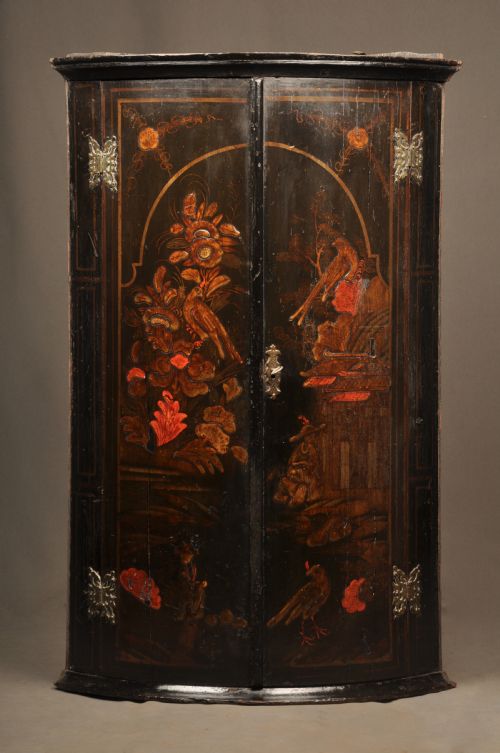

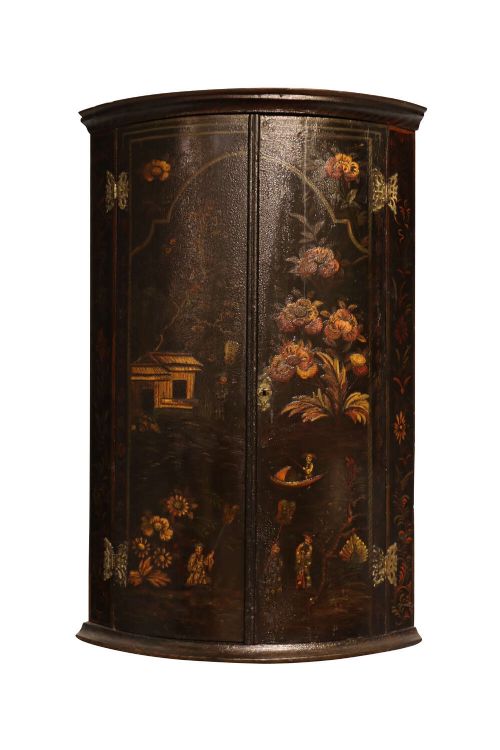


Georgian Style Chinoiserie Cabinet
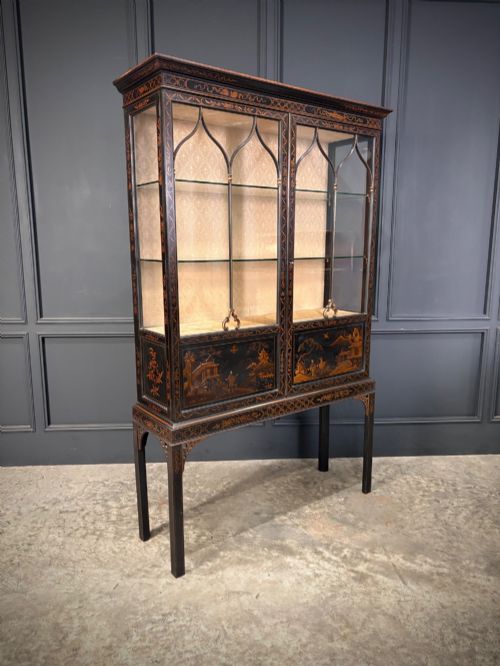
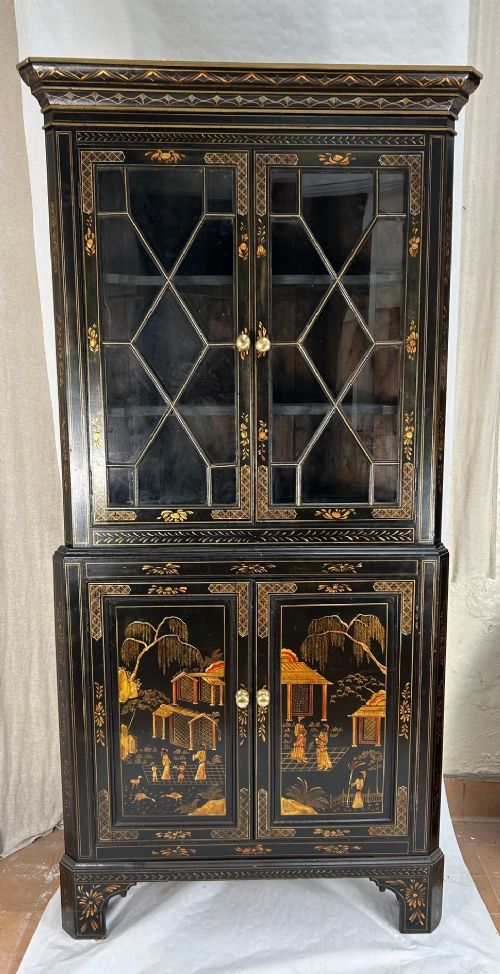
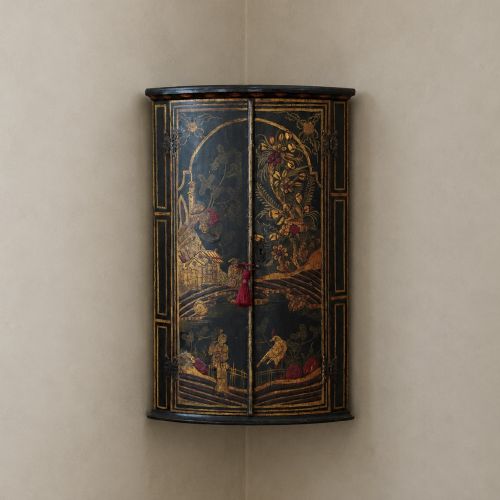
A georgian style chinoiserie cabinet brings painted lacquer and exotic scenes into a room through corner cupboards and bureaux.
Georgian Style Chinoiserie Cabinet
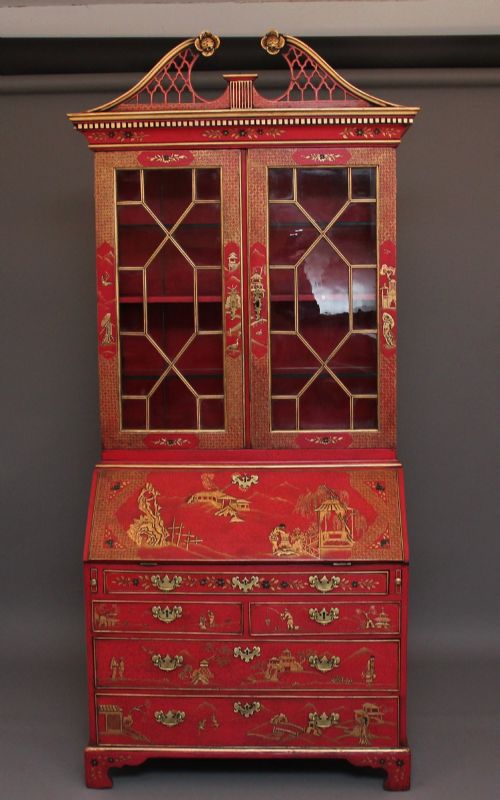
Buyers frequently encounter Edwardian and nineteenth century interpretations alongside authentic eighteenth century examples. The selection includes black and red lacquer finishes on corner cupboards and writing bureaux, reflecting enduring interest in Chinese influence cabinet work.
Forms range from simple corner cabinets to elaborate bureau bookcases and chests on chest. The listings demonstrate how cabinet makers adapted eighteenth century aesthetics for Victorian, Edwardian, and later homes.
Materials and construction
Makers utilised wood, pine, and brass alongside layers of lacquer, paint, and gold leaf to achieve decorative surfaces. Japanning techniques created glossy black or red finishes adorned with raised figures and landscapes.
Applied gilt and paint build up pictorial scenes on cupboard doors and fall fronts. Brass hardware such as hinges and escutcheons secure the wooden structures across corner units and writing desks.
Current listings feature corner cupboards, bureaux, and chests spanning the eighteenth, nineteenth, and early twentieth centuries in wood, lacquer, and brass.
Evaluating craftsmanship
Depth and detail in the lacquerwork separate standard decorative items from superior examples. The execution of painted figures, gold leaf application, and landscape motifs dictates visual presence.
Joinery standards in the underlying timber carcase, whether pine or cabinet wood, determine structural integrity. Original brass furniture and well preserved surface finishes indicate higher grade execution.
Flight, Barr and Barr
The Georgian Style Chinoiserie Cabinet Glossary
- Japanning
- European emulation of East Asian lacquerwork using heat dried varnishes and paints. This technique created the glossy dark or red surfaces seen on eighteenth century and later cabinets.
- Chinoiserie
- European artistic style reflecting Chinese motifs and decorative themes. It appears across furniture and ceramics of the eighteenth century and subsequent revival periods.
- Bureau bookcase
- A writing desk with a sloping fall front combined with upper shelving enclosed by doors. These dual purpose pieces provide storage and a writing surface.
- Chest on chest
- A tall storage unit formed of two stacked carcases, also known as a tallboy. These tall forms maximise storage capacity while displaying decorative lacquer surfaces.
- Corner cupboard
- A cabinet built with angled sides to fit directly into the corner of a room. Many examples in this category utilise this space saving domestic form.
Georgian Style Chinoiserie Cabinet: Frequently Asked Questions
What is a chinoiserie cabinet?
A chinoiserie cabinet is a storage piece decorated with European interpretations of East Asian art. These items feature painted or japanned surfaces showing figures, pavilions, and landscapes.
They appear as corner cupboards, bureaux, and tallboys across eighteenth century and revival periods.
Are these cabinets genuinely eighteenth century?
The selection includes authentic eighteenth century pieces alongside Edwardian, Victorian, and early twentieth century interpretations. Revival cabinet work often adopts Georgian proportions and decorative motifs.
Examining the construction methods and surface wear helps identify the period of manufacture.
How do I place a corner cupboard?
A corner cupboard is designed to slot neatly into empty room junctions, making efficient use of space. They suit dining rooms, hallways, and living spaces where wall space is limited.
Their angled backboards allow them to sit flush against perpendicular walls.
What is the difference between lacquer and japanning?
Lacquer traditionally refers to natural resin sap applied in multiple polished layers in Asian workshops. Japanning is the European technique that replicates this glossy finish using varnishes and heat applied paints.
Both methods produce the hard, decorative surfaces found on these cabinets.