



Painted French Provincial Chairs
Painted french provincial chairs bring enduring continental character into a room through curved wooden frames and distressed painted finishes.
Painted French Provincial Chairs
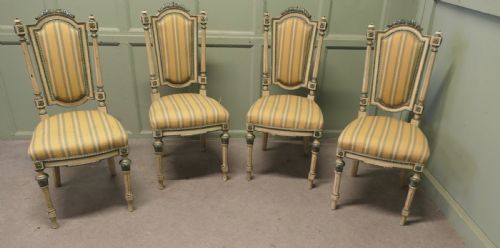
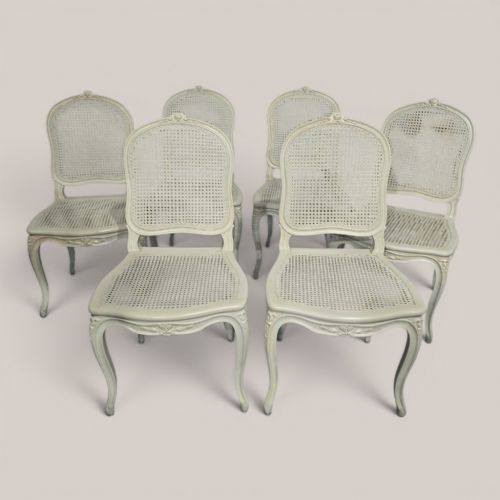
Painted french provincial chairs encompass seating designed in the rustic yet refined domestic tastes of provincial France, spanning armchairs, side chairs, and dining sets. Buyers seeking painted french provincial chairs will find pieces originating from the eighteenth century through to the mid twentieth century, reflecting enduring regional craftsmanship.
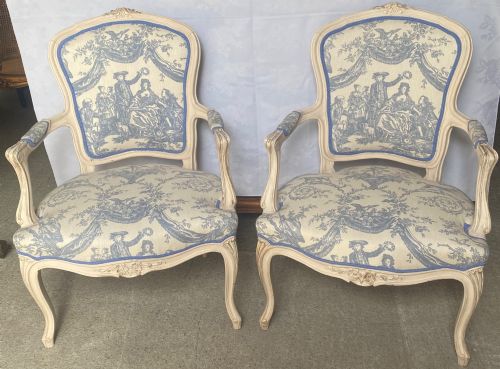
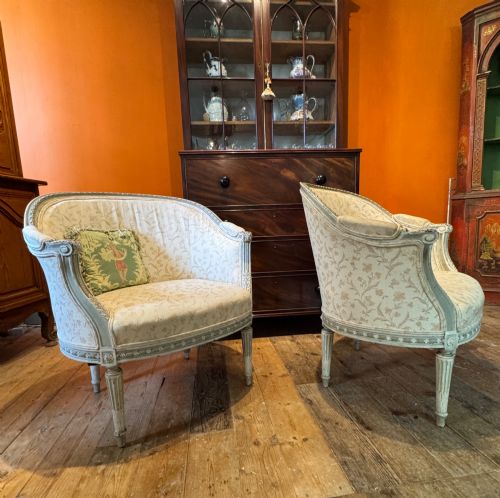
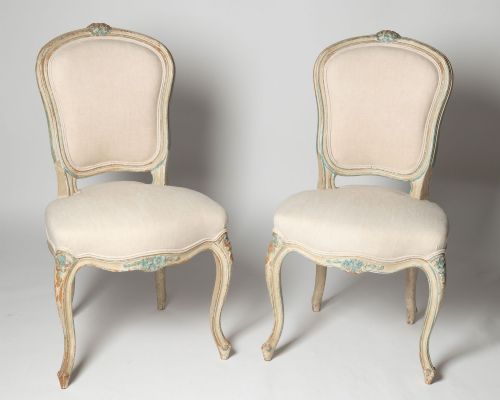
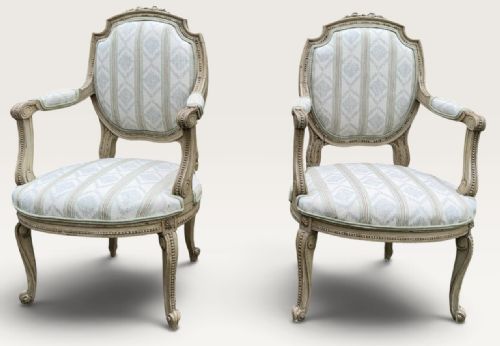
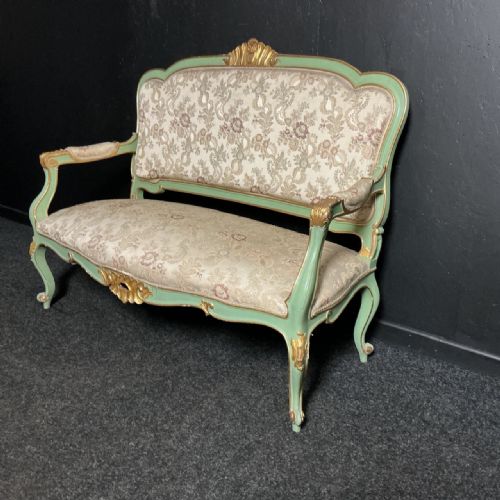
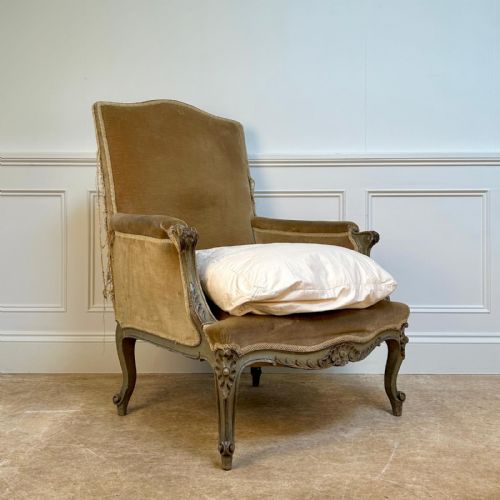
The inventory demonstrates a strong representation of Louis XV and Louis XVI stylistic influences, expressed through carved wooden frames and upholstered elements. Common forms include bergères, fauteuils, and salon chairs, often retaining traces of original or later painted surfaces.
How they were made
Carpenters shaped these frames from solid hardwoods like beech and walnut, employing traditional joinery to support curved backs and cabriole or fluted legs. Artisans applied hand-carving to ornament the structural woodwork with floral motifs and scrollwork before finishing the surfaces with paint.
Upholstery methods utilised natural textiles such as linen, fabric, and needlework, secured over supportive webbing or cane panels. Many examples display layered paint finishes that have aged over decades to show natural cracking and wear.
Painted French Provincial Chairs Retail Price Guide 2026
Typical asking prices for painted french provincial chairs among the pieces listed under this phrase on Sellingantiques today, from the lower quarter to the upper quarter. They describe what is for sale here now, not the wider market.
Listings span periods from the eighteenth century through the twentieth century, utilising beech, walnut, paint, fabric, and cane.
What varies in quality
The distinction between tiers rests upon the crispness of the hand-carved ornamentation and the integrity of the underlying wooden frame. Finer examples retain their original structural rigidity without excessive movement in the joints, whereas lesser pieces may show structural fatigue from centuries of use.
Surface treatment significantly influences character, with original undisturbed paint finishes commanding greater interest than heavily stripped or poorly refinished timber. The quality of the upholstery work, particularly traditional needlework or tautly fitted cane panels, further elevates the piece.
The Painted French Provincial Chairs Glossary
- Bergère
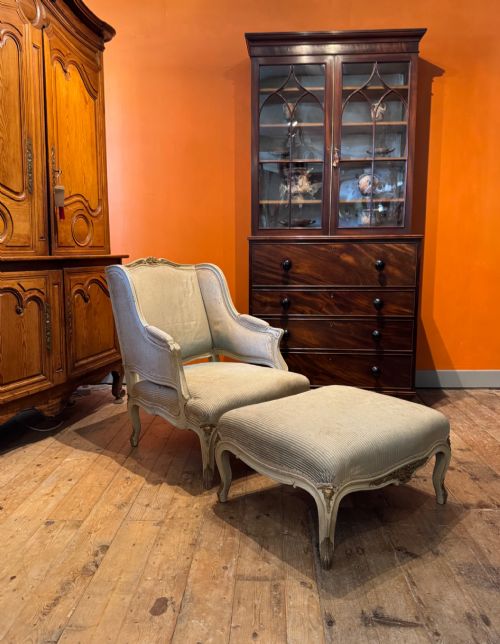
- An enclosed upholstered armchair with wooden framing and a solid upholstered back, typically featuring an exposed wooden border and a loose seat cushion. These chairs offer deeper seating than standard open armchairs.
- Fauteuil
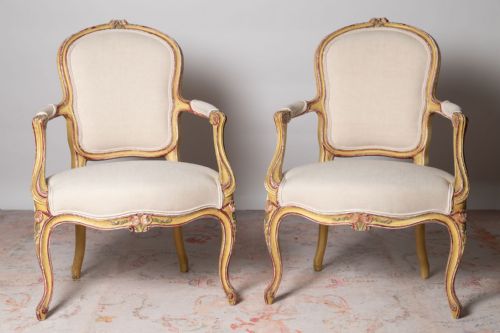
- An open-armed upholstered armchair with an exposed wooden frame, designed for formal sitting rooms during the seventeenth and eighteenth centuries. The arms usually feature upholstered elbow pads for added comfort.
- Duchesse Brisée
- A multi-part chaise longue comprising an armchair accompanied by one or two footstools to form an extended resting surface. This form allows the user to recline fully while maintaining formal stylistic symmetry.
- Cane
- Woven rattan material used to form supportive panels for the backrests and seats of light wooden chairs. This technique provides flexible support while maintaining a breathable and visually light structure.
- Needlework
- Hand-stitched textile upholstery created using wool or silk threads on a canvas ground, frequently depicting floral or pastoral scenes. Such coverings add distinct texture and historical depth to antique seating.
Painted French Provincial Chairs: Frequently Asked Questions
How do I identify a true period piece?
Examine the construction methods visible beneath the frame, looking for hand-cut joints and aged tool marks rather than modern mechanical fastenings. The presence of dried animal glue, hand-mixed paints, and consistent wear patterns helps confirm greater age.
Compare the decorative carvings against established design periods like Louis XV or Louis XVI to ensure the ornamentation matches the era of the timber frame. Genuine older examples typically exhibit natural settling and subtle asymmetries born of hand production.
Are these chairs suitable for daily dining use?
Many dining chairs and salon sets remain robust enough for regular sitting, provided the underlying joinery is secure and sound. Checking the stability of the legs and seat rails ensures the frame can support everyday weight without strain.
Adding discreet protective pads to the feet can prevent further wear on uneven modern flooring. Regular inspection of the upholstery webbing will maintain proper support over years of use.
How should I care for original painted finishes?
Dust the painted wooden surfaces gently with a soft, dry cloth to prevent the accumulation of abrasive particles. Avoid using liquid polishes, strong chemical solvents, or modern cleaning sprays that might strip or soften fragile historic paint.
Keep the seating away from direct sunlight and strong heat sources to prevent the wood from drying out and the paint from flaking. Professional conservation advice should be sought if the surface begins to crack or detach from the timber.
What is the difference between bergères and fauteuils?
Bergères feature enclosed upholstered sides with padded arms, creating a deeper, more enveloping seat designed for relaxation. Their solid sides block drafts and offer a more substantial silhouette.
Fauteuils are open armchairs featuring exposed wooden frames between the backrest and the armrests, resulting in a lighter visual presence. They were traditionally intended for formal gatherings where heavy garments required extra space.