


Painted Four Drawer Commode
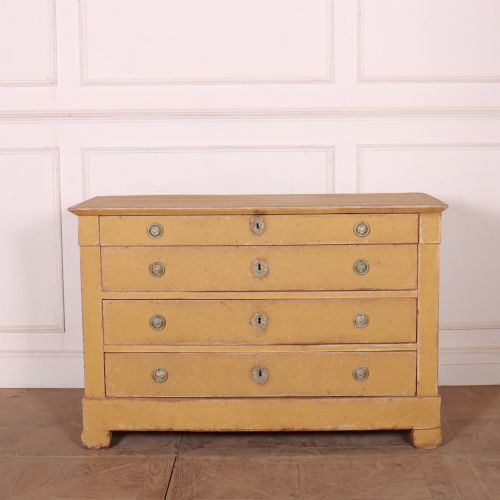
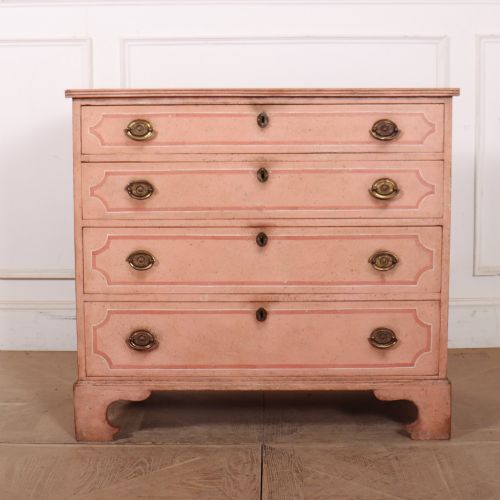
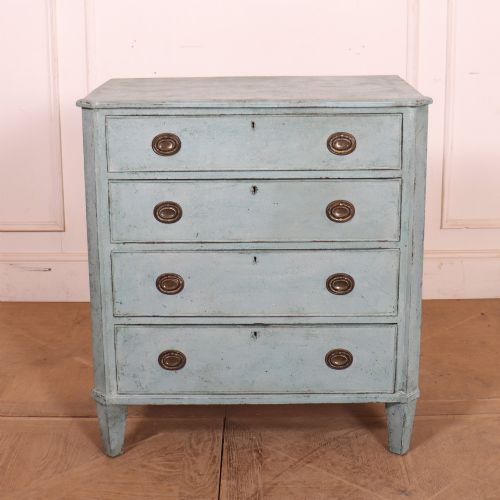
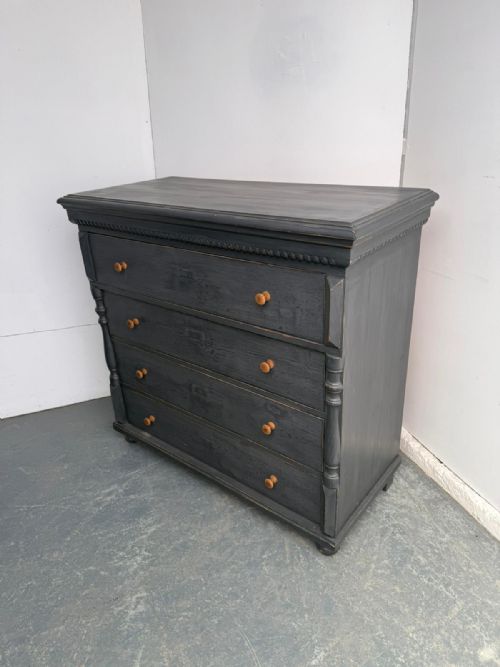
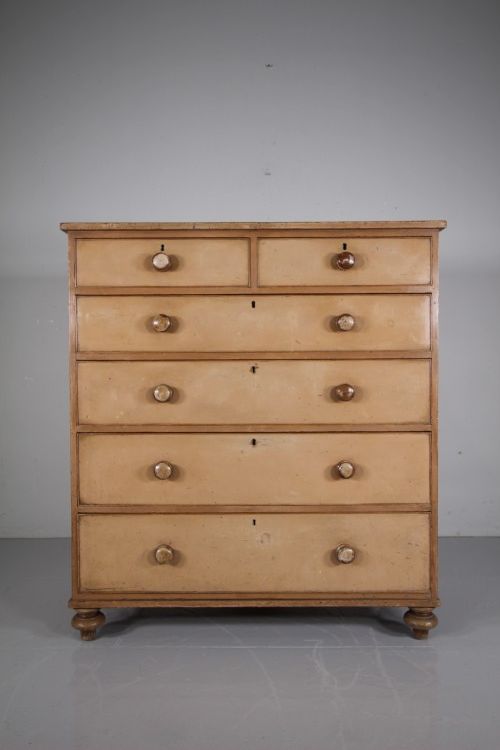
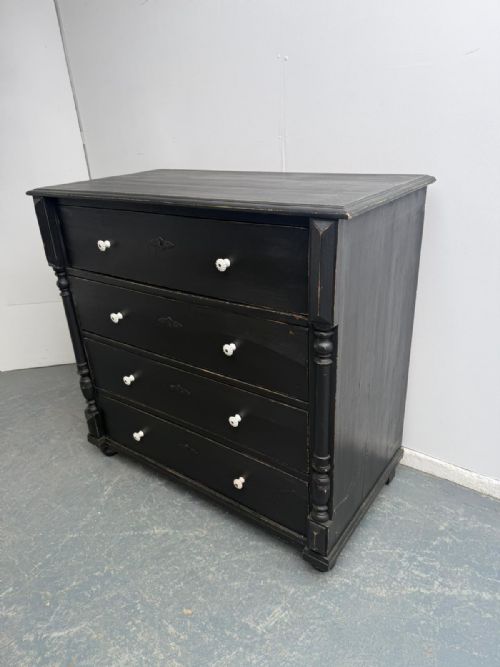
A painted four drawer commode brings functional storage and a softened decorative finish to a room, drawing on regional European traditions.
Painted Four Drawer Commode
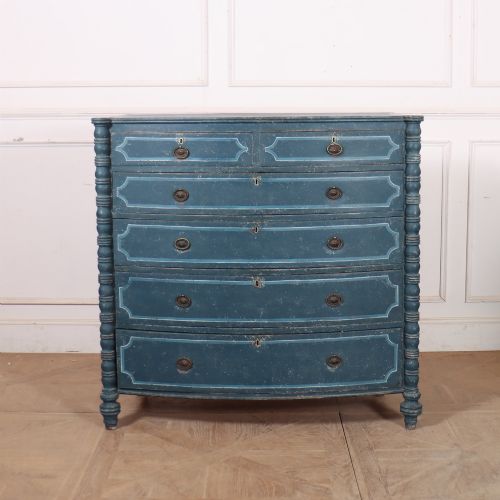
A painted four drawer commode provides substantial drawer storage while displaying decorative surface treatments across the front and sides. These pieces bridge the gap between utilitarian furniture and artistic display, offering both capacity and character.
The painted four drawer commode appears in several regional idioms on this page, spanning English country workshops, French provincial houses, and Scandinavian rural traditions. Most examples date from the eighteenth and nineteenth centuries, carrying the marks of their original decorative schemes.
Makers ranged from major cabinet-making firms like Edwards and Roberts to regional joiners working in pine, oak, and mixed timbers. Forms vary from straight-fronted chests to serpentine and bombe profiles with brass hardware.
What varies in quality
Quality rests in the survival of the original painted surface and the crispness of the cabinetwork. Pieces retaining their early or original paint layer with natural wear hold greater integrity than later repainted surfaces.
The sophistication of the form dictates distinction, moving from straightforward regional pine chests to complex serpentine, bowfront, or bombe shapes requiring advanced woodworking skill. The quality of the brass fittings and internal drawer construction also separates standard utility pieces from finer workshop productions.
Materials recorded across the inventory include pine, oak, painted timber, brass hardware, and simulated birch finishes.
Edwards and Roberts·Gemla Fabrikers
The Painted Four Drawer Commode Glossary
- Bombe
- A swollen or bulging convex front and side profile typical of continental furniture. This shape requires advanced timber bending and shaping techniques.
- Serpentine
- A gently undulating front edge curving outward at the centre and inward at the sides. It creates a dynamic silhouette across the chest of drawers.
- Bowfront
- A convex, outwardly curving front that projects smoothly from side to side. This form gained popularity during the Georgian and Victorian periods.
- Escutcheon
- A protective plate surrounding a keyhole, often cast in brass. It prevents the timber around the lock from sustaining wear and damage from keys.
- Provincial
- Describing furniture made in regional areas outside metropolitan centres. These pieces often reflect local vernacular styles and readily available timbers.
Painted Four Drawer Commode: Frequently Asked Questions
How do I clean a painted commode?
Dust the surface regularly with a soft, dry cloth to prevent the accumulation of grit. Avoid harsh chemical cleaners or abrasive pads that can strip or dull the historic paint layers.
For stubborn marks, use a slightly damp cloth with mild soap, drying the timber immediately afterward. Wax polishes should be used sparingly and only if the painted finish is stable and sealed.
Where should I place a commode?
These chests work well in bedrooms, hallways, or living spaces where surface display and drawer storage are both required. Their decorative painted finishes allow them to function as focal points against neutral walls.
Keep the piece away from direct sunlight and radiators to prevent the timber from drying out and the paint from cracking or flaking over time.
How do I date a painted commode?
Examine the construction methods inside the drawers, such as the dovetail joints and secondary timbers used for the drawer linings. Hand-cut joints and older saw marks generally point to eighteenth or nineteenth-century production.
Compare the style of the hardware, the profile of the carcase, and the composition of the paint layers with documented examples from similar regions and periods.
Are these commodes suitable for daily use?
These pieces were built as practical storage furniture and remain fully functional for holding clothes or household items. The drawers slide on wooden runners designed for regular opening and closing.
Take care not to overload deep drawers and ensure the furniture sits level on the floor to prevent the carcase from twisting and binding the drawer movement.