



Painted Folk Art Armoire
A painted folk art armoire brings rural colour and hand-applied character straight into a modern room.
Painted Folk Art Armoire
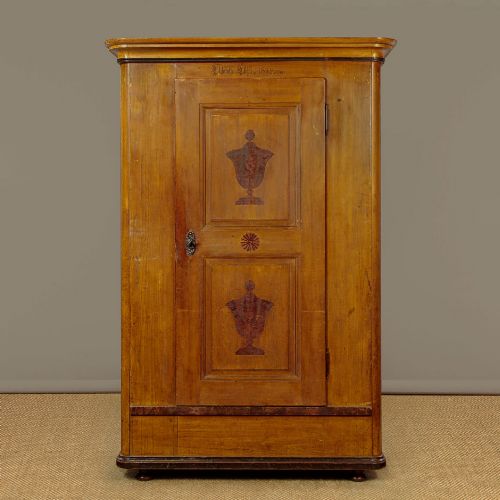
When you search for a painted folk art armoire, you encounter substantial storage furniture finished with regional decoration from across Europe. These pieces include wardrobes, linen presses, marriage cupboards, and kitchen cabinets originating from countries such as Sweden, Hungary, Austria, and Italy.
The version you are most likely to meet on this page dates from the nineteenth century, constructed primarily in pine and finished with mineral paint or traditional ragwork. Regional styles range from Scandinavian and Alpine folk art to Gustavian and Italian provincial designs.
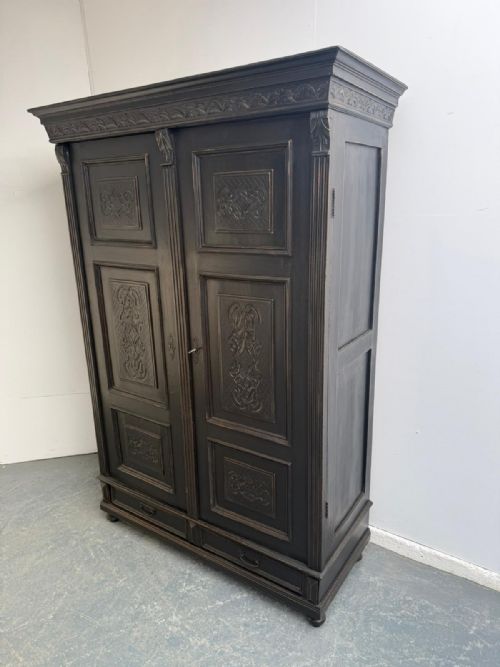
These large cupboards served practical storage needs in rural homes while displaying distinct local artistic traditions. Their forms vary from single-door hall wardrobes to two-door architectural cupboards standing on dedicated bases or bracket feet.
How they were made
Carpenters built these wardrobes and cupboards using solid timber, predominantly pine, joined with traditional pegged or dovetailed construction methods suited to regional workshops. Iron and brass hardware, including strap hinges and working latches, secured the heavy doors.
Surface decoration relied on hand-mixed mineral paints, often applied over a prepared ground to create decorative panels, floral motifs, or textural ragwork finishes. Artisans sealed these painted surfaces to protect the pigments from daily wear in domestic settings.
Several nineteenth-century marriage cupboards still bear the initials of couples who tied the knot in rural European villages long ago.
What varies in quality
The distinction between standard utility storage and a superior folk art piece rests in the ambition and execution of the painted surface. Original untouched decorative schemes with clear regional motifs command greater interest than plain or later repainted surfaces.
Proportion and architectural presence also define the tier of the piece, with well-balanced cornices and intact original ironwork separating finer provincial work from simpler workshop output.
The Painted Folk Art Armoire Glossary
- Ragwork
- A decorative painting technique using rags or cloths to manipulate wet paint on wood, creating textured patterns and mottled colour effects. This method was widely used in traditional Scandinavian furniture decoration.
- Gustavian
- The Swedish interpretation of neoclassical style, characterised by restrained carving, pale painted finishes, and symmetrical design. It developed during the reign of Gustav III.
- Marriage cupboard
- A large storage piece commissioned or gifted to celebrate a wedding, frequently inscribed with dates, initials, or symbolic motifs. These items occupied a central place in rural European households.
- Linen press
- A tall cupboard combining sliding interior trays or shelves for textiles with hanging space or lower drawers. They formed an essential part of domestic storage before fitted wardrobes became common.
- Mineral paint
- A durable type of paint bound with natural minerals, providing a flat or chalky finish on wooden furniture. It was commonly employed in rural European folk traditions.
Painted Folk Art Armoire: Frequently Asked Questions
Where should I place a painted armoire?
These large storage pieces suit bedrooms, hallways, or living spaces where their decorative painted surfaces can act as a focal point.
Ensure the room has stable humidity levels to protect the antique pine and historic paint layers from moisture fluctuation.
How do I clean a painted folk art surface?
Dust the exterior gently with a dry, soft cloth to prevent particulate buildup on the delicate mineral paint.
Avoid chemical cleaning products or abrasive cloths, which can strip away historic pigments and surface patination.
How can I tell a regional style apart?
Examine the palette and decorative motifs, as Scandinavian pieces often favour pale blues and greens with floral work, while Alpine and Hungarian examples display richer, darker tones.
Construction joints and timber choices also offer clues to the specific European workshop origin.
What is the difference between an armoire and a cupboard?
An armoire typically refers to a large wardrobe designed specifically for hanging garments behind full-length doors.
A cupboard frequently incorporates internal shelving or linen trays for folded textiles, though regional naming conventions often overlap.