


Painted Flower Urn Art
These painted flower urn art pieces bring botanical studies and classical vases into domestic spaces through oils, watercolours, earthenware, and carved wood.
Painted Flower Urn Art
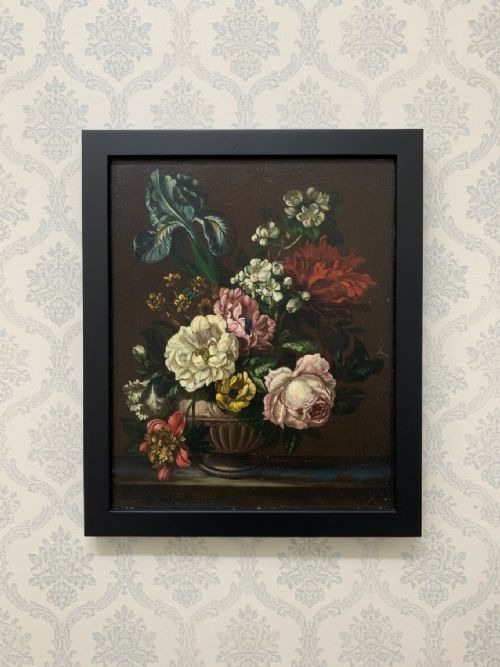
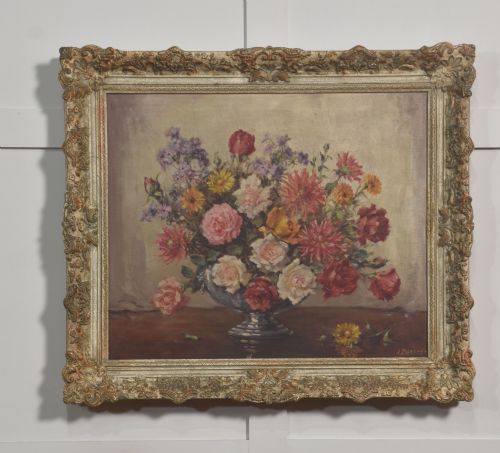
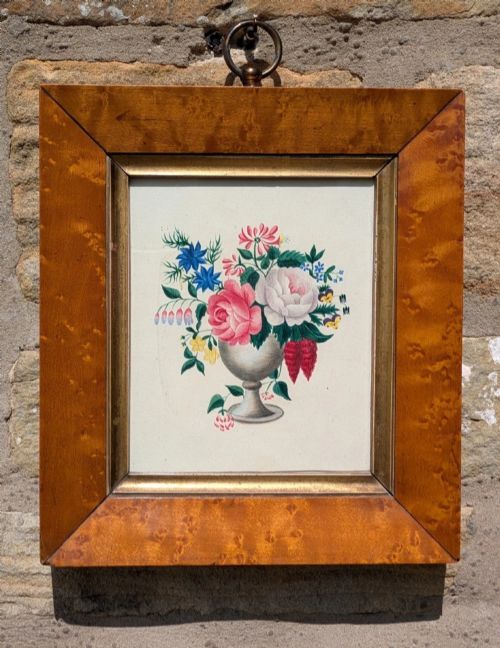
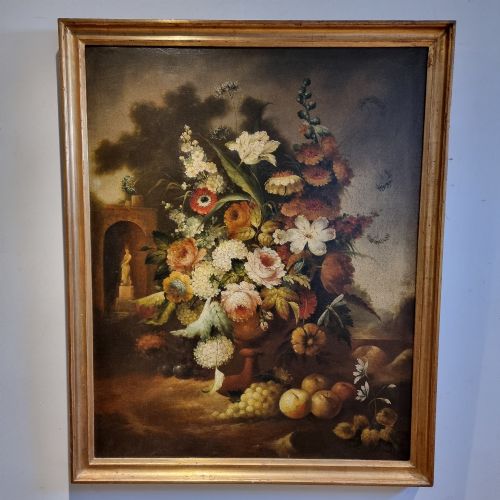
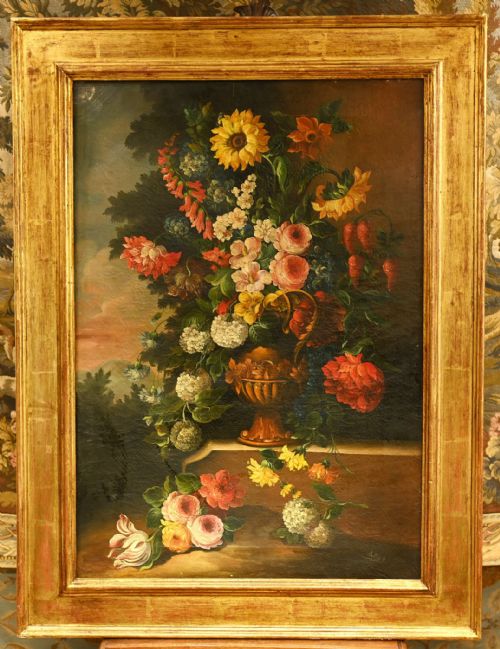
Painted flower urn art encompasses floral still life oil paintings, botanical watercolours, and decorated earthenware vases spanning from the eighteenth century to the twentieth century. These works capture arrangements of spring flowers, classical urns, and garden blooms across canvas, panel, and ceramic surfaces.
Buyers will encounter Dutch school compositions, Flemish revival panels, and Regency studies alongside Art Nouveau enamelled glass and pottery from factories like Doulton and Poole. The selection balances framed wall art with decorative three-dimensional vessels displaying floral motifs.
The periods represented stretch from the Regency era and the eighteen-hundreds through nineteenth century revivals into nineteen-twenties and thirties modernism. Each piece records changing domestic tastes for floral decoration across various European schools.
How they were made
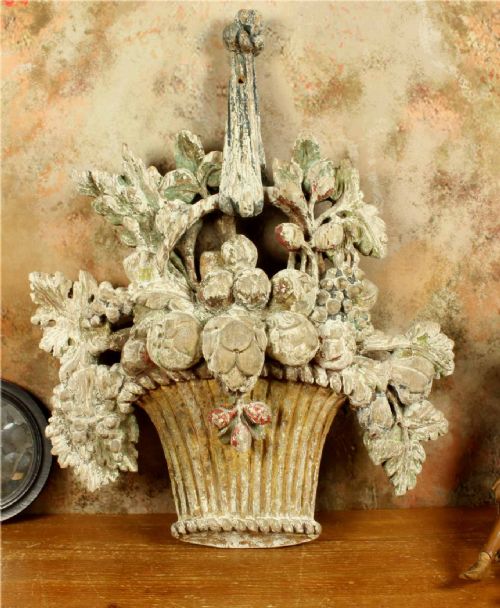
Painters applied oil paint or watercolour to canvas, wood panels, and paper boards, often employing classical Dutch and Flemish composition techniques. Woodcarvers shaped decorative wall reliefs from solid timber, while ceramic artists formed earthenware bodies for painted and glazed vases.
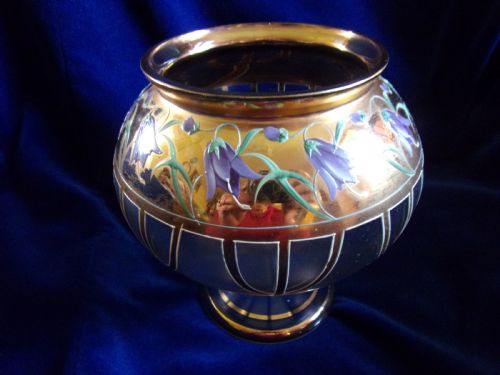
Pottery and glass pieces utilise enamel colours, slip painting, and gold leaf gilding applied to fired clay or blown glass surfaces. These decorative layers undergo kiln firing to fix the pigments and metallic highlights.
Framed artworks utilise stretched canvas over wooden frames or secure panels within moulded timber surrounds, sometimes incorporating gilded details.
Pigeons occasionally share canvas space with the floral arrangements, reminding viewers that nature includes feathers alongside petals.
What varies in quality
The standard of painting relies upon brushwork control, pigment richness, and the convincing rendering of botanical detail and light upon petals and leaves. Finer canvases display depth in shadow and careful tonal graduation within the urn or vase structures.
Ceramic and glass pieces depend on the precision of the enamel application, the crispness of the moulded relief, and the richness of the ground colour. Factory pieces show distinction through named artists and specific pattern attributions.
Framing and mounting contribute to the finished presentation, where period mouldings and preserved canvas grounds maintain the integrity of the piece.
I. Berezny·Terence Loudon·Royal Doulton·Poole Pottery·Carter Stabler Adams
The Painted Flower Urn Art Glossary
- Still life
- A painting or drawing depicting inanimate subject matter, typically commonplace objects such as flowers and fruit. These compositions dominated Dutch and Flemish traditions.
- Earthenware
- Pottery fired at a relatively low temperature, leaving the clay porous before glazing. This material forms the body of many decorative Victorian and twentieth-century vases.
- Trompe l'oeil
- An art technique involving extreme realism to create the optical illusion that the depicted objects exist in three dimensions. Artists used this to render floral arrangements with striking immediacy.
- Enamel
- A decorative glassy substance melted onto ceramics, glass, or metal at high heat. It provides bright, durable colour on decorative vases.
- Wood relief
- Sculptural work where figures or floral motifs project from a flat background plane. Carved wooden panels employ this method to create depth on walls.
Painted Flower Urn Art: Frequently Asked Questions
What is painted flower urn art?
This category includes oil paintings, watercolours, and ceramic vases featuring floral arrangements in urns and baskets. The works range from eighteenth-century Dutch style canvases to twentieth-century pottery.
Collectors select these pieces to introduce classical botanical themes and rich colours into interior spaces through both wall art and decorative vessels.
How do I date an oil painting?
Dating relies upon canvas preparation, stretcher construction, pigment analysis, and stylistic markers of the period. Eighteenth and nineteenth-century works often exhibit specific canvas weaves and frame construction.
Signatures, artist attributions, and exhibition labels also assist in establishing the approximate decade of creation.
Where were these ceramic vases made?
The ceramic pieces originate from notable British potteries active during the late nineteenth and early twentieth centuries. Factories such as Doulton and Poole produced earthenware bodies decorated with hand-painted floral motifs.
Backstamps and impressed marks on the base identify the specific pottery and production period.
How should I hang an oil painting?
Oil paintings require stable wall fixings suited to the weight of the wooden frame and canvas panel. Position artworks away from direct sunlight and excessive moisture to protect the pigment and ground.
Ensure hanging wire and D-rings are secure and inspect the frame backing periodically.