
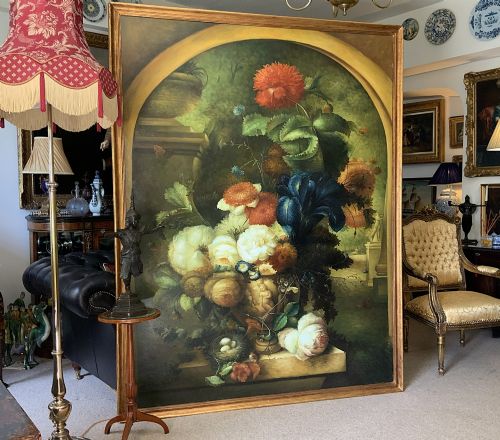
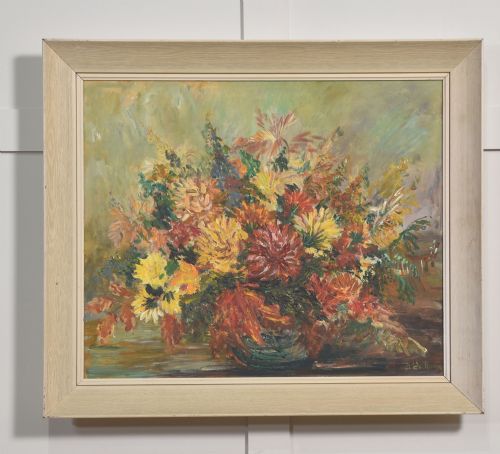
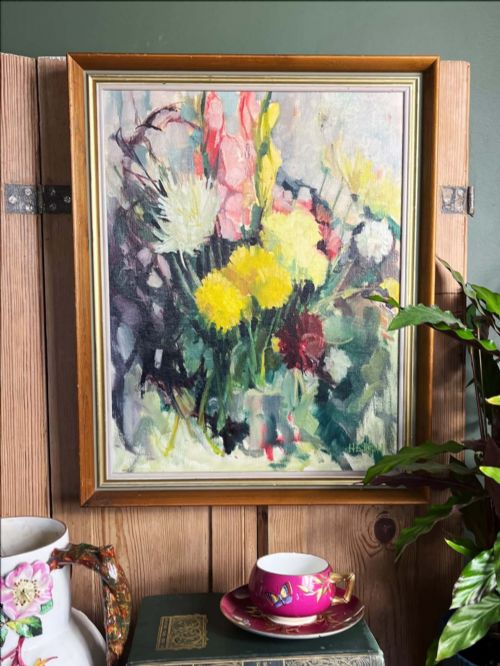
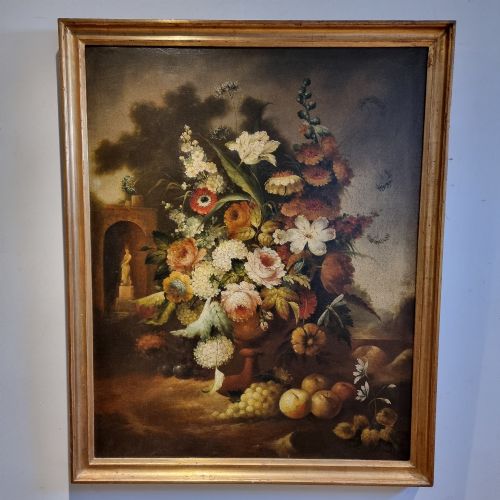
Framed Floral Canvas Painting
A framed floral canvas painting brings botanical subjects to interiors through oil paint and textile supports shaped by centuries of artistic tradition.
Framed Floral Canvas Painting
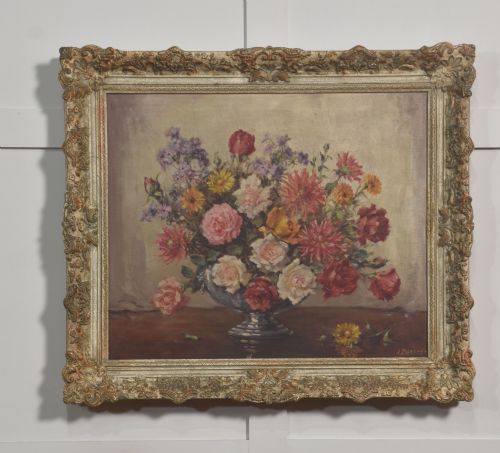
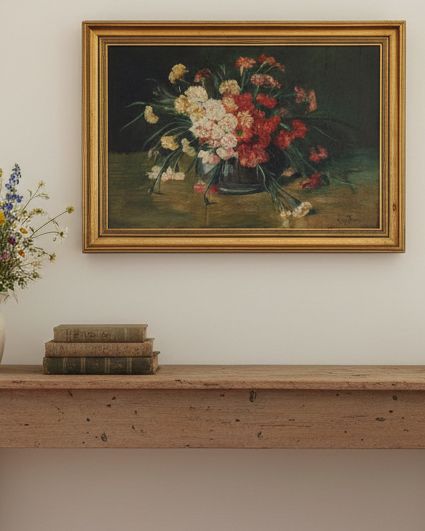
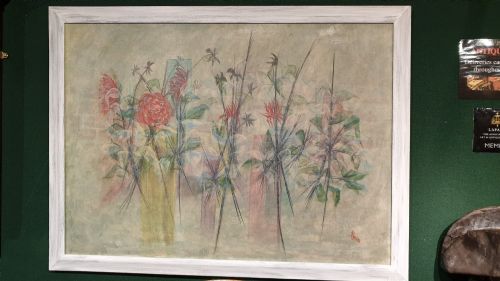
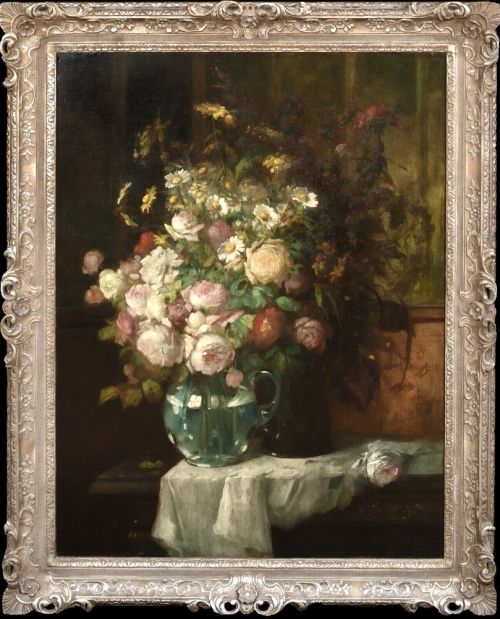
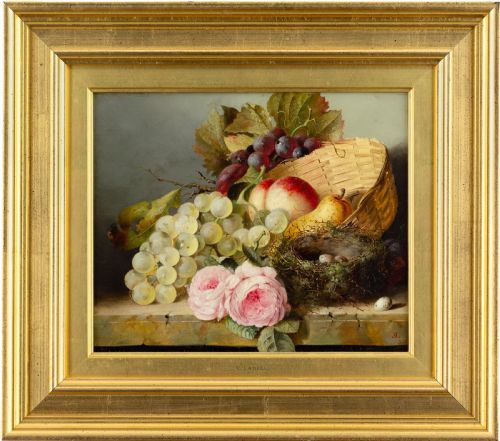
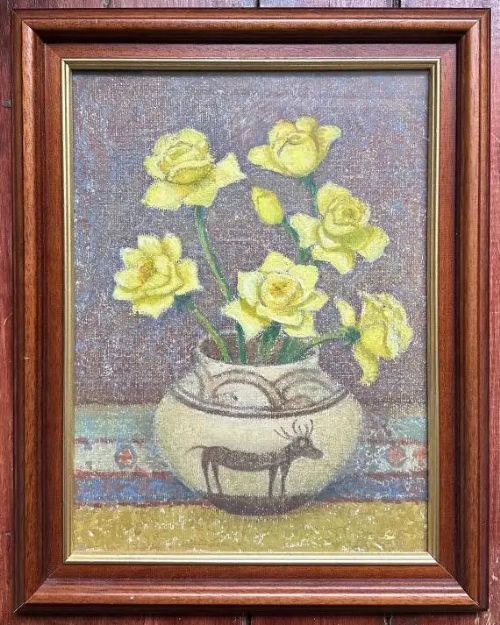
A framed floral canvas painting presents botanical still life studies executed primarily in oil paint upon woven canvas supports. Buyers encounter works spanning from the seventeenth century through to the mid-twentieth century, encompassing British Impressionism, Flemish Baroque, and Mid-Century Modern styles.
How They Were Made
Artists applied oil paint to stretched canvas or wooden board supports, building texture and depth through layered brushwork. Pigments capture the varied tones of petals, foliage, and containers, ranging from detailed Dutch Baroque realism to looser Impressionist strokes.
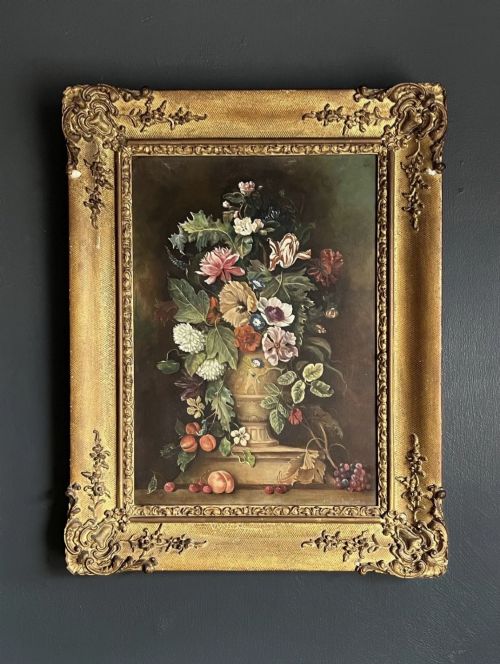
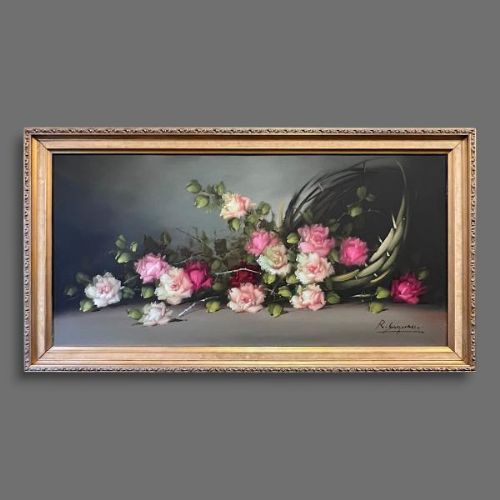
Surviving works are typically housed in wooden frames enhanced with gilt and gesso ornaments. These surrounds complement the painted canvas, utilising gold leaf and moulded plaster details characteristic of their respective periods.
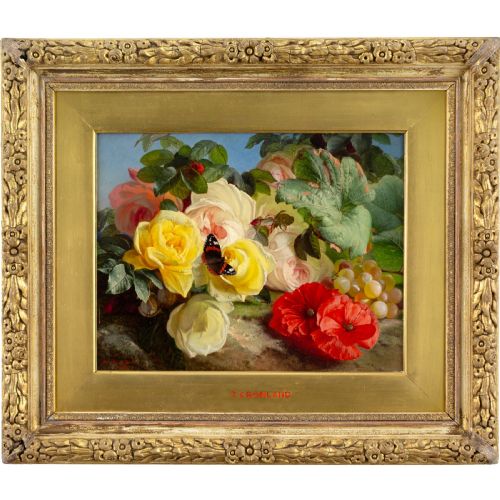
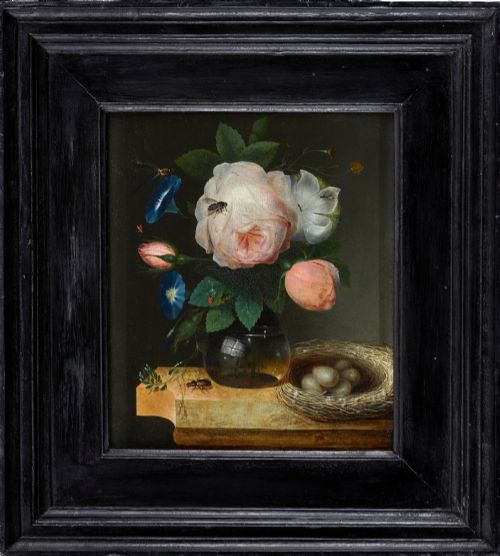
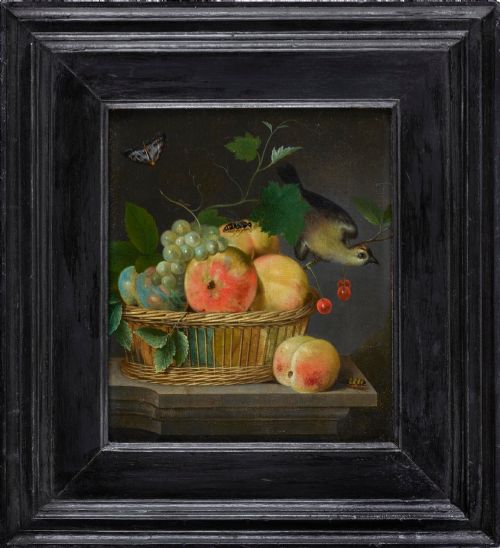
Several floral canvases feature unexpected animal guests, including butterflies, birds' nests, and resting birds tucked among the roses.
What Varies in Quality
The sophistication of composition and brush technique distinguishes individual pieces within the range. Mastery over light, shadow, and botanical accuracy marks the distinction between standard decorative works and accomplished fine art paintings.
Frame craftsmanship also differs significantly, with hand-carved and heavy gilt gesso surrounds offering greater substance than simpler wooden mouldings. The integration between the painting and its original frame influences the overall integrity of the piece.
Theude Grönland·I Berezny·D L Williams·Mark Ingram·Konstantin Stoitzner·Edward Ladell·Emma Fordyce MacRae·Gaspar Peeter Verbruggen·Peter Newcombe·Harold Clayton·Edwin Steele·Manuela Bonati·William Thomas Wood·Victor Simonin·Owen Bowen·Gertrude Hayes·Simon Pietersz Verelst·Thomas Bromley Blacklock·Amile Coppieters·Florence Hess·A Nikolokov
The Framed Floral Canvas Painting Glossary
- Canvas
- A heavy woven fabric utilised as a support surface for oil paintings. It provides a durable ground that painters prime before applying pigment.
- Gesso
- A white paint mixture consisting of a binder mixed with chalk, gypsum, or pigment. It prepares wooden frames and panels to receive gilding or paint.
- Gilt
- Covered thinly with gold leaf or gold paint. This finish enhances the decorative framing of historical artworks.
- Still Life
- A painting genre depicting inanimate subject matter, typically commonplace objects such as flowers, fruit, or vessels. Botanical compositions form a prominent subset within this tradition.
- Impressionism
- A nineteenth-century art movement characterised by relatively small, thin, yet visible brush strokes and an emphasis on accurate depiction of light. Artists applied these principles to capture transient floral effects.
Framed Floral Canvas Painting: Frequently Asked Questions
How are older canvases protected?
These works rely on stable indoor environments away from direct sunlight and excessive moisture to preserve the canvas and oil pigments.
Regular dusting with a soft, dry brush keeps the surface clear without introducing moisture or damaging the delicate paint layers.
Can frames be replaced safely?
Frames are often integral to the historical context and aesthetic of a framed floral canvas painting, especially when original to the piece.
Changing a surround requires professional assessment to ensure the rebate depth and structure support the canvas without causing tension.
What defines a still life?
A still life focuses on stationary objects arranged deliberately within a composition, such as cut flowers in ceramic vessels or wicker baskets.
This genre allows artists to explore light, texture, and colour harmonies through controlled indoor subjects.
How do you date a painting?
Dating relies on stylistic markers, framing techniques, canvas preparation methods, and any recorded signatures or biographical dates of the artist.
Comparative analysis with documented works from specific periods helps narrow down the decade of creation.