




Brown Floral Oil Painting
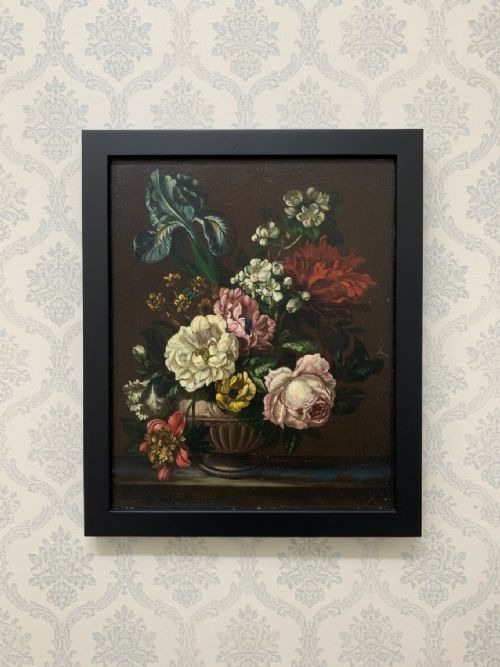
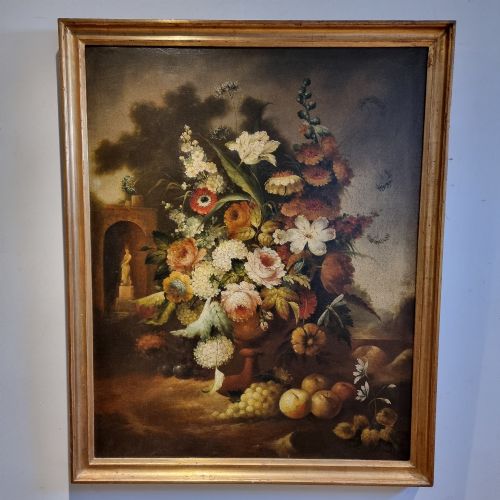
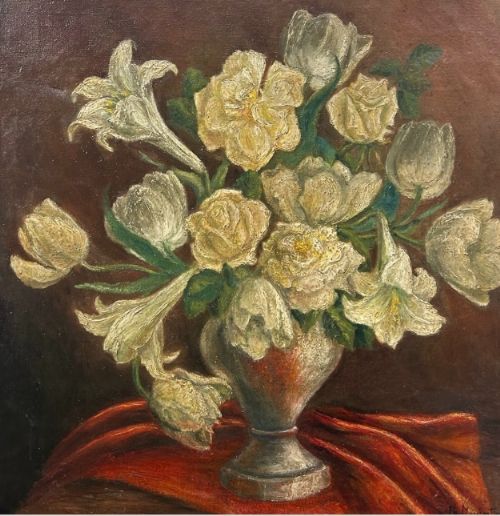
These brown floral oil painting works capture botanical subjects in muted earth tones, offering collectors moody atmospheres and rich historical depth for domestic display.
Brown Floral Oil Painting
A brown floral oil painting brings together botanical subjects and dark, earthy palettes across periods spanning the nineteenth and twentieth centuries. Buyers searching this phrase encounter traditional still life compositions alongside mid-century modernist interpretations and revival pieces.
The selection on this page ranges from Dutch school panel works dated around eighteen hundred to signed mid-century canvases and miniature floral studies. Alongside canvas and wood panel paintings, the listings include occasional walnut wall mirrors that share the same period aesthetic.
Traditional still life works focus on vases of spring flowers, potted plants, and arrangements featuring floral elements against dark backgrounds. Mid-century examples introduce abstracted, lightly cubist approaches to chestnut leaves and white lilies while retaining the characteristic earth-toned palette.
Materials and painting techniques
Artists utilise oil paint applied to prepared canvas or solid wood panels, building up rich pigment layers that achieve deep, sombre tones. Impasto techniques appear in continental works, where thick paint application creates a textured surface that catches the light differently than smooth glazes.
Support materials vary between stretched linen canvas and wooden panels, with some works housed in walnut frames or gilt wood surrounds. The interplay of oil pigment on these traditional supports ensures longevity and the characteristic patina valued by collectors of vintage fine art.
A pigeon occasionally shares the canvas with the flowers and fruit.
Distinguishing quality in period artwork
Quality rests upon the artist's handling of light, shadow, and botanical form within the restricted earth-toned palette. Masterful brushwork defines the depth of a floral arrangement and the convincing weight of terracotta pots or silver vases.
Condition of the painted surface, stability of the canvas or wood panel, and originality of the frame contribute significantly to a piece's standing. Signed works by documented painters carry greater weight among collectors compared to anonymous studio pieces.
Terence Loudon·Robin MacKertich·Owen Bowen·Katherine Bourne
The Brown Floral Oil Painting Glossary
- Canvas
- A heavy woven fabric stretched across a wooden frame to serve as a support for oil paintings. It provides a slightly textured surface that absorbs oil paint differently than rigid panels.
- Wood Panel
- A flat wooden board utilised as a rigid support for paintings, particularly common in earlier Dutch and traditional works. Panels offer a smooth, stable surface for fine brushwork.
- Impasto
- A technique where oil paint is laid thickly on the surface, standing out from it so that brush or palette-knife marks remain visible. This method adds tangible texture and dimensionality to floral petals and leaves.
- Still Life
- A work of art depicting mostly inanimate subject matter, typically commonplace objects such as flowers, fruit, and pottery. In these listings, floral arrangements dominate the genre.
- Dutch Golden Age
- A period in Dutch painting known for mastery of light, dark backgrounds, and meticulous botanical detail. Revival pieces often emulate these distinct dark, atmospheric qualities.
Brown Floral Oil Painting: Frequently Asked Questions
How do I care for an oil painting?
Keep oil paintings away from direct sunlight and fluctuating humidity levels to protect the canvas and paint layer. Dust gently with a soft, dry brush without applying pressure to the impasto surface.
Avoid using water or chemical cleaners on the paint or the wooden frame. Professional conservation is recommended for any major cleaning or restoration work.
What periods do these paintings represent?
The selection spans from nineteenth-century traditional works to mid-century modernist interpretations. You will also find twentieth-century revival pieces that echo earlier Dutch styles.
Dates range across the eighteen hundreds, nineteen-twenties, thirties, and fifties. Each period brings distinct approaches to framing, canvas preparation, and floral composition.
Are these paintings signed by the artist?
Several pieces in the listings feature signatures or attribution to known painters like Owen Bowen and Terence Loudon. Other works remain anonymous examples from specific historical schools.
Signed pieces often provide clearer provenance and dating clues. Unsigned works are judged purely on their artistic merit, material quality, and stylistic period.
How were these floral paintings displayed historically?
Floral still life paintings were traditionally hung in dining rooms, parlours, and drawing rooms as decorative statements. They brought botanical life indoors while complementing dark wood furniture and panelled walls.
Many were housed in heavy walnut or gilt frames designed to isolate the dark canvas from the wall. Today, they serve a similar role in warming modern or traditional interiors.