


Painted Farmhouse Work Table
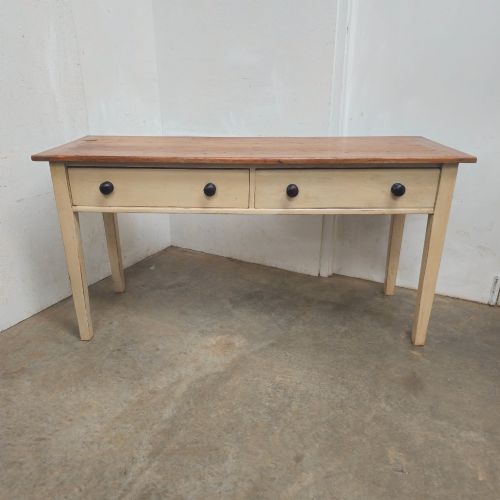
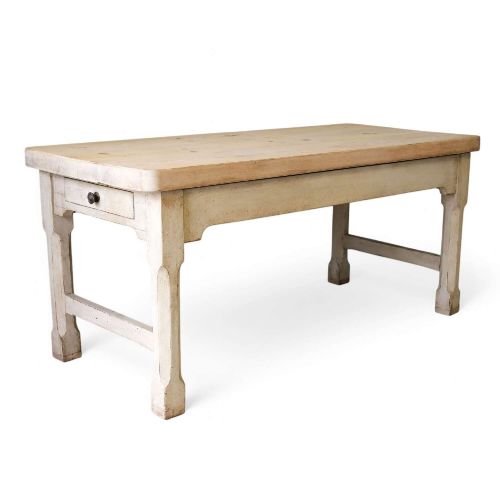
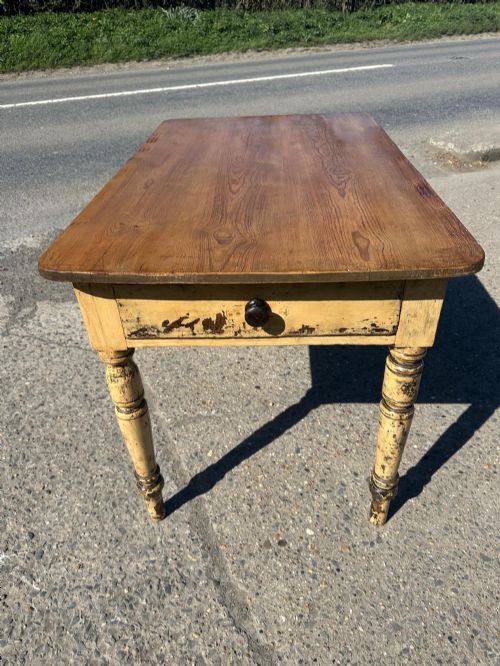
A painted farmhouse work table brings honest utility and heritage character to a room, offering robust surfaces shaped by generations of domestic use.
Painted Farmhouse Work Table
When searching for a painted farmhouse work table, a buyer encounters utilitarian surfaces designed for preparation, dining, and daily domestic labour in country houses, dairies, and taverns. The pieces meeting this search phrase span the nineteenth century, including specific dates such as seventeen ninety, eighteen fifty, eighteen eighty, eighteen ninety, and nineteen ten.
Origins represented in the evidence stretch across England, Wales, and Sweden, reflecting diverse regional domestic traditions. These pieces range from simple two-plank tops with cleated ends to trestle designs and tables incorporating drawers.
How they were made
Construction relies primarily on pine and softwood timbers, frequently joined to form sturdy tops and frames intended for heavy daily service. Iron and metal components, such as fixings or drawer hardware, reinforce the structural integrity of these utilitarian tables.
Surface finishes include original paint, later paint, distressed green paint, and traditional Swedish Falu paint. These protective and decorative layers were applied to softwood structures, evolving through decades of use in kitchens, dairies, and country houses.
Tables bearing Swedish Falu paint bring centuries of copper-mining byproduct straight into the kitchen, turning industrial waste into charming domestic colour.
What varies in quality
Quality in these utility tables is defined by the integrity of the original construction and the survival of early or untouched surface paint. Tables retaining their original painted finish or authentic regional characteristics command greater interest among collectors.
Structural complexity also distinguishes the pieces, from simple plank tops to sophisticated tavern frames, X-framed supports, or integrated drawers. The harmony between the softwood timber and the remaining pigment reveals the piece's working history.
The Painted Farmhouse Work Table Glossary
- Falu Paint
- A traditional Swedish paint derived from copper mine waste, recognised for its deep red matte finish. It provides exceptional preservation for softwood timber exposed to wear.
- Dairy Table
- A specialised work table utilised in agricultural settings for milk processing and cheese making. These surfaces often feature scrubbed pine tops designed for regular washing.
- Prep Table
- A heavy utilitarian table built for food preparation in large country kitchens or sculleries. They typically offer robust softwood construction and generous working surfaces.
- Tavern Table
- A sturdy drinking or dining table common in public houses and rural homes during the eighteenth and nineteenth centuries. They often feature robust frames and thick plank tops.
- Cleated Ends
- Wooden battens fixed across the ends of a tabletop to prevent the boards from warping. This traditional technique accommodates the natural expansion and contraction of softwood.
Painted Farmhouse Work Table: Frequently Asked Questions
How do I date a painted farmhouse work table?
Dating relies on construction methods, timber characteristics, and the type of paint applied to the softwood frame. Examining nail types, joint details, and historical wear patterns helps place the piece within the nineteenth century or earlier periods.
Regional styles also provide clues, as English, Welsh, and Scandinavian workshops employed distinct structural habits that shifted between seventeen ninety and nineteen ten.
Were these tables used only in kitchens?
While frequently called kitchen or prep tables, these pieces served multiple roles across domestic and commercial spaces. Evidence shows them utilised in dairies, taverns, and country house utility rooms for various forms of manual work.
Their robust construction made them suitable for any environment requiring a stable, hard-wearing wooden surface.
Is original paint important on these tables?
Original paint significantly impacts the character and historical integrity of a farmhouse work table. Surviving early pigments, whether traditional Falu paint or distressed green, record the working life of the object.
Some pieces feature later paint applied during subsequent decades of use, which represents another layer of their domestic history.
How do I care for a painted softwood surface?
Softwood surfaces benefit from gentle cleaning with a dry or lightly dampened cloth to preserve vulnerable paint layers. Avoiding harsh modern chemicals ensures the historic finish remains stable over time.
Maintaining stable room humidity prevents the pine timber from excessive movement, protecting both the joints and the painted exterior.