





Painted Enamel Jewellery
Painted enamel jewellery captures miniature portraits and floral scenes fused in glass on gold, silver, and copper across centuries.
Painted Enamel Jewellery
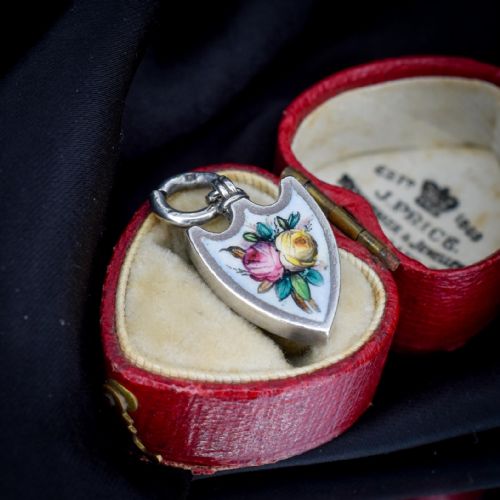
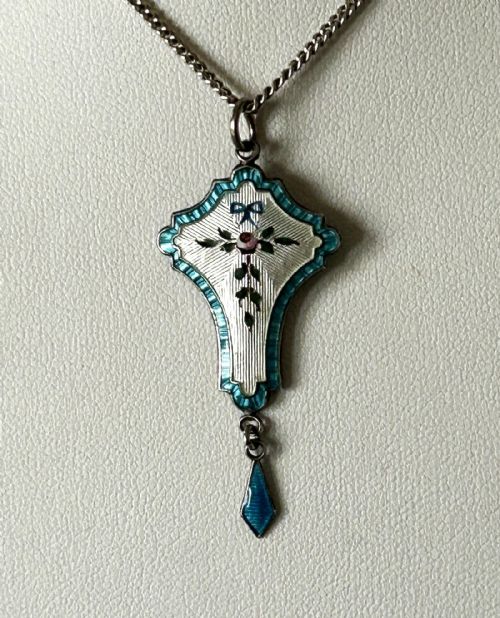
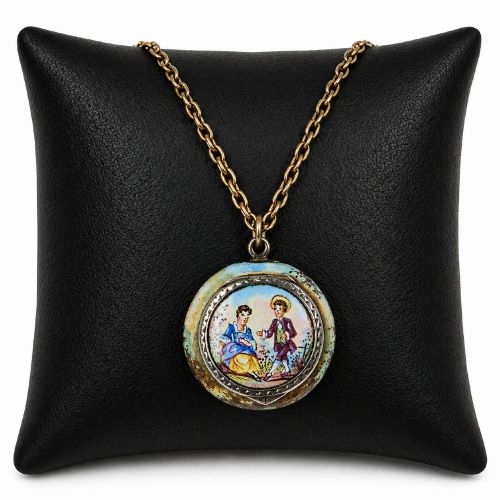
Painted enamel jewellery encompasses intricate portrait miniatures, pendants, brooches, and small boxes created across the eighteenth, nineteenth, and early twentieth centuries. These pieces display hand-painted imagery upon fused glass surfaces, frequently mounted in silver, gold, or base metal settings.
The selection ranges from Georgian sentimental love tokens and eighteenth-century portrait miniatures to Victorian lockets, Edwardian pendants, and Art Deco panel bracelets. Pieces originating from French and Viennese workshops appear regularly alongside English and Scandinavian examples.
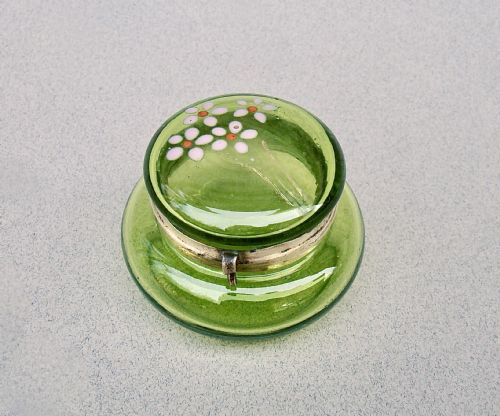
Buyers encounter wearable miniatures such as rings and brooches alongside larger vanity items including jewellery caskets and trinket boxes. The common thread uniting these objects is the application of enamel painting on metal, glass, or porcelain foundations.
How they were made
Craftsmen applied vitreous enamel powders to metal bases of gold, silver, or copper, firing the pieces in kilns to achieve a glossy, durable surface. Artisans painted detailed portraits and botanical motifs directly onto the hardened enamel using metallic oxide pigments before a final firing fixed the colours.
Mountings utilised cast or wrought gold and silver, frequently incorporating decorative elements like pearls or gilt detailing. Glass and porcelain substrates also served as canvases for miniature paintings, secured within protective metal frames or fitted box structures.
Listings feature items spanning the eighteenth, nineteenth, and twentieth centuries, incorporating gold, silver, copper, glass, and porcelain.
What varies in quality
The precision of the miniature painting dictates much of the value, separating hurried souvenir pieces from works attributed to skilled artists. Finer portraits display delicate facial shading, accurate anatomy, and meticulous brushwork.
The choice of metal mounting influences the standing of a piece, with heavy eighteen-carat gold and substantial silver settings indicating higher original cost than base metal alternatives. Intact enamel free from chipping or extensive restoration preserves the integrity of the design.
Henry Bone ARA·Christian Friedrich Zincke
The Painted Enamel Jewellery Glossary
- Vitreous enamel
- Glass powder fused to a metal substrate through high-temperature firing. This technique creates a smooth, waterproof coloured coating that resists fading over centuries.
- Portrait miniature
- A small, highly detailed painting depicting a specific person. These works were frequently worn as pendants or set into rings and brooches as personal tokens.
- Locket
- A hinged pendant designed to open and conceal a lock of hair or a tiny portrait. Victorian examples in gold and enamel were popular for sentimental reasons.
- Trinket box
- A small container with a hinged lid, often fashioned from enamelled glass, porcelain, or metal. They were utilised on dressing tables to store small pins and rings.
- Love token
- A sentimental gift exchanged between romantic partners, often bearing symbols or painted motifs denoting affection. Georgian and Victorian iterations frequently incorporate hairwork or miniature portraits.
Painted Enamel Jewellery: Frequently Asked Questions
How do I clean antique enamel jewellery?
Clean painted enamel surfaces gently with a soft, dry cloth to remove surface dust. Avoid liquid immersion, ultrasonic cleaners, and harsh chemical dips, as moisture can infiltrate old settings and damage the enamel or underlying metal.
Store pieces individually in padded boxes to prevent scratching from neighbouring items. Handle pendants and brooches by their mountings rather than applying pressure directly to the enamelled panels.
Were portrait miniatures painted from life?
Many portrait miniatures recorded the likeness of sitters during life, serving as portable remembrances before the invention of photography. Wealthy patrons commissioned artists to paint detailed likenesses for family members or prospective spouses.
Some later or generic pieces depicted idealised subjects or historical figures rather than specific sitters. Artists sometimes copied successful oil paintings down to miniature scale for a wider market.
How can I tell the period of a piece?
Examine the style of the mounting, the clothing and hair of any portrayed figures, and the construction methods visible on the reverse. Georgian pieces often feature closed-back settings and sentimental motifs, while Victorian items frequently incorporate heavier gold work and distinct hallmarks.
Art Nouveau and Art Deco examples display the characteristic linear motifs, geometric patterns, or stylized natural forms of their respective decades. Comparing the clasp or pin mechanism provides additional clues regarding the date of manufacture.
Can I wear painted enamel jewellery daily?
Enamel is essentially glass and remains vulnerable to sharp impacts, heavy knocks, and sudden temperature changes. Rings and bracelets endure greater physical stress during daily wear, increasing the risk of chipping or cracking the delicate painted surface.
Pendants and brooches generally experience less direct impact, making them safer for regular wear with careful handling. Removing jewellery before sleeping, swimming, or engaging in manual tasks preserves the fragile painted details.