




Painted Earthenware Platter
A painted earthenware platter brings domestic display and hand-painted artistry into focus, spanning Dutch delftware, Victorian commemorative wares, and Art Deco design.
Painted Earthenware Platter
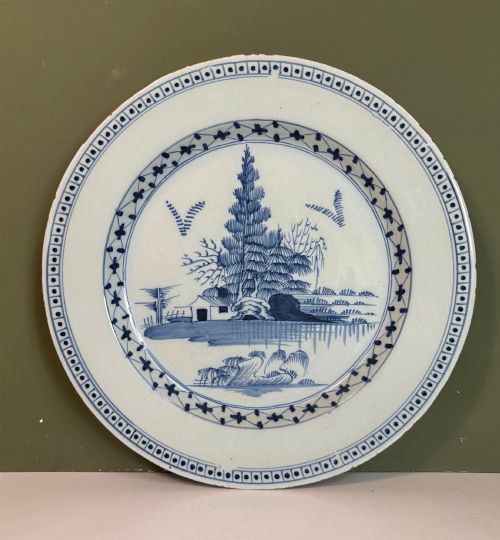
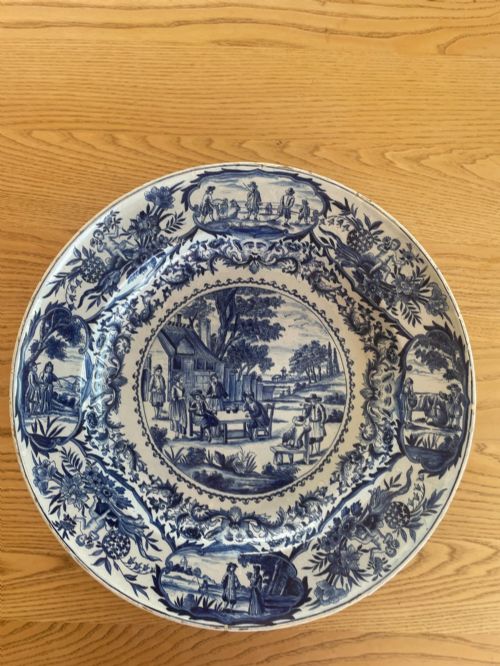
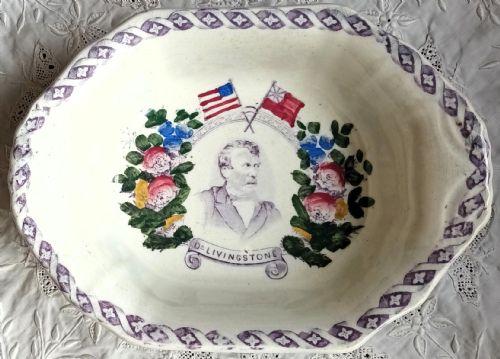
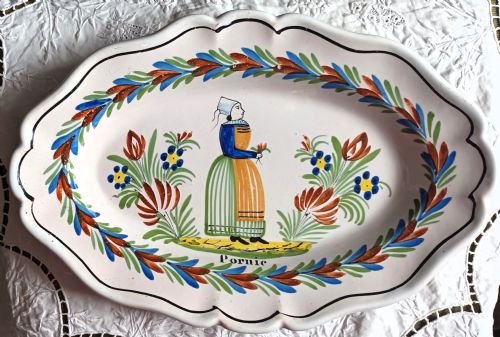
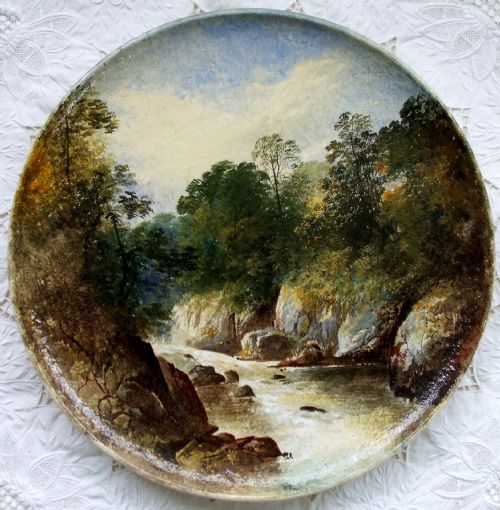
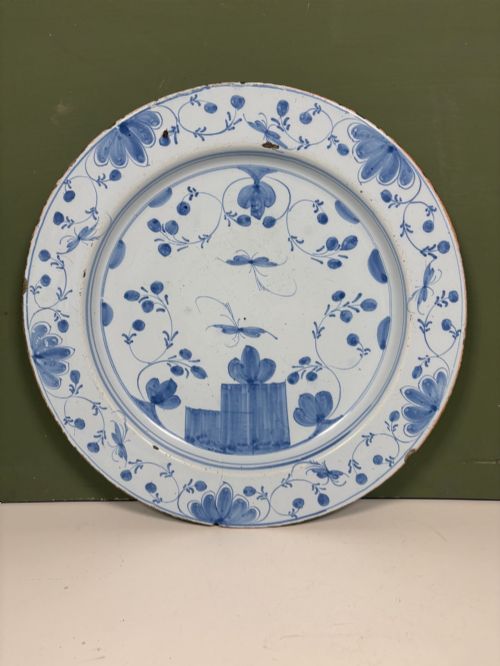
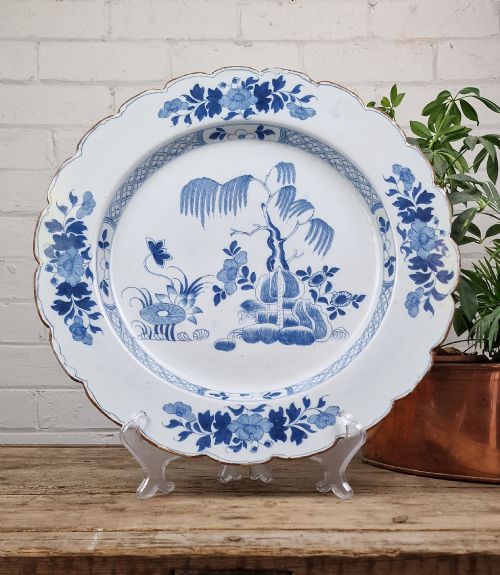
When you search for a painted earthenware platter, you encounter large chargers, decorative plates, and wall plaques designed primarily for visual impact rather than dining service. These pieces span centuries of ceramic tradition, from English, Dutch, and Bristol delftware of the eighteenth century to nineteenth-century Scottish commemorative dishes, French faience, and Italian maiolica.
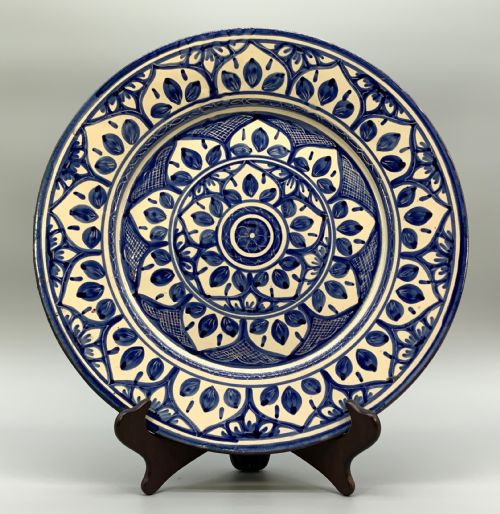
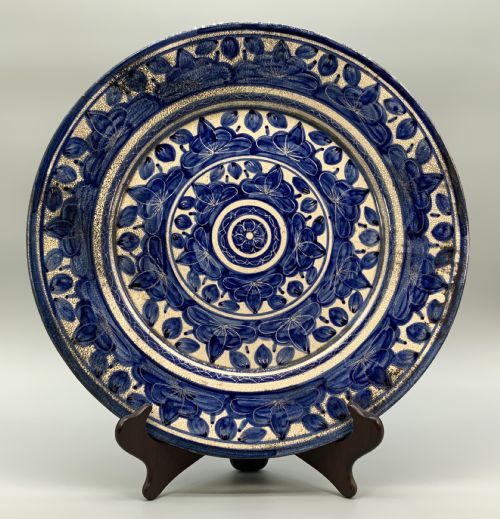
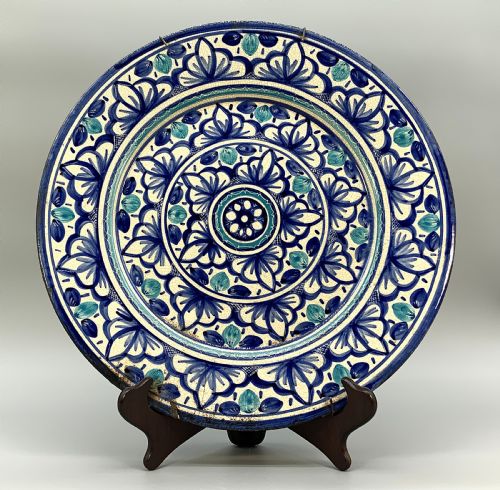
The versions met most frequently on this page are substantial eighteenth-century delft chargers alongside nineteenth-century pictorial and commemorative pottery. Continental examples introduce Moorish styles, while later twentieth-century pieces present tubelined Art Deco designs by makers such as Charlotte Rhead. Forms range from shallow dishes to massive forty-centimetre chargers intended for display on walls or dresser plate-racks.
How They Were Made
Makers shaped porous earthenware bodies before applying opaque tin glaze or tin-glaze coatings to create a smooth white canvas for brushwork. Cobalt oxide and cobalt pigments delivered deep blue tones, while polychrome palettes incorporated manganese and multi-coloured mineral pigments fired directly into the glaze.
Certain twentieth-century pieces introduced raised clay lines known as tubelining to contain fluid glazes within geometric or organic patterns. Firing techniques ranged from traditional grand feu kilns to specialised earthenware firings that set the hand-painted pigments permanently beneath or within the glassy surface.
Listings feature earthenware bodies decorated with tin glaze, cobalt oxide, and manganese across Georgian, Victorian, and Art Deco periods.
What Varies in Quality
The artistic ambition of the painted subject separates standard vessels from exceptional works. Master painters achieved fluid, confident brushwork in historical scenes, portraits, or intricate botanical patterns, whereas lesser examples display rigid or repetitive motifs executed with haste.
Control during the firing process governs the integrity of the glaze and the crispness of the painted pigments. Superior pieces maintain a bright, even tin glaze free from excessive clouding or discoloration, allowing the cobalt and polychrome details to remain sharp and legible.
Royal Bonn·Copeland Pottery·Charlotte Rhead·Crown Ducal·Bursley Ware·Minton
The Painted Earthenware Platter Glossary
- Delftware
- Tin-glazed earthenware produced in the Netherlands and England, typically featuring blue and white painting influenced by imported Chinese porcelain. This tradition dominates eighteenth-century charger production.
- Maiolica
- Tin-glazed Italian earthenware decorated with metallic oxide pigments on an opaque white background. It frequently depicts classical historical scenes or narrative subjects.
- Faience
- European tin-glazed pottery produced in France and other continental centres. It encompasses regional styles such as Quimper and Desvres wares.
- Charger
- A large decorative plate or platter intended for wall hanging or display on a sideboard rather than practical table service. Eighteenth-century examples often exceed thirty centimetres in diameter.
- Tubelining
- A decorative ceramic technique where liquid clay is piped onto the unglazed body to form raised outlines that partition different coloured glazes.
Painted Earthenware Platter: Frequently Asked Questions
What is a painted earthenware platter used for?
These large plates and chargers were historically produced for decorative display rather than daily dining. Owners placed them on sideboards, dressers, or hung them on walls to showcase the painted artistry.
Over the centuries, specific pieces also served commemorative functions, marking notable figures, events, or scenic views with detailed pictorial designs.
How do you date an antique delft charger?
Dating relies on examining the characteristics of the earthenware body, the tint and thickness of the tin glaze, and the style of the hand-painted brushwork. Eighteenth-century examples typically exhibit thinner throwing lines and softer glaze tones.
Later nineteenth-century and twentieth-century revivals often incorporate maker stamps, registration numbers, or distinct regional manufacturing marks on the reverse.
How should I clean my antique platter?
Porous earthenware and fragile tin glazes require gentle handling to preserve the historic surface. Dusting with a dry, soft cloth is normally sufficient for routine maintenance.
Water and harsh cleaning agents must be avoided, as moisture can penetrate old earthenware bodies and destabilise historical glaze layers.
What is the difference between delftware and maiolica?
Delftware refers specifically to tin-glazed earthenware originating in England and the Netherlands, famous for cobalt blue painting. Maiolica represents the corresponding Italian tin-glazed tradition, which frequently utilised rich polychrome palettes for narrative historical scenes.
Both employ a tin-oxide glaze over a clay body, but their regional aesthetics, painting styles, and kiln techniques reflect distinct European ceramic traditions.