

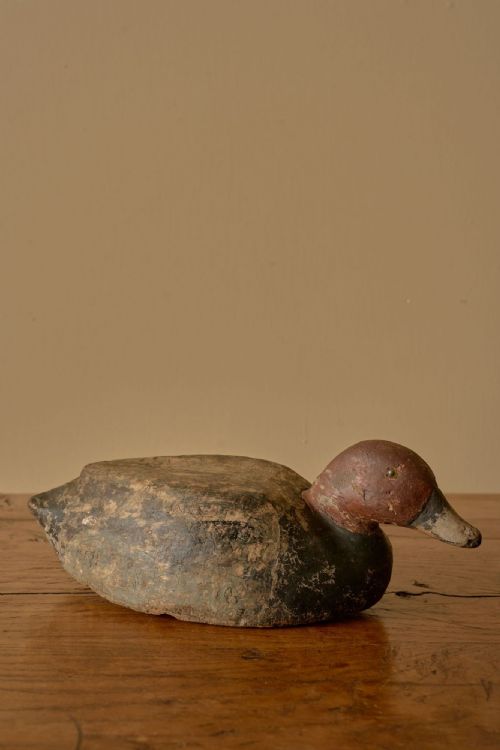
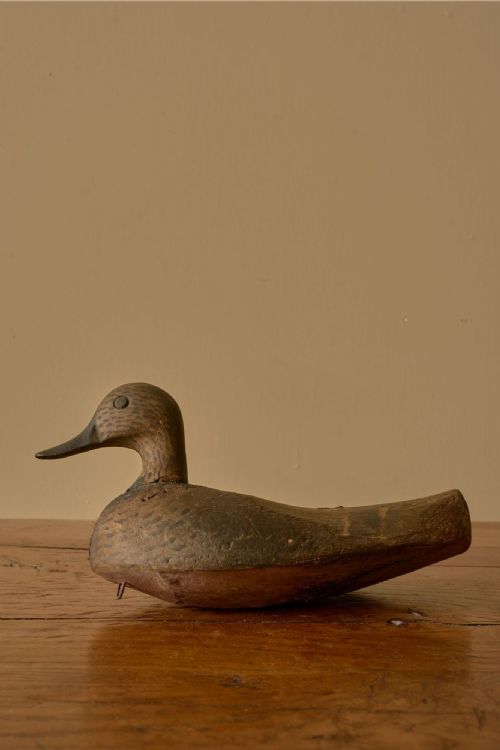
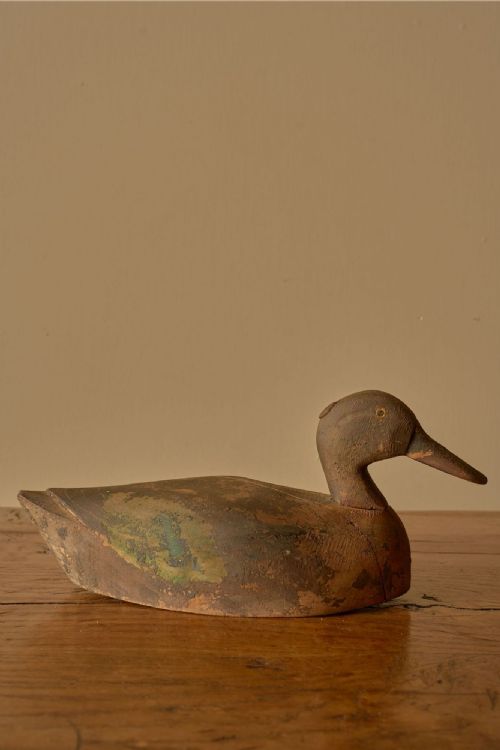
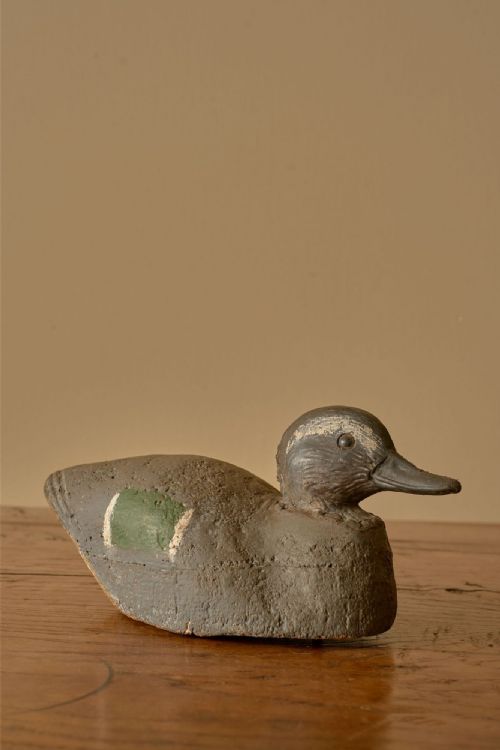
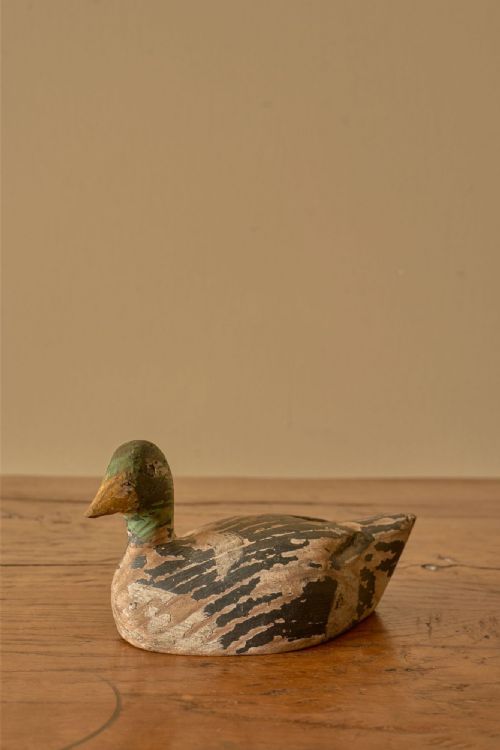
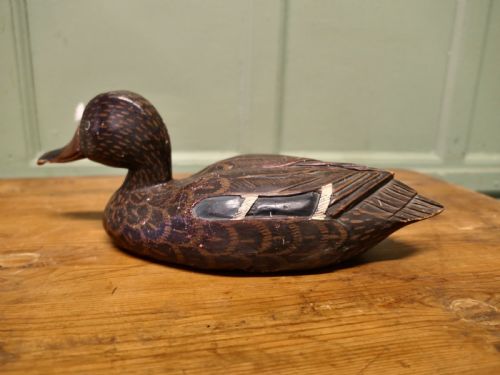
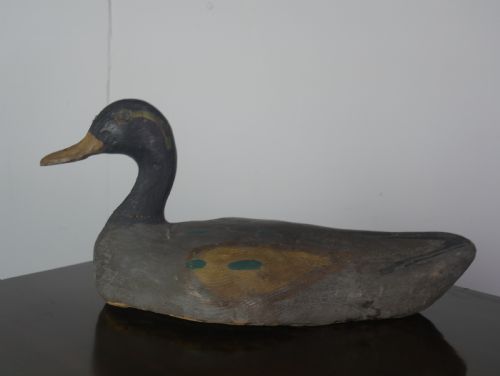


Painted Duck Decoy
A painted duck decoy is a carved wooden working bird that brings raw rustic character and traditional craftsmanship into a modern interior.
Painted Duck Decoy
A painted duck decoy is a carved wooden bird originally used by hunters, now collected purely for its decorative folk art appeal. When you search for a painted duck decoy, you encounter pieces shaped from timber and finished with distinct layers of brushwork.
The selections available span from the nineteenth century through the Edwardian era and into the early twentieth century, up to the nineteen-thirties. You will find single birds, pairs, and small sets, alongside specialised forms such as an American loon with her chick.
These items sit comfortably within English country folk art and decorative sculpture traditions. Each piece displays the honest wear of its working history, making them straightforward additions to shelf displays or mantelpieces.
How they were made
Makers fashioned each painted duck decoy from solid wood and timber, carving the body and head by hand before applying layers of paint to simulate plumage. Some examples include inset glass eyes to enhance the lifelike appearance, while others rely entirely on carved and painted detail.
Makers occasionally incorporated weights into the base to ensure the wooden body sat correctly on the water during use. The combination of hand carving and repeated coats of paint creates the textured, weathered surfaces seen across nineteenth-century and early twentieth-century examples.
Painted Duck Decoy Retail Price Guide 2026
Typical asking prices for painted duck decoy among the pieces listed under this phrase on Sellingantiques today, from the lower quarter to the upper quarter. They describe what is for sale here now, not the wider market.
What varies in quality
Quality in a painted duck decoy rests on the articulation of the carved wooden form and the character of the surviving paintwork. Stronger examples display confident knife or tool marks and layered pigments that have aged with pleasing patination.
The presence of original materials like glass eyes and weighted bases separates standard utility pieces from more expressive sculptural examples. The visual appeal depends on how well the carved silhouette and surface colour retain their distinct folk art identity.
The Painted Duck Decoy Glossary
- Decoy
- A carved and painted bird used to attract wildfowl. These working objects are now valued as decorative sculptures.
- Folk art
- Utilitarian items made by self-taught or traditional artisans. This style defines the unpretentious charm of these wooden birds.
- Edwardian
- The period spanning nineteen hundred to nineteen ten. Pieces from this era show traditional craftsmanship.
- Timber
- Wood prepared for building or carpentry. Makers selected these native woods for their reliable carving properties.
Painted Duck Decoy: Frequently Asked Questions
What is a painted duck decoy?
A painted duck decoy is a wooden bird carved by hand and finished with paint, originally utilised by wildfowlers on the water.
Today, collectors and interior decorators prize these items as examples of folk art sculpture for display in the home.
How do I date an old decoy?
Dating relies on observing the tool marks left by the carver, the composition of the timber, and the style of the paint surface.
Nineteenth-century examples often display simpler, heavier forms, whereas pieces from the nineteen-twenties and nineteen-thirties show different decorative finish techniques.
Where should I display my decoy?
These decorative objects suit placement on bookshelves, sideboards, or mantelpieces where their carved wooden texture can be appreciated up close.
Keep them away from direct heat sources to protect the aged timber and historic painted surfaces.
Why do some decoys have glass eyes?
Makers inserted glass eyes into specific working birds to create a more realistic appearance when luring wildfowl on the water.
Today, surviving glass eyes add a focal point that collectors look for when assessing individual pieces.