
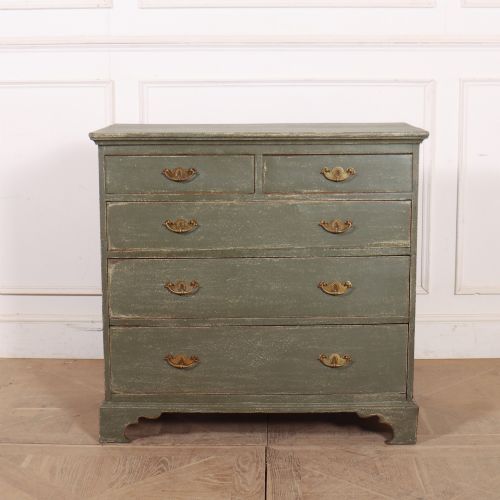
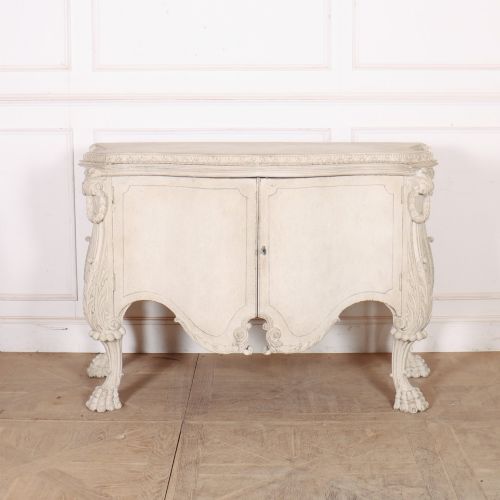
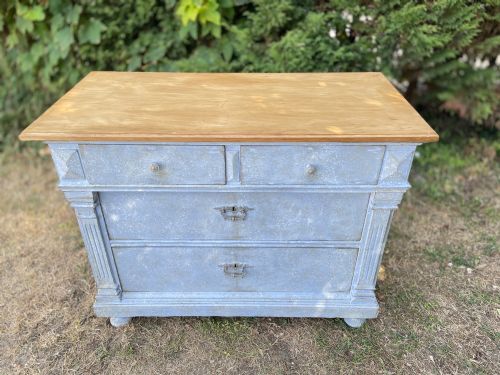
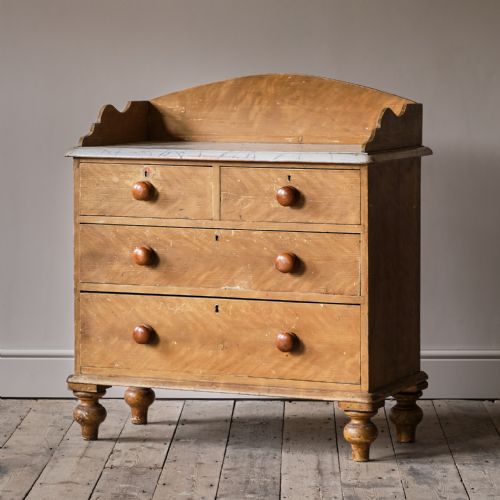
Painted Country Commode
A painted country commode brings robust vernacular charm and practical drawer storage to a room through weathered pigment and honest carpentry.
Painted Country Commode
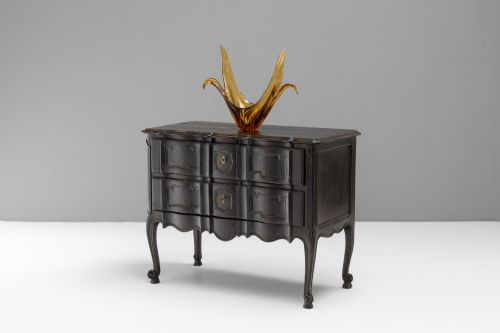
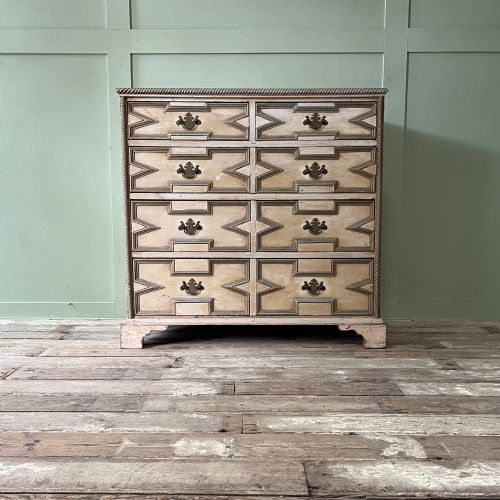
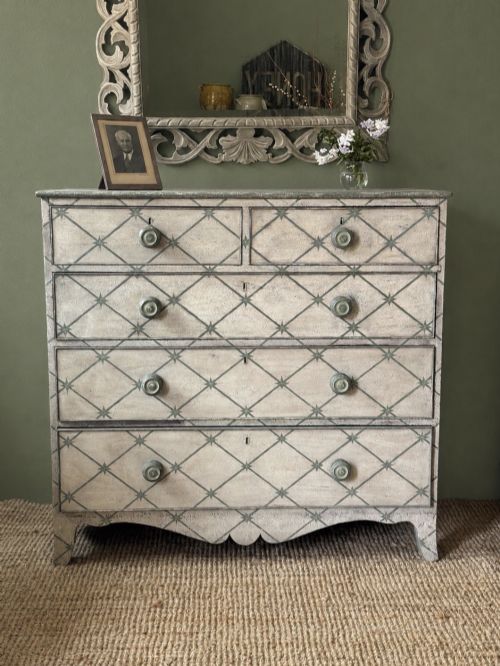
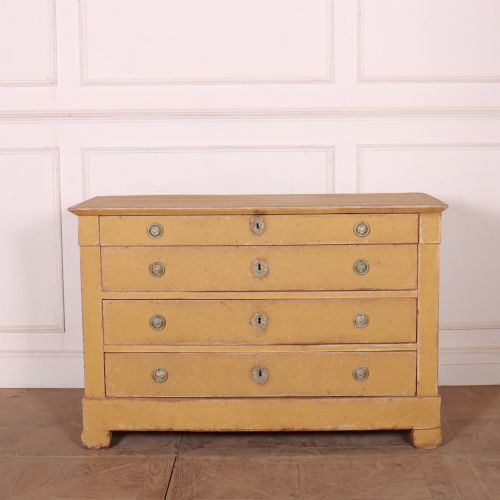
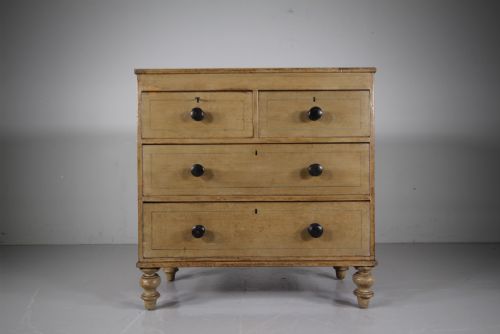
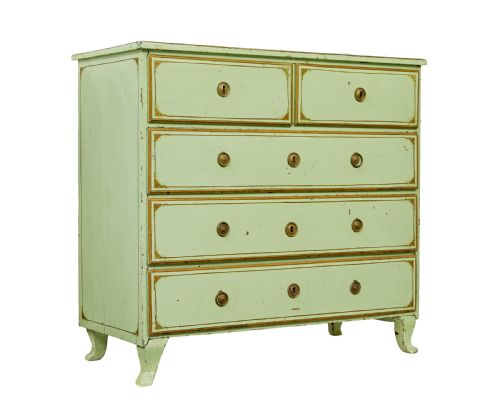
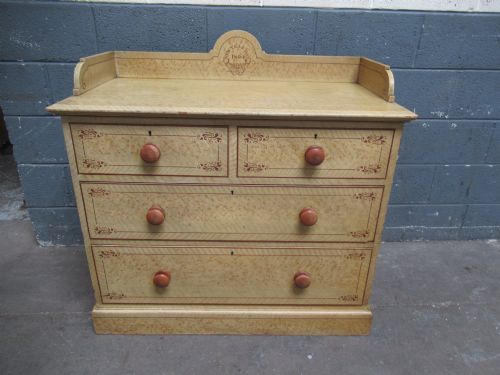
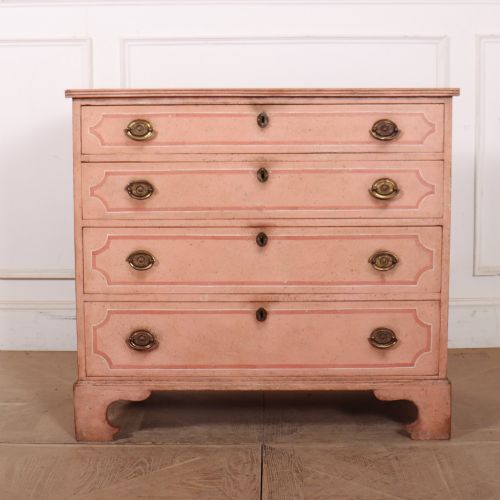
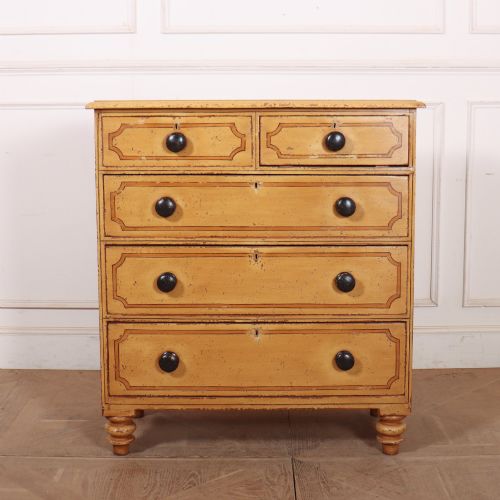
A painted country commode primarily manifests as a pine chest of drawers or storage cabinet originating from rural workshops across Britain, France, Sweden, and beyond. These domestic storage pieces range from compact bedside tables and miniature apprentice chests to large multi-drawer bedroom chests.
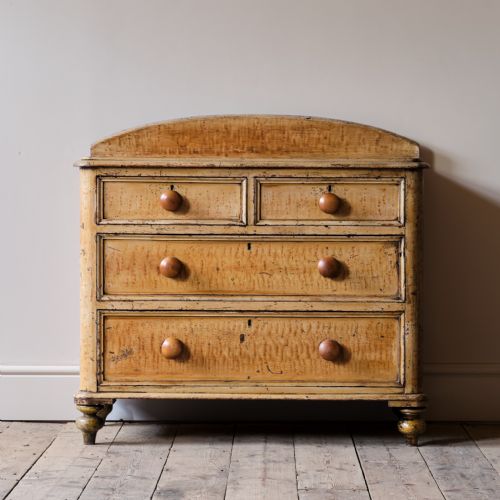
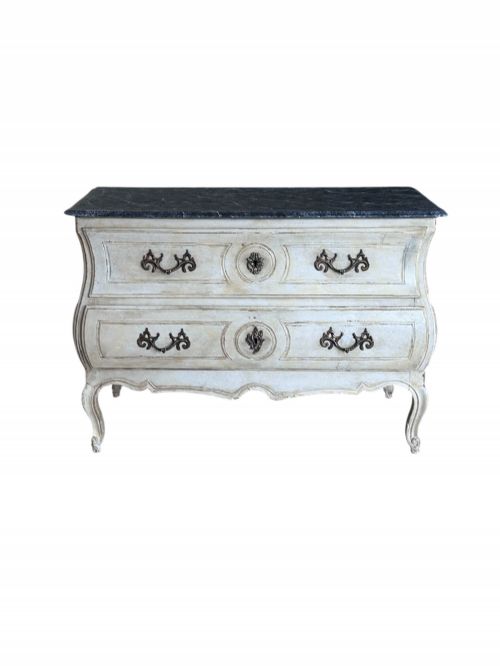
Buyers encounter examples spanning the eighteenth, nineteenth, and early twentieth centuries, bearing regional characteristics such as Swedish fluted drawer fronts, French provincial shaping, or British scumble glazes. The forms emphasise utility, typically featuring stacked drawer arrangements designed for daily household use.
Construction and surface methods
Carpenters constructed these storage pieces predominantly from solid pine and other utilitarian woods, employing traditional dovetail joints and sturdy framing to withstand decades of domestic wear. Iron and brass hardware such as drop handles and drawer pulls completed the structural assembly.
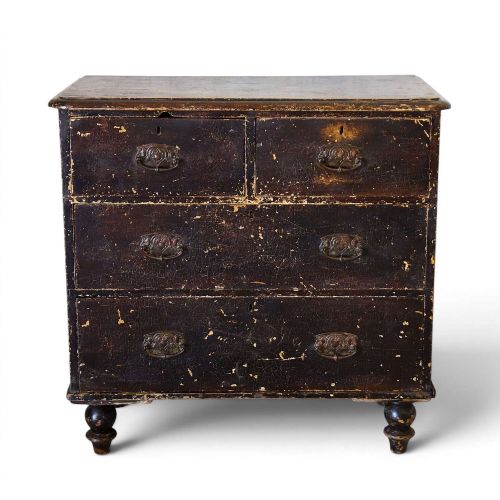
Surfaces received protective and decorative coatings including original paint, simulated wood graining, and scumble glazes applied in layers. Over generations, these pigment layers acquired natural patina through scrubbing and everyday contact.
One tiny apprentice chest was built small enough to travel as a salesman's portable sample.
Evaluating surface integrity and form
Quality rests heavily on the survival and originality of the surface coating, distinguishing pieces retaining their untouched historic paint from those stripped or heavily recoated later. The integrity of the underlying timber framework and the crispness of applied carved details also dictate value.
Proportion and regional character separate standard utility items from more sophisticated provincial expressions. Pieces displaying distinct local decorative traits, such as specific Scandinavian fluting or French commode shaping, command greater interest.
Sir Clough Williams-Ellis·Edwards and Roberts·Gemla Fabrikers
The Painted Country Commode Glossary
- Scumble
- A translucent or semi-opaque layer of dark paint dragged over a lighter base colour to simulate wood grain or create mottled texture. This technique was widely utilised by nineteenth-century decorators to elevate plain pine.
- Commode
- A low chest of drawers or cabinet originating from French furniture traditions. In country contexts, the term often describes decorative low drawer units with provincial flair.
- Original paint
- The initial historic decorative finish applied to the timber, unaltered by modern stripping or total repainting. Surviving original pigment layers preserve the authentic visual history of the piece.
- Dovetail
- A traditional interlocking wood joint formed by wedge-shaped tenons and mortises. Hand-cut dovetails on drawer construction indicate older craftsmanship prior to industrial mass production.
Painted Country Commode: Frequently Asked Questions
How do I care for original painted surfaces?
Original painted surfaces require gentle treatment using a soft, dry cloth for routine dusting. Avoid harsh chemical cleaners, modern solvents, or excessive moisture that can lift or dissolve historic pigment.
Keep the furniture away from direct sunlight and strong heat sources to prevent the underlying timber from shrinking and the paint layers from cracking.
How can I tell different regional styles apart?
Regional styles reveal themselves through distinct decorative motifs, proportions, and colour palettes. Swedish examples often display pale Gustavian greys and fluted details, whereas French pieces showcase provincial curves.
British and Scottish items generally rely on darker scumble glazes, simulated wood grains, or straightforward painted pine construction suited to local domestic architecture.
Where were these chests used historically?
These chests functioned primarily as essential bedroom furniture for storing linens, clothing, and personal items. Their sturdy construction also suited farmhouses, cottages, and provincial town dwellings.
Smaller variations served in hallways, nurseries, or dressing rooms as washstands and compact bedside storage units.