

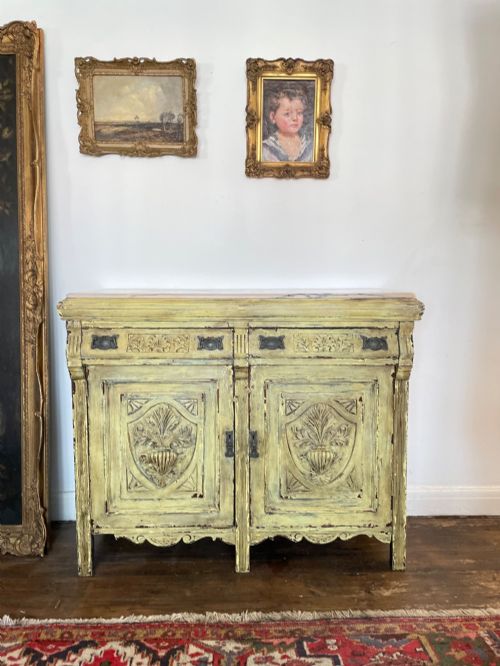
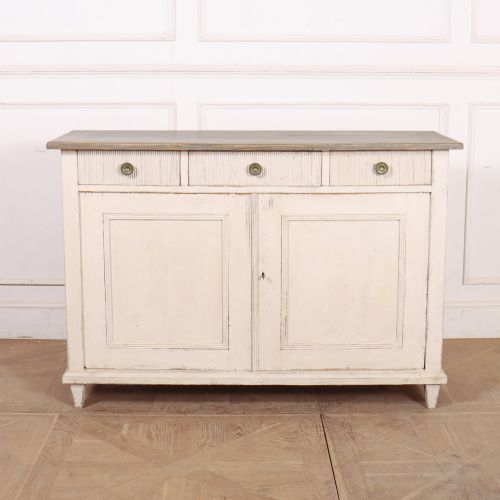
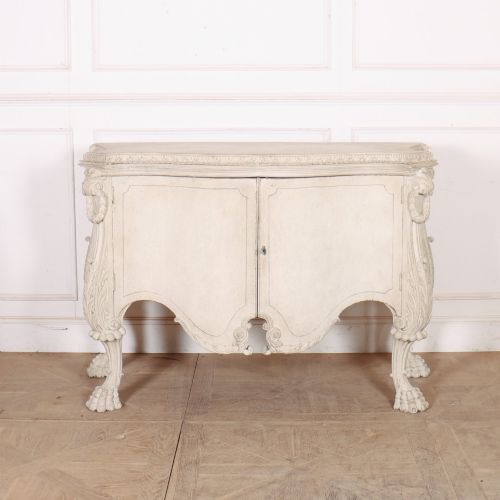
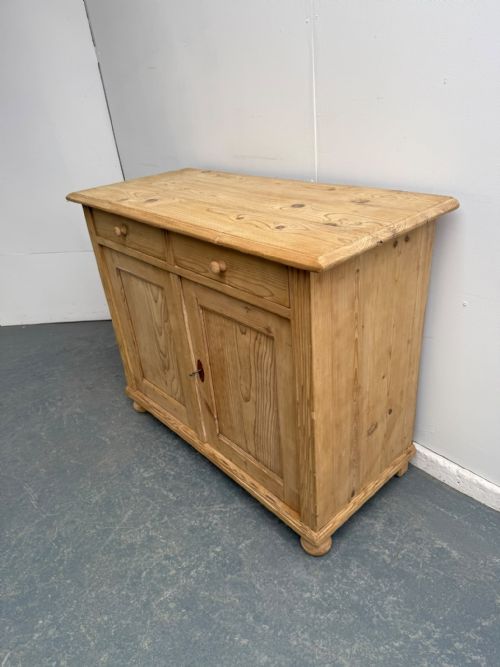


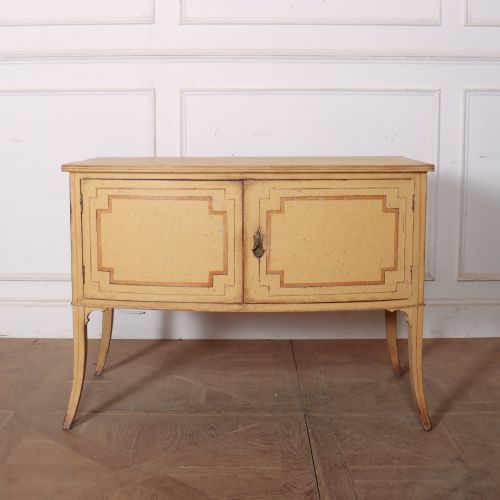
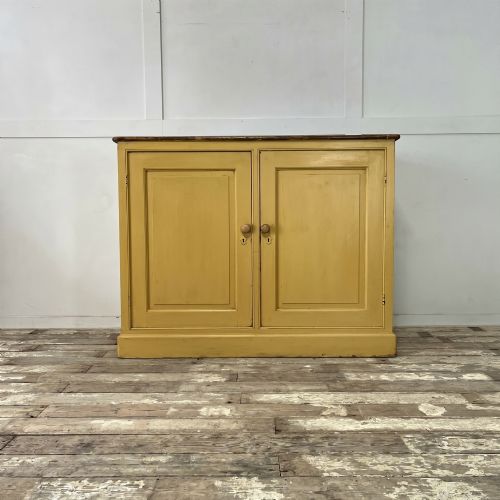
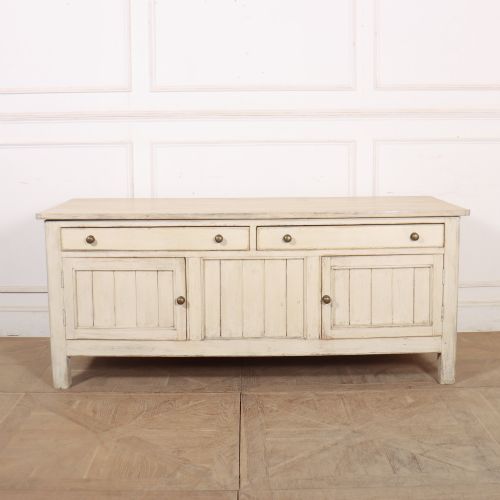
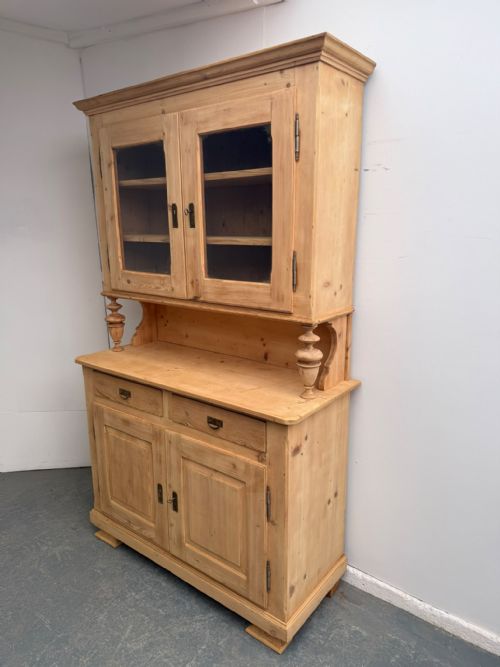

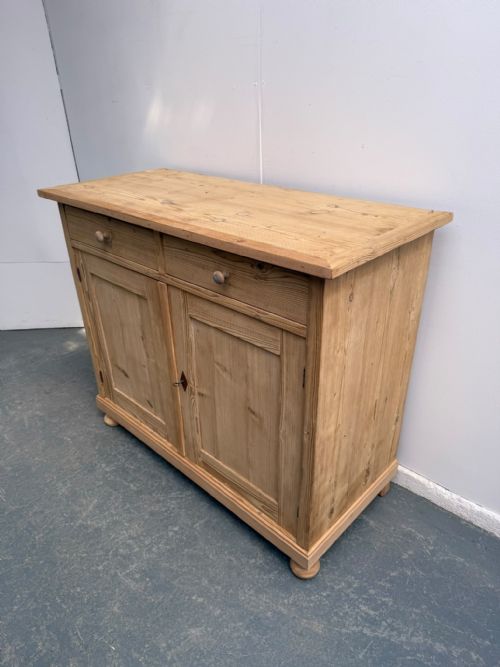
Painted Country Buffet
A painted country buffet brings practical utility and honest surface history into a room, offering robust storage finished in pigment.

Painted Country Buffet
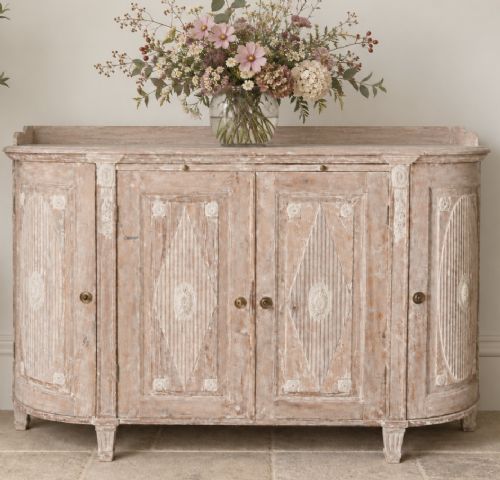
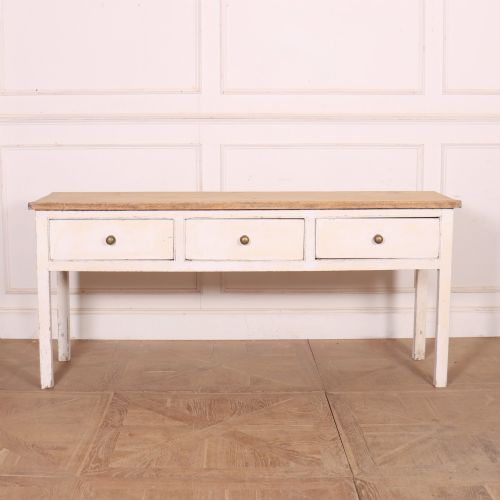
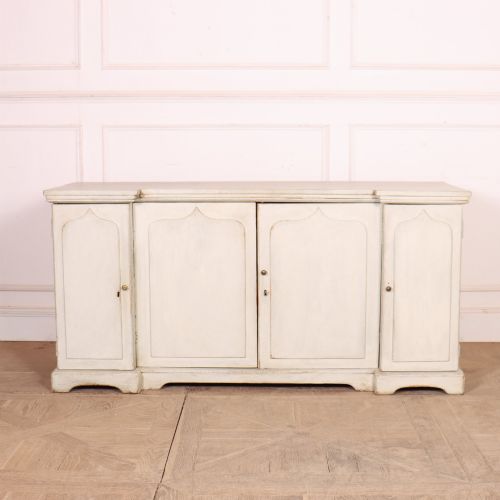
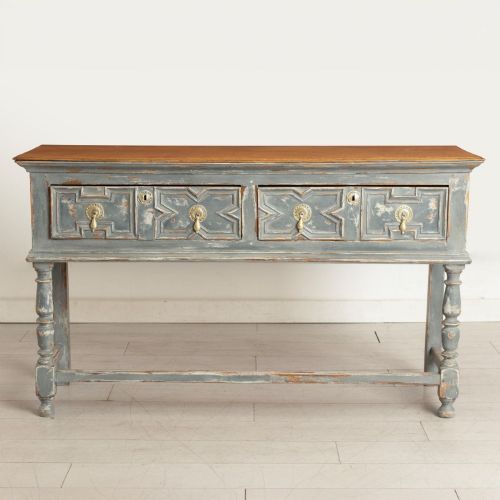
A painted country buffet provides substantial storage through combinations of cupboards, drawers and open surfaces. These pieces emerge from domestic and agricultural settings across regions including England, France, Sweden and Italy.
The inventory on this page spans the eighteenth, nineteenth and early twentieth centuries, capturing domestic workhorses like kitchen dressers, sideboards, cupboard bases and tall linen stores. Construction prioritises utility, resulting in functional proportions designed for heavy daily use in farmhouses and provincial homes.
Regional styles range from clean-lined Scandinavian and Gustavian work to hearty English country house pieces and French provincial cabinets. Many examples retain surface pigment that documents decades of working life.
Materials and construction
Makers relied primarily on native timbers, predominantly pine and oak, complemented by secondary woods for interior framing and drawer linings. Iron hinges, brass pulls and glass panels appear as functional hardware rather than ornamental excess.
Surfaces received layers of lead or oil paint, sometimes scraped back to reveal earlier coats, or left bare to take wax finishing. Joinery methods relied on sturdy pegged mortise and tenon frames built to withstand generations of domestic service.
Painted Country Buffet Retail Price Guide 2026
Typical asking prices for painted country buffet among the pieces listed under this phrase on Sellingantiques today, from the lower quarter to the upper quarter. They describe what is for sale here now, not the wider market.
Listings feature pieces spanning the eighteenth century through to nineteen ten, constructed primarily from pine and oak with painted finishes.
Surface and proportion
Quality rests upon the integrity of the original painted surface and the honesty of the timber frame. Unmodified proportions and undisturbed patination distinguish the finest survivals from heavily altered examples.
The handling of pigment, whether a rich scraped finish or untouched layered paint, dictates visual character. Superior pieces balance functional scale with balanced hardware and sound structural timber.
The Painted Country Buffet Glossary
- Dresser base
- The lower section of a kitchen dresser, featuring cupboards and drawers beneath a solid working top without upper shelving.
- Potboard
- An open lower shelf built into a dresser base, traditionally used for storing heavy pots and pans.
- Buffet
- A sideboard or low storage cabinet designed for serving food and storing dining ware in domestic dining rooms.
- Scraped paint
- A conservation technique or historical state where upper layers of paint are partially removed to expose underlying historic colours.
- Bread slide
- A pull-out wooden board integrated into cabinet framing, originally used for cooling or preparing dough.
Painted Country Buffet: Frequently Asked Questions
What is a painted country buffet?
A painted country buffet is a utilitarian storage cabinet originating from provincial domestic settings, finished in historic paint or pigment.
These pieces typically combine cupboards and drawers within robust wooden frames designed for daily household use.
Where were these buffets made?
They originate from rural workshops across Britain and continental Europe, including France, Sweden and Italy.
Local timber availability and regional design traditions shaped the distinct forms found within each area.
How do I care for original paint?
Original painted surfaces require gentle dusting with a dry cloth and protection from direct sunlight and moisture.
Avoid chemical cleaners or aggressive polishing that might strip historical layers of pigment.
How do I distinguish regional styles?
Regional styles reveal themselves through construction details, timber selection, and characteristic paint palettes.
Scandinavian pieces often feature pale tones and clean lines, while English and French examples display heavier mouldings and distinct panel configurations.