

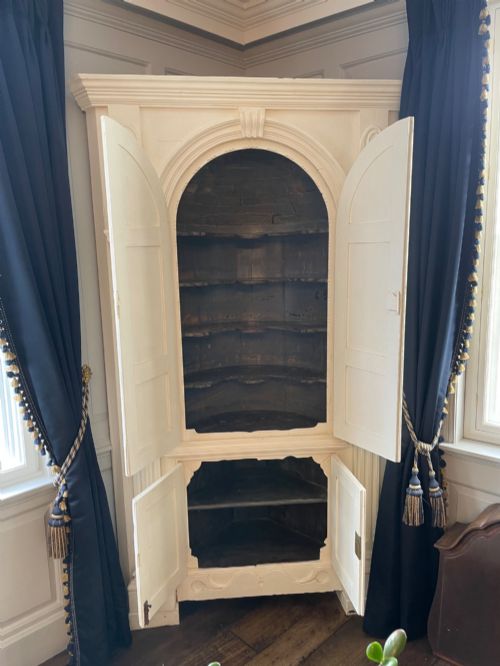
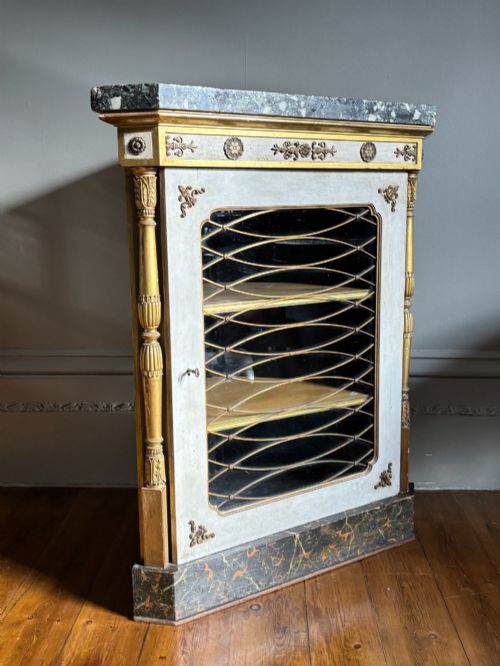
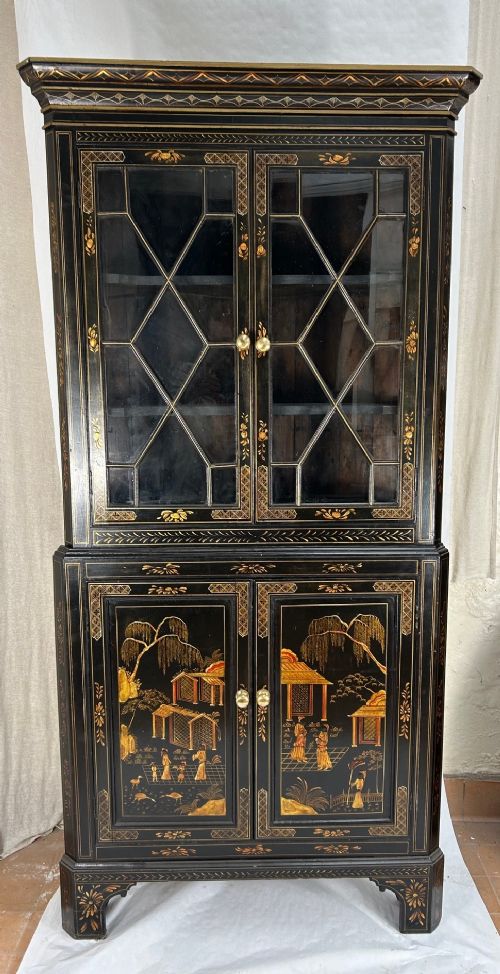
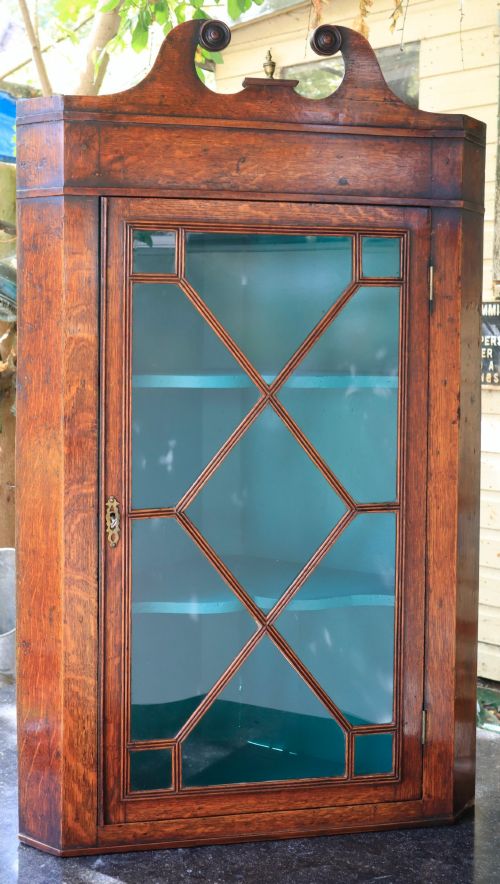




Painted Corner Display Cupboard
These painted corner display cupboard examples make clever use of awkward spaces while framing your best porcelain and glass behind glazed or open doors.
Painted Corner Display Cupboard
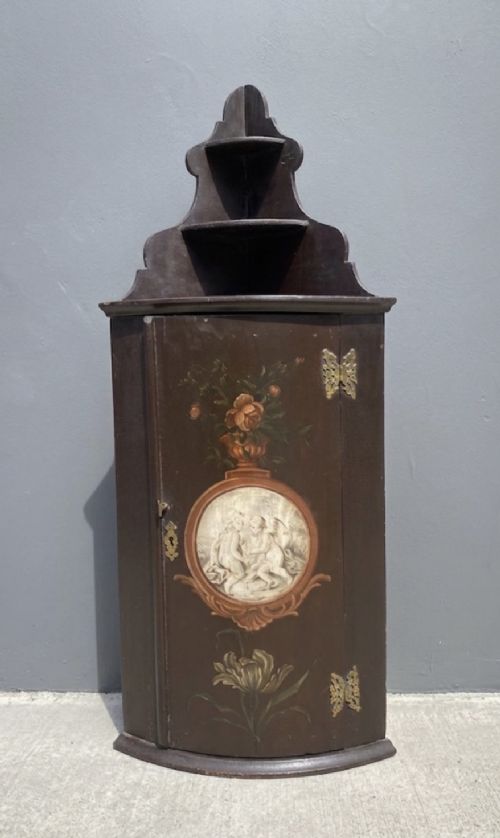
A painted corner display cupboard utilises dead angles in a room, turning unused junctions into focal points for storage and display. You will encounter architectural Georgian two-part cabinets, slender Edwardian lacquered examples, and rustic Scandinavian folk art pieces.
These items range from compact hanging models to tall standing cupboards fitted with interior shelving. The form typically pairs a glazed or open upper section with a panelled lower cupboard, designed to fit snugly into a ninety-degree corner.
How they were made
Carpenters constructed these cupboards primarily from pine and mahogany, applying decorative painted finishes, lacquer, or gilding directly to the wood. Interiors often retained original painted surfaces, while brass hardware secured doors and glass protected the display shelves.
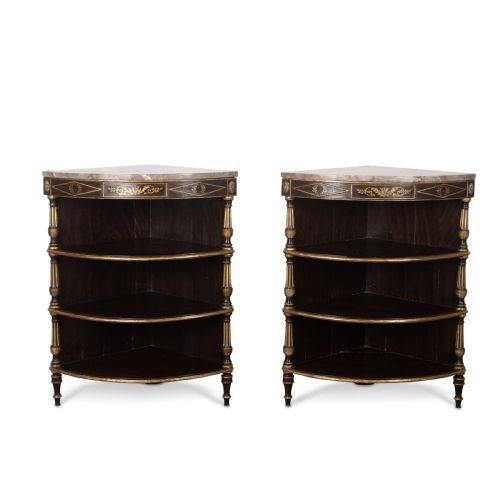
Some refined Regency and Victorian iterations incorporate marble tops and elaborate Chinoiserie motifs. Construction methods varied from provincial vernacular joinery to sophisticated cabinet-making with distinct period detailing.
Painted Corner Display Cupboard Retail Price Guide 2026
Typical asking prices for painted corner display cupboard among the pieces listed under this phrase on Sellingantiques today, from the lower quarter to the upper quarter. They describe what is for sale here now, not the wider market.
The listings on this site span pine, mahogany, and satinwood, decorated with paint, lacquer, and marble.
What varies in quality
The integrity of the painted surface dictates much of the visual character, with untouched original decoration holding greater aesthetic interest than later overpainting. Subtle hand-applied brushwork and period-appropriate pigments distinguish finer workshops from simpler provincial output.
Proportion and timber selection also separate standard pieces from exceptional examples. Cabinetmakers who paid careful attention to the alignment of panel doors and the delicacy of interior shelving created structurally balanced forms that endure.
The Painted Corner Display Cupboard Glossary
- Chinoiserie
- European decorative style inspired by Chinese artistic traditions, featuring painted motifs of figures, landscapes, and pagodas. This technique appears on several lacquered and decorated cabinets from the Edwardian period.
- Vitrine
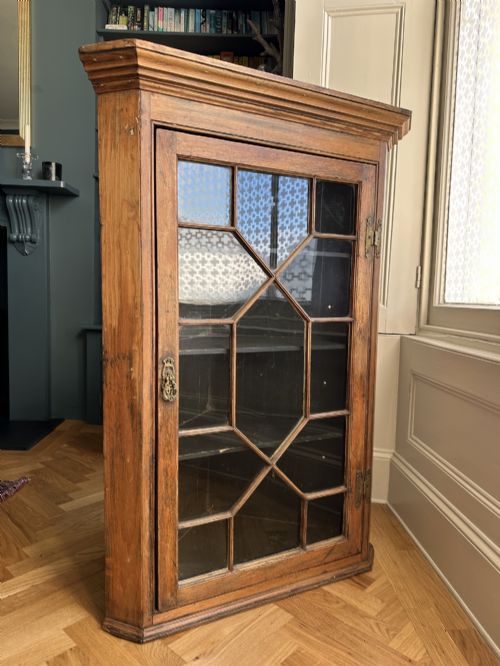
- A glass-fronted cabinet designed specifically for displaying fine objects and porcelain. These pieces often feature multi-pane glazed doors to showcase the contents.
- Gustavian
- The Swedish interpretation of neoclassical design, characterised by pale painted finishes and restrained classical ornamentation. Pieces from this tradition often utilise soft greys, creams, and muted blues.
- Gilded
- Decorated with a thin layer of gold leaf or metallic powder applied to wooden surfaces. This technique highlights carved mouldings and decorative panels.
- Bow front
- A convex, outwardly curved front section on a cabinet or cupboard. This shape softens the angular geometry typical of corner furniture.
Painted Corner Display Cupboard: Frequently Asked Questions
How do I fit a corner cupboard?
Measure the wall angle carefully, as older properties rarely feature true ninety-degree corners. Standing models often require simple wall attachment for stability.
Take into account the door swing radius to ensure adjacent furniture does not obstruct access.
What is the difference between glazed and open shelves?
Glazed doors protect delicate porcelain and glassware from household dust while maintaining full visibility. Open upper shelves offer immediate access but require more frequent cleaning of the displayed items.
Period pieces use timber glazing bars to divide the glass into smaller panes.
How do I care for painted wood?
Dust surfaces gently with a dry, soft cloth and avoid chemical sprays or abrasive cleaners that can damage historic finishes. Keep the cupboard away from direct sunlight and excessive heat sources to prevent paint cracking.
Stable room humidity preserves both the timber substrate and the delicate painted decoration.
Are these cupboards two-part or single units?
Many larger examples are built in two separate sections, comprising an upper display cabinet that sits upon a lower cupboard base. This modular construction aids transportation and installation in rooms with low ceilings.
Smaller hanging or single-door variations are constructed as one solid piece.