
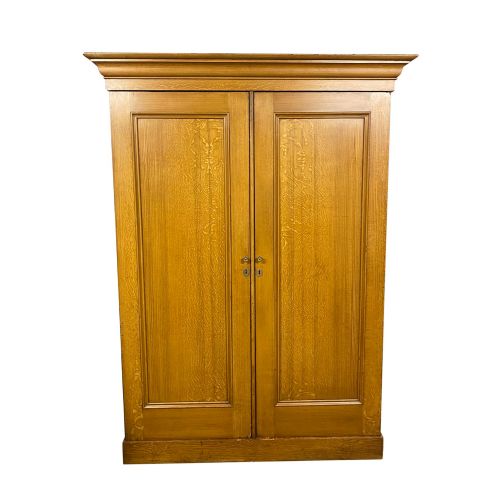
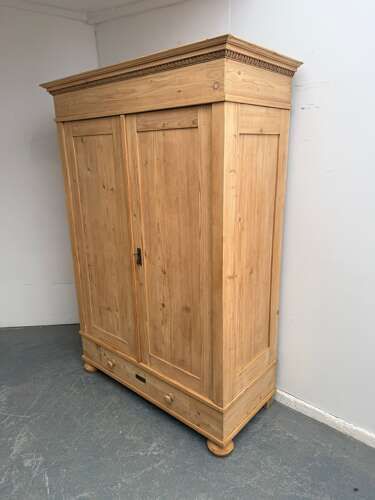
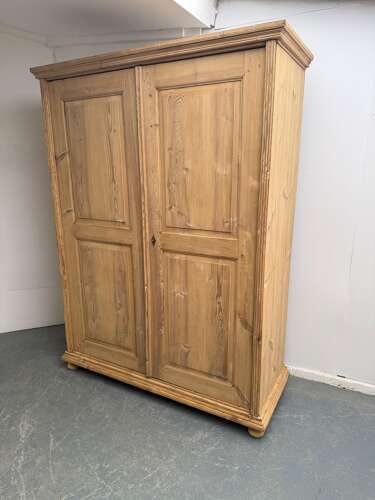
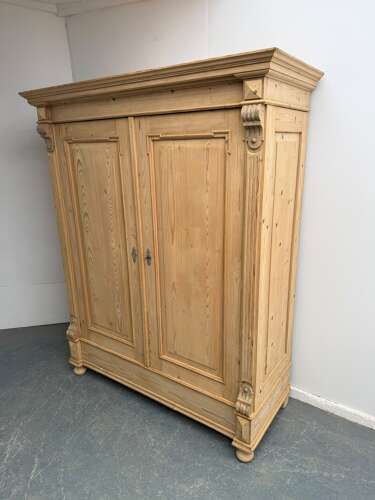
Painted Clothes Cupboard
A painted clothes cupboard offers practical storage dressed in decorative colour, bringing character and utility to a bedroom.
Painted Clothes Cupboard
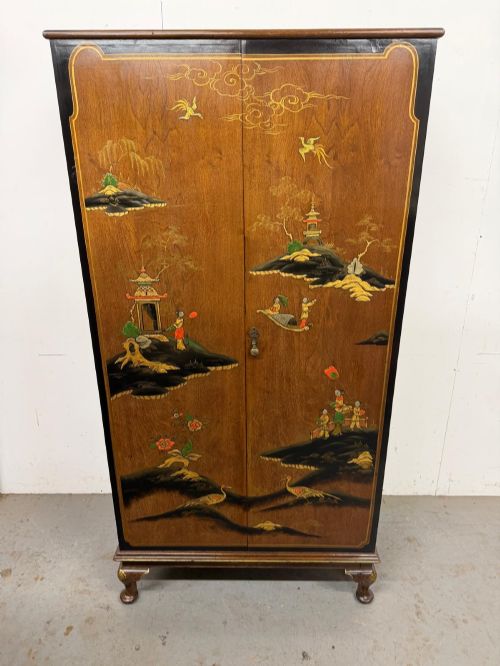
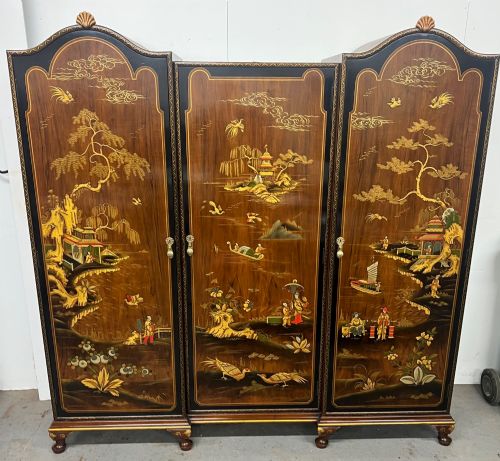
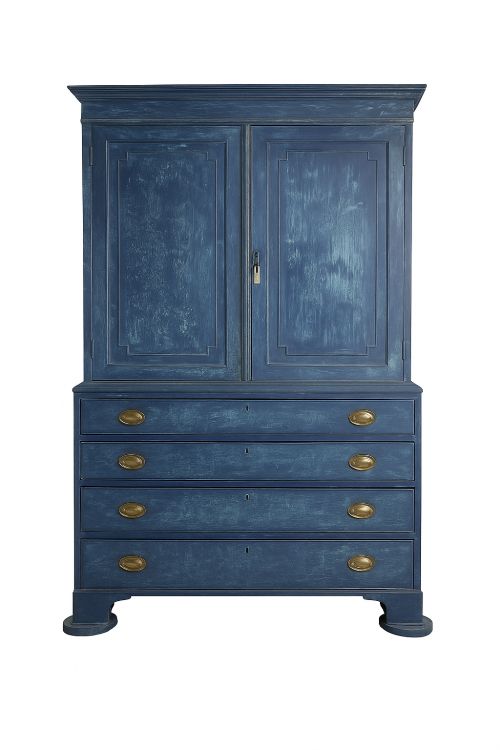
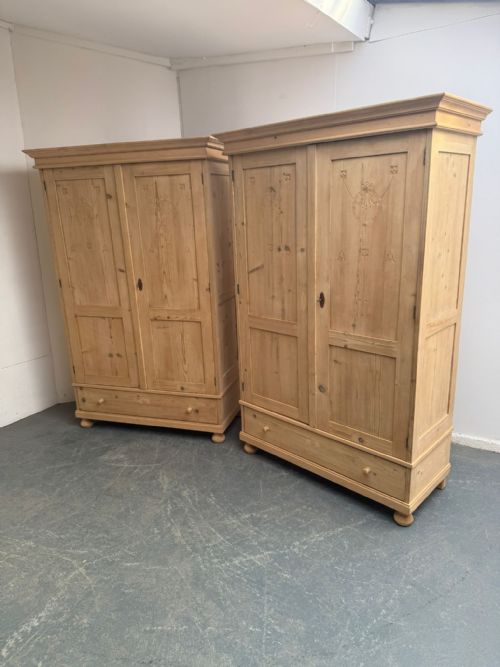
A painted clothes cupboard spans robust storage forms including tall wardrobes, compactums, armoires, linen presses, and smaller hall cupboards. Buyers searching for a painted clothes cupboard encounter substantial pieces originating from Georgian, Victorian, Edwardian, and later periods up to the early twentieth century.
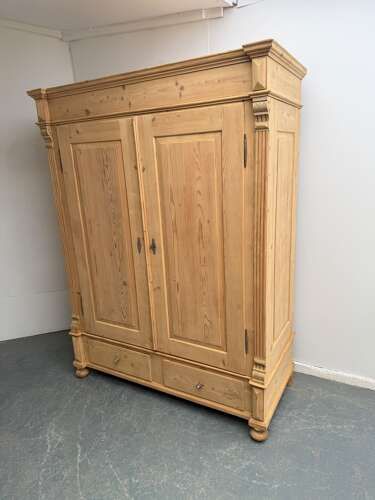
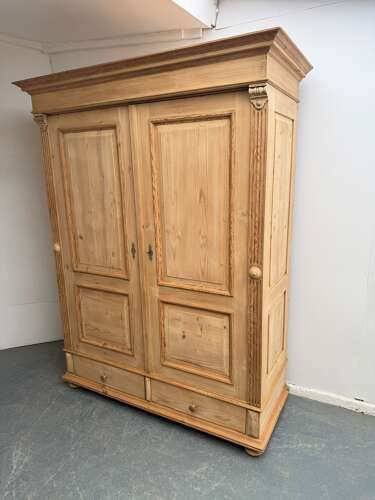
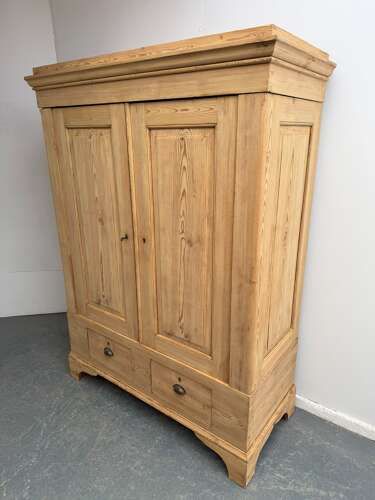
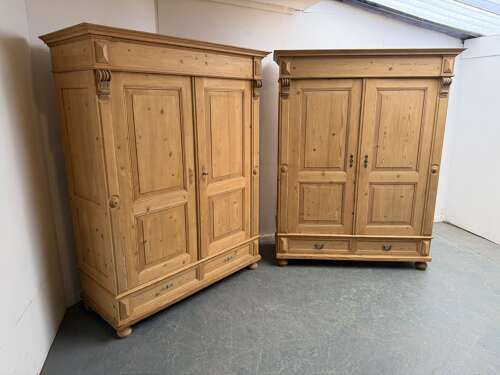
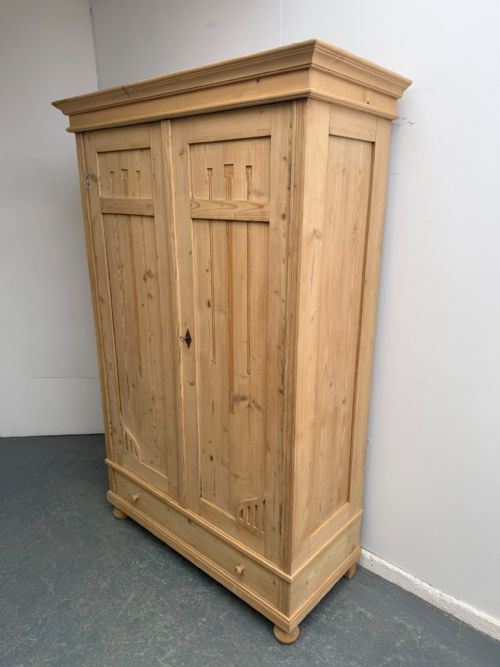
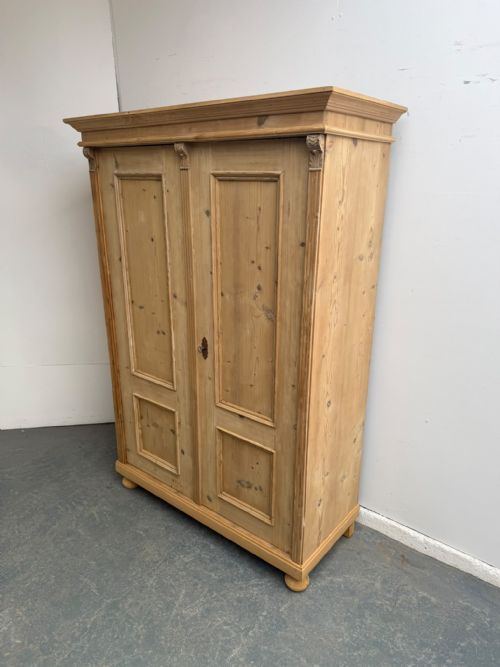
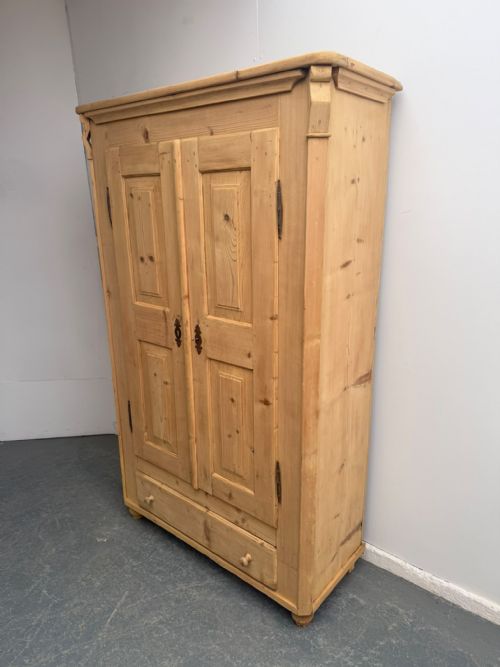
The pine knockdown wardrobe emerges as the dominant form on this page, often supplied ready for a custom finish alongside examples retaining original scumble or decorative paintwork. These pieces serve contemporary homes as functional storage units with deep historical roots.
Materials and construction methods
Makers constructed these cupboards primarily from solid pine and satinwood, frequently integrating iron and brass hardware such as hinges, handles, and locks. Many larger Victorian and Georgian examples utilise knockdown construction principles, allowing the main body to separate into manageable sections for transport.
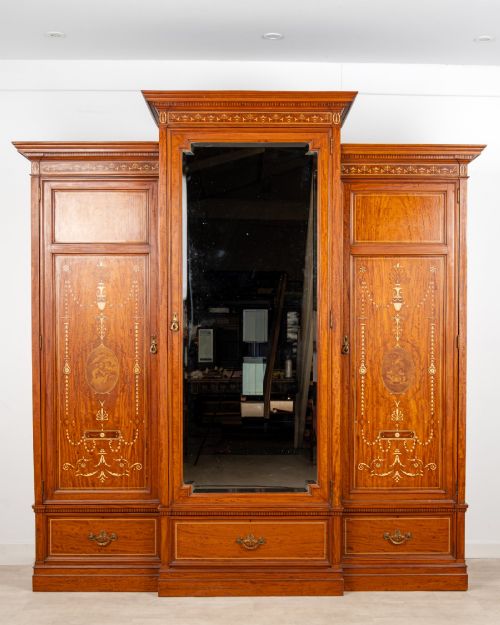
Surfaces were prepared to receive paint, scumble glazes, or intricate chinoiserie decoration, while certain pieces feature mirrored glass doors or carved detailing. The application of paint served both to protect the underlying timber and to achieve desired aesthetic styles ranging from rustic country house finishes to refined revival designs.
Several Victorian pine wardrobes wait patiently to be waxed or painted, essentially acting as blank canvases for future interior decorators.
Factors of quality and execution
Quality rests upon the integrity of the original timber construction, the stability of knockdown joints, and the survival of early or original decorative paint surfaces. Superior examples display careful proportions, well-fitted panel doors, and intact internal shelving or hanging space.
The distinction between utilitarian workshop pieces and finer items lies in the sophistication of the exterior finish, whether executed in delicate satinwood with inlay, specialised scumble work, or detailed regional painting.
Maples & Co.
The Painted Clothes Cupboard Glossary
- Knockdown wardrobe
- A large piece of furniture designed to be dismantled into flat sections for ease of movement. This method of assembly was especially common for heavy pine furniture in the Victorian period.
- Compactum
- A multi-compartment wardrobe combining hanging space with drawers, shelves, and sometimes small cupboards. It provides comprehensive storage within a single footprint.
- Scumble paintwork
- A decorative paint technique involving translucent layers dragged or brushed over a base coat to imitate the grain of more expensive timbers like oak. It was widely used during the nineteenth century.
- Linen press
- A tall storage piece traditionally used for flat textiles, featuring upper sliding trays or shelves above a chest of drawers. Later adaptations often integrated hanging space for garments.
Painted Clothes Cupboard: Frequently Asked Questions
How do I assemble a knockdown wardrobe?
Knockdown wardrobes utilise interlocking panels, peg joints, or internal bolts to secure the sides, top, and base without permanent glue. Mark the panels during disassembly to ensure correct alignment when rebuilding the structure.
Enlist a second person to support the heavy pine sides while engaging the joints to prevent strain on the timber tenons and fixings.
Can I repaint an antique pine cupboard?
Many pine cupboards survive in a stripped state or carry modern coats applied over earlier finishes, making them suitable for new decorative paint. Assess whether the current surface is a historic scheme before applying new paint layers.
Use breathable modern paints or traditional formulations depending on whether you wish to highlight the underlying timber grain or achieve a flat historic colour.
What is the difference between an armoire and a wardrobe?
An armoire typically denotes a large continental cupboard with deep proportions and elaborate paneling, while a wardrobe refers specifically to British hanging furniture. Both terms describe tall storage units used for garments.
British examples on this page lean toward functional pine constructions, whereas armoires and revival pieces often display stylistic influences such as chinoiserie or gothic revival.
How should I clean original painted surfaces?
Original paintwork requires gentle dry dusting with a soft brush to remove surface particulate without moisture damage. Avoid abrasive cleaning agents or modern chemical solvents that lift historic pigment layers.
Consult a conservator if the paint surface exhibits flaking or instability, as aged scumble and decorative finishes demand specialist consolidation.