


Painted Center Table
A painted centre table brings decorative brushwork and strong silhouette to a room, acting as both a functional surface and a focal point.
Painted Center Table
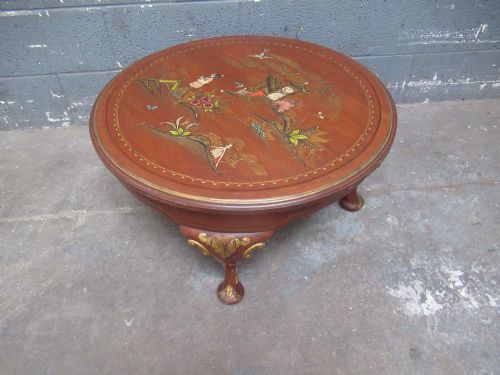
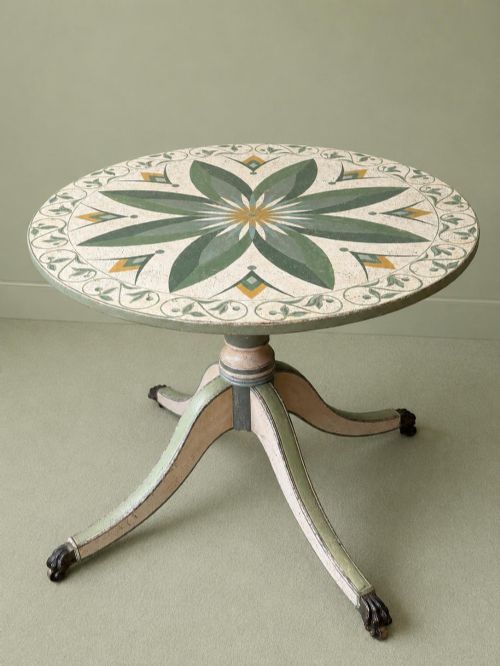
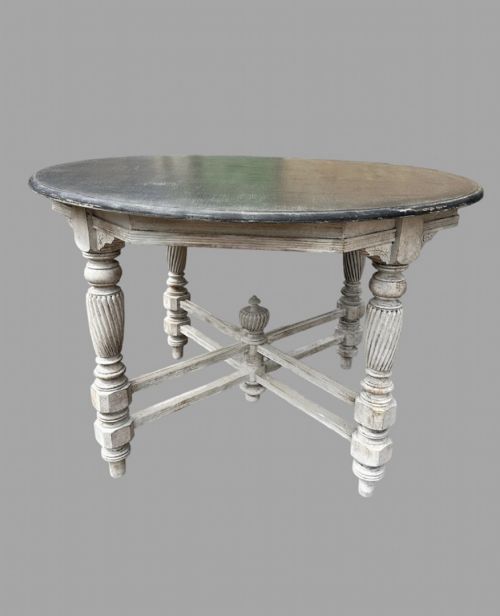
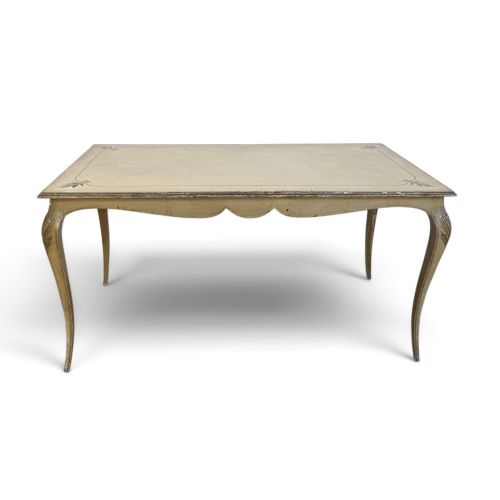
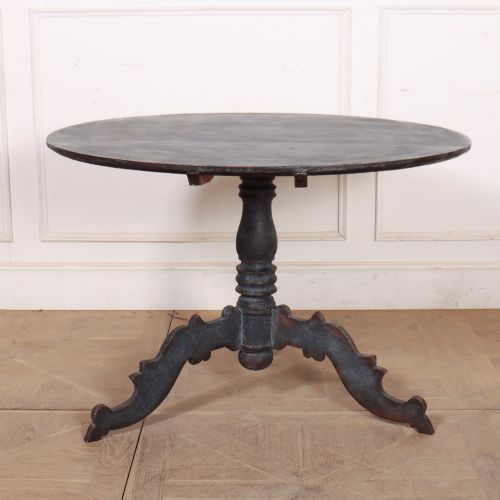
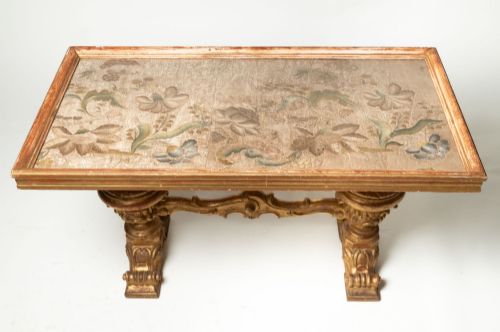
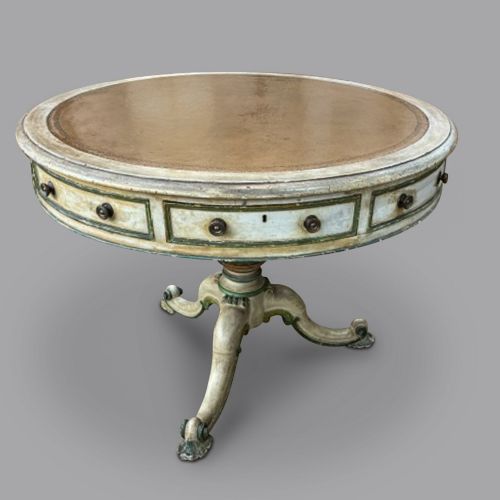
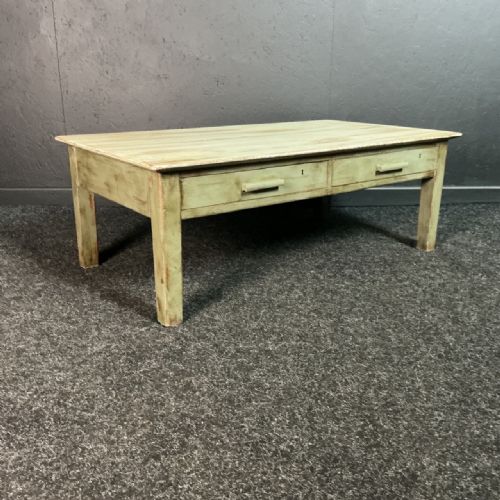
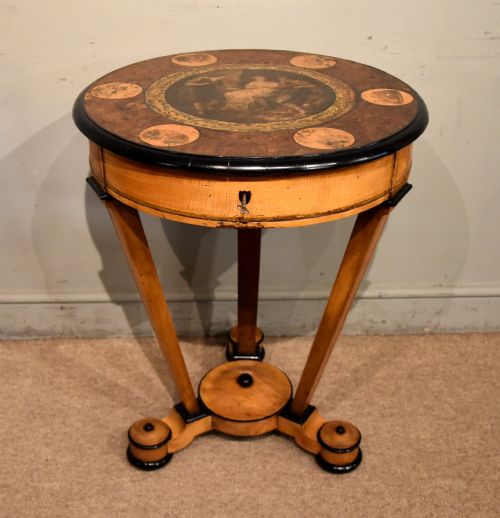
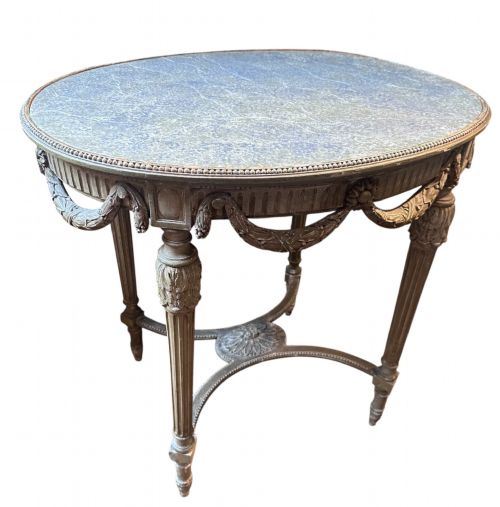
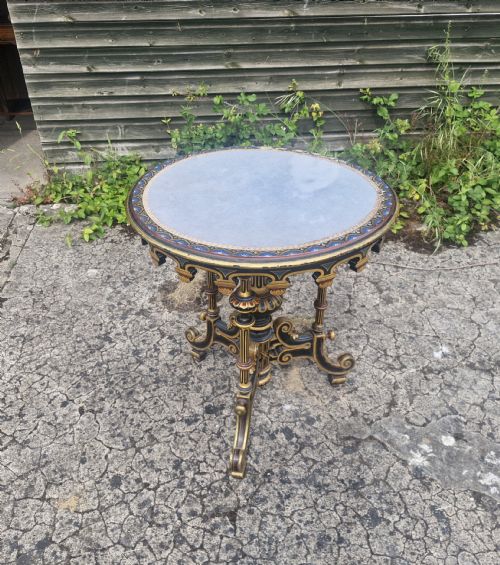
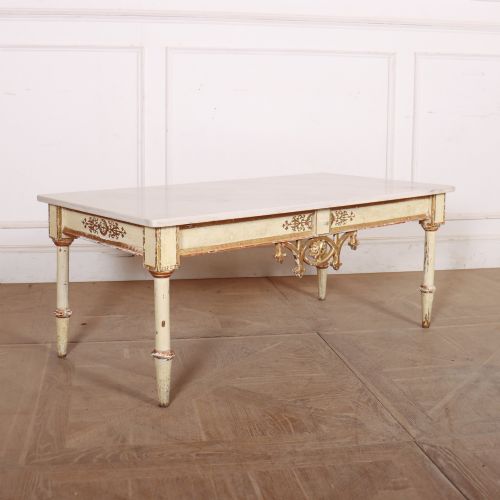
A painted centre table is an occasional piece designed to stand freely in a room rather than against a wall. The examples listed here span the nineteenth and twentieth centuries, taking the form of round coffee tables, occasional stands, tilt-top tables, and gueridons.
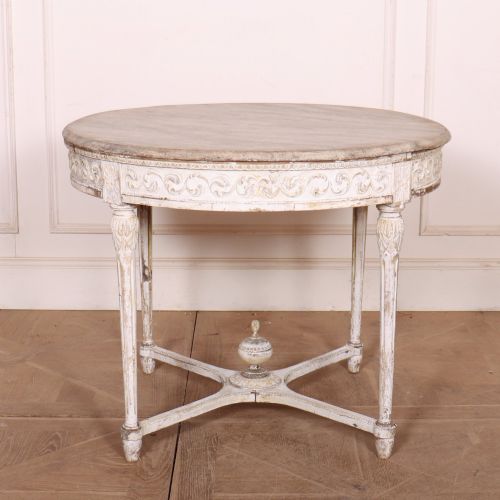
Origins stretch across Europe, encompassing French provincial and Parisian styles, Swedish and Scandinavian country pieces, Venetian designs, and English workmanship. These tables served various domestic roles, from supper tables and dressing stands to grander salon pieces featuring marble tops.
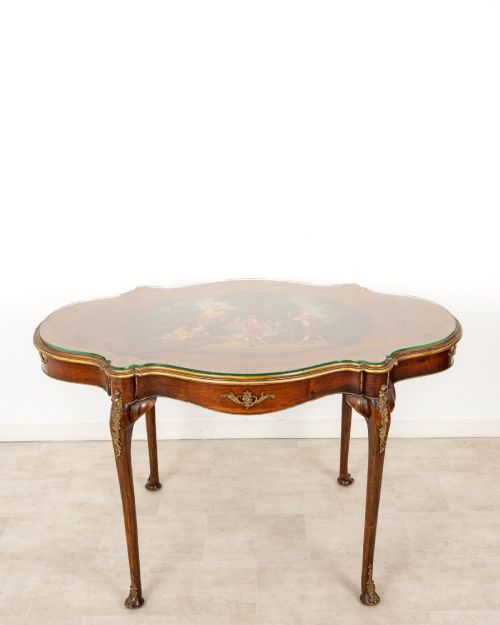
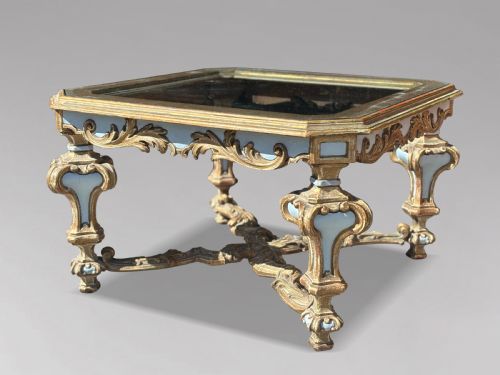
The aesthetic vocabulary draws upon Chinoiserie decoration, Rococo Revival curves, Louis XV and XVI motifs, and Gustavian simplicity. Makers utilised both soft painted finishes and richer gilding to create distinct visual identities.
Materials and Construction
Construction relies upon traditional cabinet timbers including pine, oak, sycamore, and assorted hardwoods, often shaped into circular tops, pedestal bases, or tripod supports. Many examples incorporate heavy stone elements, pairing painted wooden frames with original marble tops.
Surface decoration forms the defining characteristic of these pieces, executed through hand-painted pigments, parcel-gilding, silvering, and lacquering. Certain pieces feature porcelain plaques or majolica inserts, reflecting the diverse decorative techniques of their respective periods.
Painted Center Table Retail Price Guide 2026
Typical asking prices for painted center table among the pieces listed under this phrase on Sellingantiques today, from the lower quarter to the upper quarter. They describe what is for sale here now, not the wider market.
One unexpected survivor manages to double as a dressing centre table, proving morning routines once demanded a painted stage.
Quality and Execution
Quality rests upon the execution of the decorative surface and the integrity of the underlying woodwork. Finer tables display confident brushwork, delicate parcel-gilding, and sophisticated motifs such as Chinoiserie scenes or Vernis Martin finishes rather than plain flat coats.
The selection of materials further divides the range, particularly the inclusion of inset marble slabs, Ormolu mounts, or porcelain panels by manufactories like Sevres. Proportions, stability of pedestal mounts, and the preservation of original decorative schemes determine the standing of each piece.
Eugene Clauss of Paris·Harrods
The Painted Center Table Glossary
- Gueridon
- A small French table, often round and supported by a single central pillar or three legs. These were frequently used as candle stands or small decorative tables in nineteenth-century salons.
- Chinoiserie
- European theatrical interpretation of Chinese and East Asian artistic traditions. It appears on furniture through hand-painted motifs depicting figures, landscapes, and pagodas.
- Vernis Martin
- An eighteenth-century European imitation of East Asian lacquerwork, named after the Martin brothers. The technique involves successive layers of translucent varnish over painted decoration.
- Parcel-gilt
- Partially gilded woodwork where gold leaf is applied selectively to highlight carved details, mouldings, or specific ornamental motifs against a painted ground.
- Tilt-top table
- A table featuring a mechanism that allows the circular top to pivot into a vertical position when not in use. This clever design saved space in period interiors.
Painted Center Table: Frequently Asked Questions
What is a painted centre table?
A painted centre table is a freestanding piece of furniture designed to be viewed from all sides in the middle of a room. These tables feature decorative painted surfaces, carved wooden frames, and sometimes marble or porcelain inserts.
Originating across various European traditions, they serve multiple functions as coffee tables, occasional stands, or grand salon centerpieces.
How do I style a painted centre table?
These tables work best when placed where their decorative surfaces can be appreciated fully, such as the middle of a drawing room or a spacious hallway. Their painted finishes allow them to either complement existing interior colour schemes or provide a distinct visual anchor.
Keep tabletop arrangements modest to avoid hiding the detailed brushwork, gilding, or marble tops characteristic of the period.
How do I identify the period of a table?
Dating relies on combining the structural characteristics of the woodwork with the specific decorative style applied to the surface. Nineteenth-century examples often display Rococo Revival curves or Gustavian influences, while later pieces lean towards early twentieth-century interpretations.
Examination of the underlying pine, oak, or hardwood timbers and the ageing of the painted finish helps clarify the era of manufacture.
Were these tables used for dining?
Some forms, such as supper tables or larger circular occasional tables, were built to accommodate dining or drinking in informal settings. Tilt-top mechanisms also allowed tables to double as serving surfaces or space-saving partitions.
Smaller gueridons and lamp tables, however, were intended strictly for display, holding decorative objects, lighting, or books.