
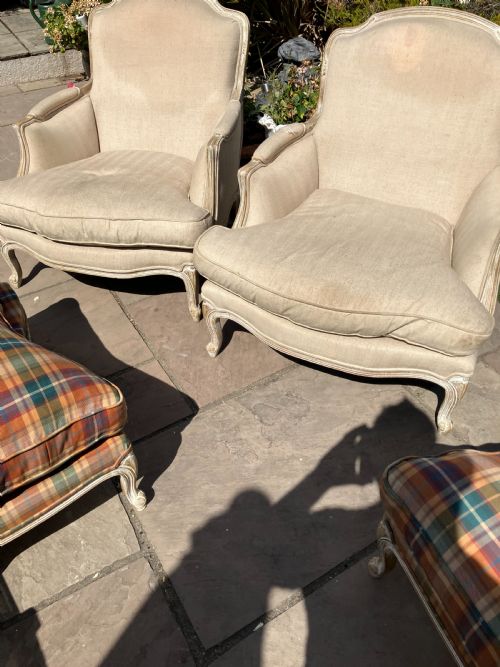
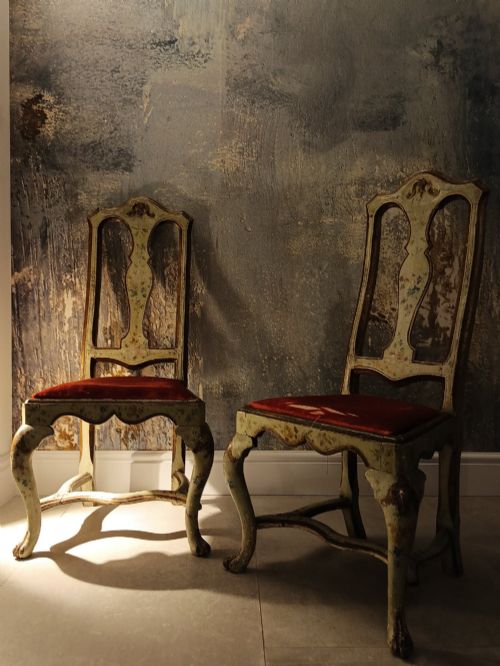
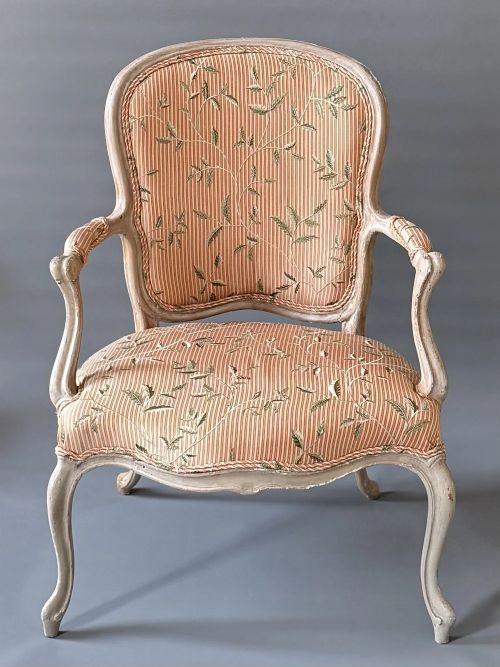
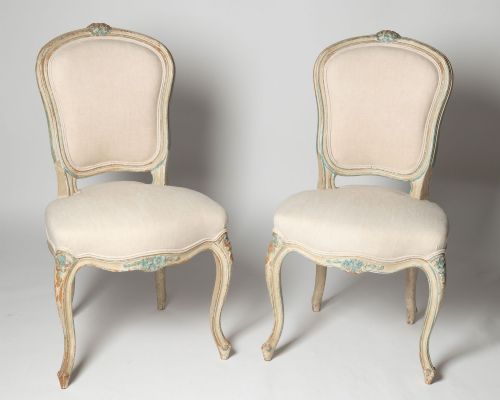
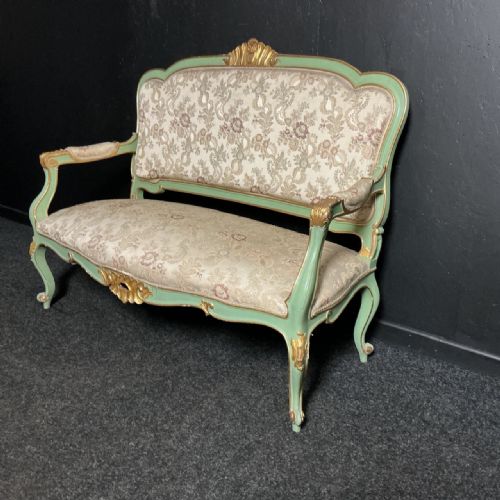
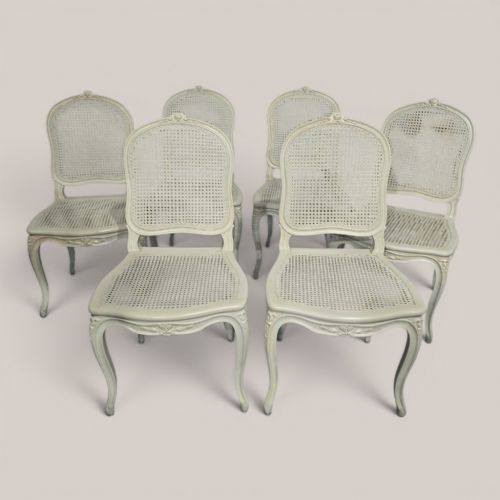
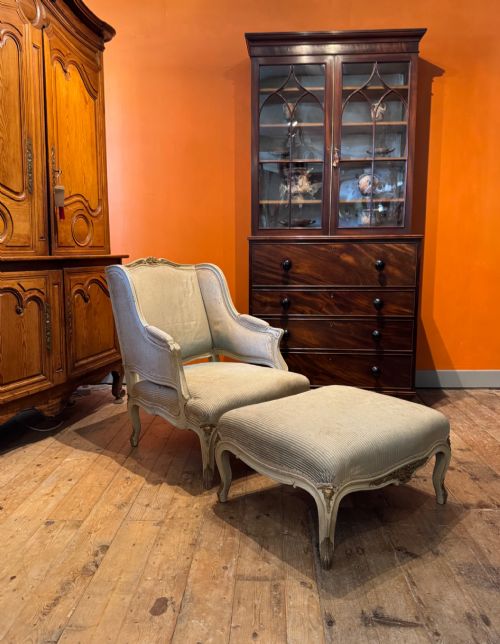
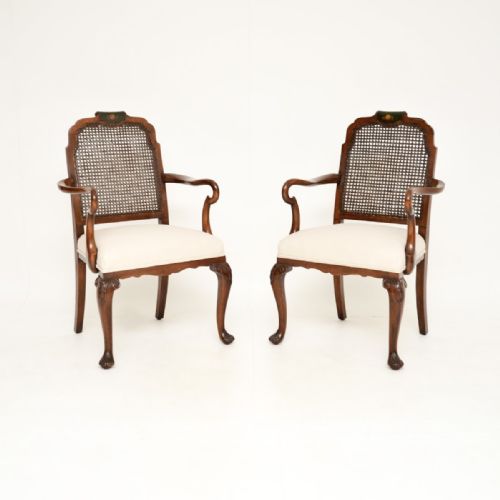


Painted Cabriole Leg Chairs
These painted cabriole leg chairs bring curving French and Italian grace into a room through shaped wooden frames and decorative colour.
Painted Cabriole Leg Chairs
When you search for painted cabriole leg chairs, you encounter seating built with signature double-curved legs that taper down to pad or scroll feet. The selection spans armchairs, side chairs, dining chairs, and chaises longues rooted in eighteenth-century continental design principles.
Most examples you meet on this page date from the nineteenth and twentieth centuries, taking inspiration from earlier Louis periods, French provincial traditions, and Italian rococo forms. These pieces often arrive with distressed or layered painted surfaces that highlight their sculptural contours.
How they were made
Carpenters shaped frames from beech, walnut, or general wood, carving the signature curving legs directly from the timber blocks to ensure structural strength. Caned panels or upholstered pads using fabric, linen, and velvet provided seat and back support.
Surface decoration involved applying paint, lacquer, or japanning directly over the wood, sometimes over earlier finishes. This protective and decorative layer defines the visual character of each piece.
Materials recorded across the inventory include beech, walnut, cane, velvet, linen, and fabric.
What varies in quality
The sophistication of the wood carving determines much of the distinction, separating fluid, hand-shaped contours from rigid or mechanical shaping. Crisp detailing along the knees and shoulders of the cabriole legs indicates superior craftsmanship.
The integrity of the painted surface matters greatly, distinguishing honest patination and original pigment layers from unsympathetic modern repainting. Frames that retain their original joinery without excessive movement hold higher distinction.
The Painted Cabriole Leg Chairs Glossary
- Cabriole leg
- A furniture leg featuring a double curve, bulging outward at the knee and tapering inward toward the foot. This form mimics animal legs and defines many eighteenth-century revival pieces.
- Bergere
- An enclosed upholstered armchair with wooden framing and upholstered sides. These seats frequently incorporate cane panels or loose cushion pads.
- Fauteuil
- An open-arm armchair with upholstered back and seat resting on exposed wooden arms. The style originates from French court furniture.
- Japanning
- A European imitation of East Asian lacquerwork using resin varnishes and painted decoration. It appears on various decorative chair frames.
- Duchesse brisée
- A multi-part chaise longue comprising a chair and one or two footstools or ottomans joined together. The form allows for reclining while maintaining formal proportions.
Painted Cabriole Leg Chairs: Frequently Asked Questions
How do I clean painted chair frames?
Dust the wooden surfaces regularly with a soft, dry cloth to prevent dirt accumulation.
Avoid commercial liquid polishes, which can soften or damage fragile historical paint layers.
Are these chairs comfortable for daily use?
Many armchairs and bergere styles offer deep seating suited for relaxed sitting.
Dining chairs and side chairs provide firmer support designed for upright posture around a table.
How can I tell a revival piece from an older one?
Examine the timber species, tool marks, and construction joints beneath the paint for clues.
Revival pieces often carry nineteenth or twentieth-century hardware and standardised shaping methods.
Where should I place these chairs at home?
Use occasional armchairs in corners or bedrooms where their decorative frames stand clear.
Dining sets work well around wooden tables in living or dining spaces.