




Painted Breakfront Display Cabinet
A painted breakfront display cabinet brings architectural presence and painted charm to a room, offering generous glazed storage for books or collections.
Painted Breakfront Display Cabinet
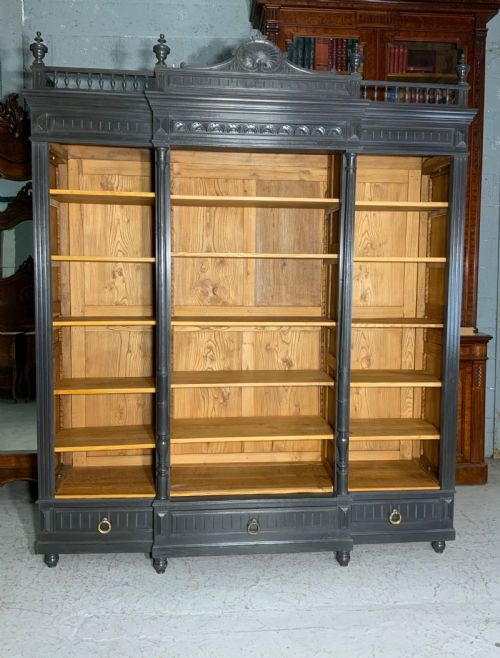
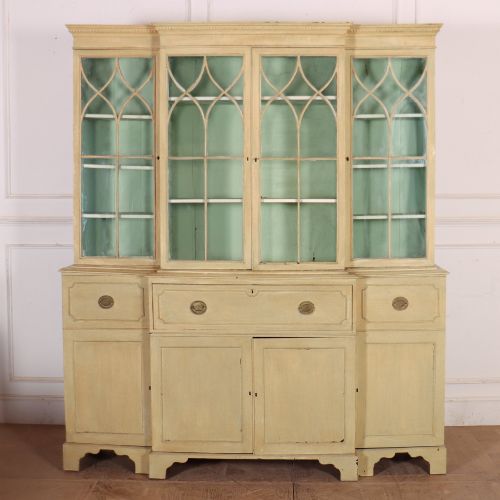
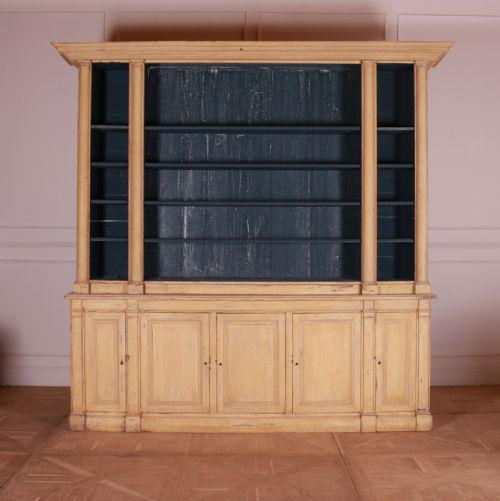
A painted breakfront display cabinet is a substantial piece of furniture defined by its projecting central section and glazed or open shelving. These cabinets appear across several distinct regional and stylistic traditions, including English, Irish, Scottish, and French forms from the nineteenth and early twentieth centuries.
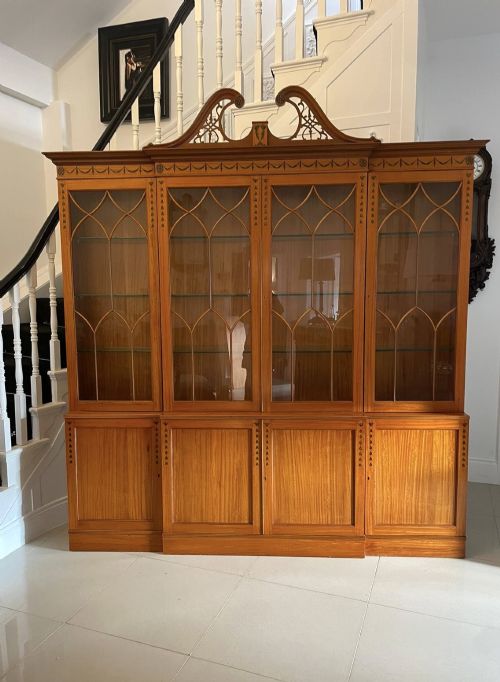
The selection ranges from large library bookcases and kitchen dressers to refined satinwood display cabinets with original painted decoration and Sheraton Revival motifs. Buyers frequently encounter nineteenth-century painted woodwork alongside satinwood examples dating towards nineteen thirty, often featuring astral glazed doors.
Makers such as Edwards & Roberts appear among the nineteenth-century pieces, showing the high level of cabinet-making that accompanied painted decoration during the period. Forms extend from four-door bookcase cupboards and side cabinets to grand French library bookcases designed for serious collections.
How they were made
Construction relies primarily on timber carcasses built from pine, satinwood, and general painted wood, assembled to create the characteristic multi-section breakfront profile. Glazing relies on glass panes held by timber bars or wire mesh panels, while brass hardware provides functional closure for doors and cupboards.
Painted decoration is applied directly to the wood surface, sometimes accompanied by satinwood inlay work in the Sheraton Revival manner or gilt accents. Original painted surfaces survive on many pieces, preserving the brushwork and colour choices intended by the nineteenth and early twentieth-century makers.
Some library bookcases hide secret writing drawers behind seemingly ordinary book spines.
What varies in quality
Quality rests significantly on the preservation of the original painted decoration and the crispness of any inlaid satinwood detailing. Pieces retaining their untouched early paintwork stand apart from later repainted surfaces.
Proportion and timber selection dictate the standing of a cabinet, with finer pieces utilising carefully figured satinwood and balanced astral glazing bars across the breakfront facade. The structural integrity of the projecting central section and the quality of the brass fittings further separate standard utility pieces from fine maker-attributed examples.
Edwards & Roberts
The Painted Breakfront Display Cabinet Glossary
- Breakfront
- A piece of furniture where the central section projects forward from the flanking outer wings. This architectural arrangement creates depth and shadow across the facade.
- Astral glazing
- Cabinet doors divided into small glass panes by narrow wooden bars, often arranged in geometric or Gothic patterns. This technique allows light to enter while keeping books secure.
- Satinwood
- A lustrous tropical timber with a fine grain and yellow-gold colour, highly favoured for polished and inlaid furniture during the eighteenth and nineteenth centuries.
- Sheraton Revival
- A late nineteenth-century design style drawing on the neoclassical furniture forms of Thomas Sheraton. It frequently incorporates delicate painted motifs, satinwood veneers, and classical symmetry.
- Secretaire
- A cabinet or desk incorporating a pull-down writing flap that conceals small drawers and pigeonholes. It combines the storage of a bookcase with the utility of a writing surface.
Painted Breakfront Display Cabinet: Frequently Asked Questions
How do I style a large painted cabinet?
Large painted cabinets work well as the focal point in a dining room, library, or drawing room, where their height and painted finish can anchor the space. Use the internal shelving to display books, ceramics, or collections behind the glass doors.
Keep surrounding furniture simpler to let the painted decoration and proportions of the cabinet remain the main feature of the room.
Are these cabinets original painted pieces?
Many examples on this page retain their original painted decoration from the nineteenth or early twentieth century. This preservation shows in the patina and wear consistent with age.
Checking the integration of the paint with the timber underneath helps distinguish period decorated surfaces from later cosmetic painting.
How do I tell nineteenth-century cabinets apart?
Nineteenth-century pieces vary through regional characteristics, such as the robust forms of English kitchen dressers compared to the lighter satinwood Sheraton Revival pieces. Details like wire mesh, astral glazing, and brass hardware help indicate the specific period and stylistic influence.
Maker attribution stamps, such as those from Edwards & Roberts, also provide clear guidance on origin and date.