
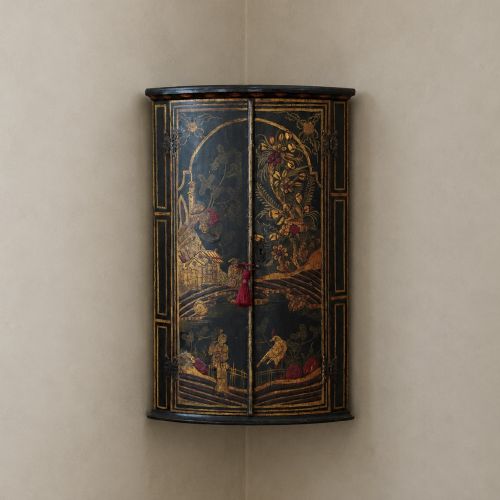
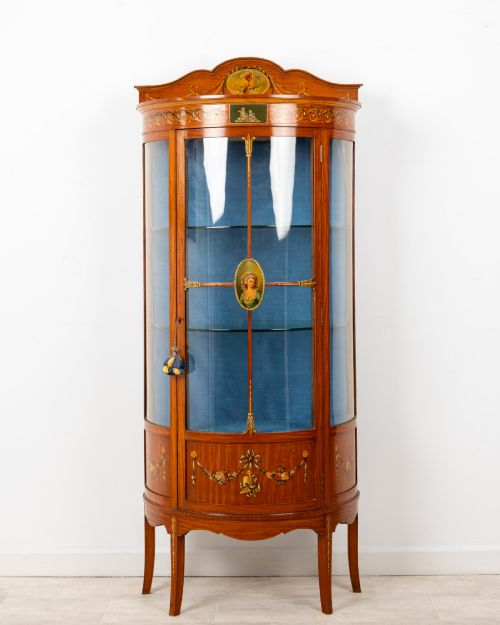
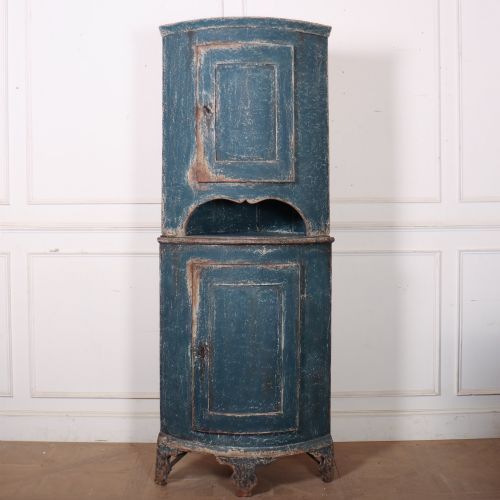
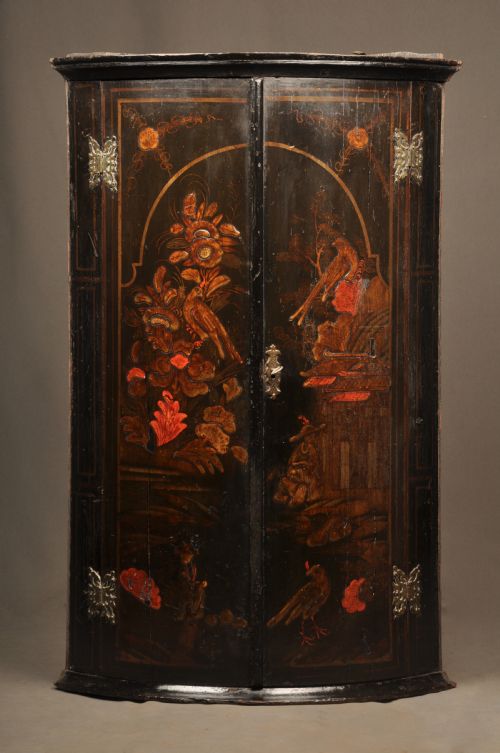

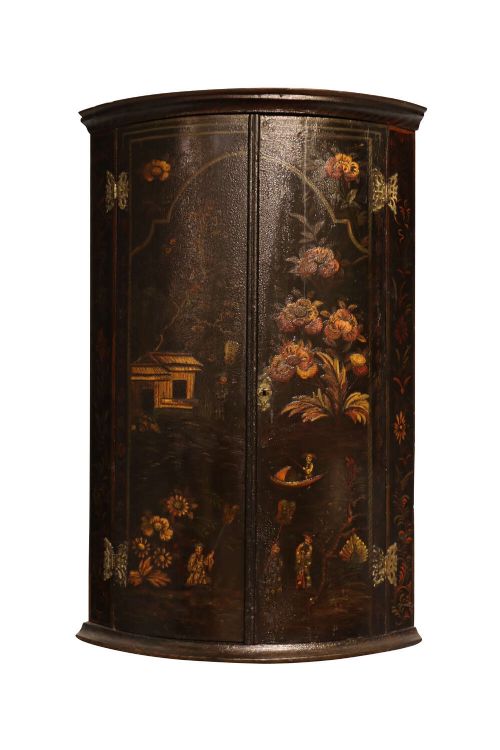


Painted Bowfront Cabinet
A painted bowfront cabinet brings curved elegance and hand-finished artistry to a room, offering both concealed storage and decorative presence.
Painted Bowfront Cabinet
When you search for a painted bowfront cabinet, you encounter a distinct form that curves outward at the front, softening the angles of a room while providing practical storage. These pieces bridge utilitarian function and decorative arts, appearing across various historical periods.
The selections span corner cupboards, side cabinets, and display cabinets, often featuring curved doors that follow the characteristic bowfront contour. Origins stretch from British Georgian and Victorian workshops to Swedish and Italian regional makers.
Chinoiserie and Sheraton revival examples dominate the aesthetic, bringing painted motifs onto mahogany, pine, or satinwood carcases. Buyers most frequently meet corner cupboards and display cabinets from the eighteenth and nineteenth centuries on this page.
How they were made
Constructed from timbers such as mahogany, pine, and satinwood, these pieces rely on stable carcases built to hold curved door fronts and glass panels. Wood is shaped and joined carefully to maintain the tension of the bowfront profile over centuries.
Surfaces receive layers of paint, lacquer, or japanning before being detailed with hand-painted floral or figural motifs. Brass hardware, including hinges and escutcheons, secures the doors and completes the construction.
What varies in quality
The refinement of the painted decoration marks the upper tier of these pieces, separating simple utilitarian cupboards from fine artistic works like Chinoiserie lacquering. Hand-painted details show depth and precision in the brushwork rather than mechanical repetition.
Cabinetmaking standards appear in the smoothness of the curved door action, the integrity of the timber joints, and the selection of base woods like satinwood or mahogany. Finer examples maintain structural balance within the bowfront profile alongside well-preserved surface finishes.
The Painted Bowfront Cabinet Glossary
- Bowfront
- A cabinet front that curves outward in a convex arc. This shape softens room geometry and requires skilled joinery to execute.
- Japanning
- A European imitation of East Asian lacquerwork using resin varnishes and raised metallic decoration. It appears frequently on eighteenth-century corner cupboards.
- Chinoiserie
- European artistic style reflecting Chinese motifs and landscapes. Painters applied these fantastical scenes to lacquer and painted cabinet surfaces.
- Satinwood
- A durable, lustrous timber with a golden sheen used extensively in cabinetmaking. It provides a pale ground for delicate painted decoration.
- Vitrine
- A glass-fronted display cabinet designed to showcase porcelain and objets d'art. These pieces often incorporate bowfront glass panes.
Painted Bowfront Cabinet: Frequently Asked Questions
Where do I put a bowfront cabinet?
Corner cupboards fit neatly into unused angles of a room, making efficient use of space while drawing the eye with their curved doors.
Standing side cabinets and display pieces work well against flat walls where their painted surfaces and bowfront profiles can act as focal points.
How do I clean a painted cabinet?
Dust surfaces gently with a soft, dry cloth to protect fragile painted decoration and aged lacquer finishes from abrasion.
Avoid chemical polishes and moisture, which can damage historic paint layers and timber carcases over time.
Are these cabinets purely decorative?
While many pieces feature glass doors and painted scenes meant for display, their interior shelving provides practical storage for tableware or collections.
Sideboards, chest of drawers, and closed cupboards offer concealed space alongside their decorative exteriors.
How do I tell an 18th century piece from a revival?
Eighteenth-century examples often display early lacquer or japanning techniques on native pine or imported hardwoods with distinct regional construction methods.
Sheraton revival pieces from the late nineteenth century typically utilise satinwood grounds with refined neoclassical painted details and machine-sawn internal timbers.