




Hand Painted Vitrine
A hand painted vitrine brings together fine glazed display and delicate brushwork to showcase precious small possessions in any room.
Hand Painted Vitrine
When you search for a hand painted vitrine, you are looking at glazed display cabinets, corner cabinets, and bijouterie tables decorated with painted scenes or floral motifs. These pieces serve primarily to exhibit decorative objects while adding colour and ornament to an interior space.
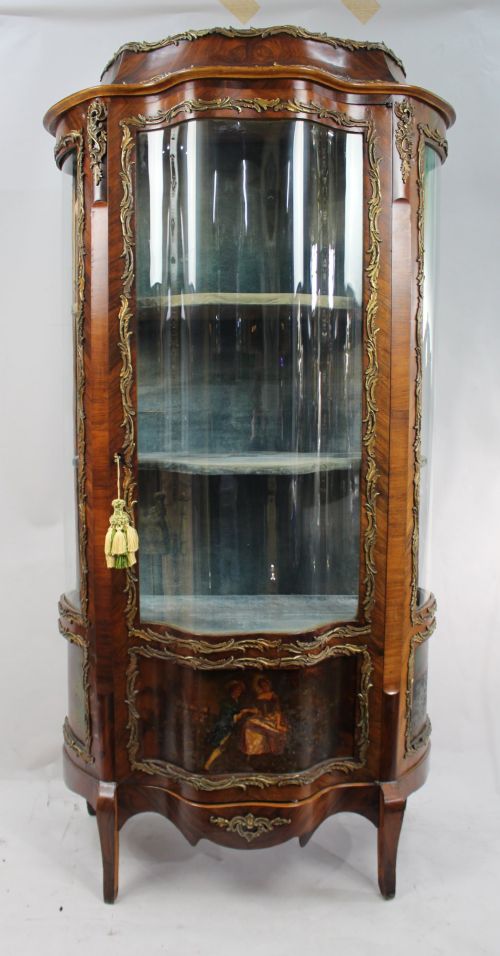
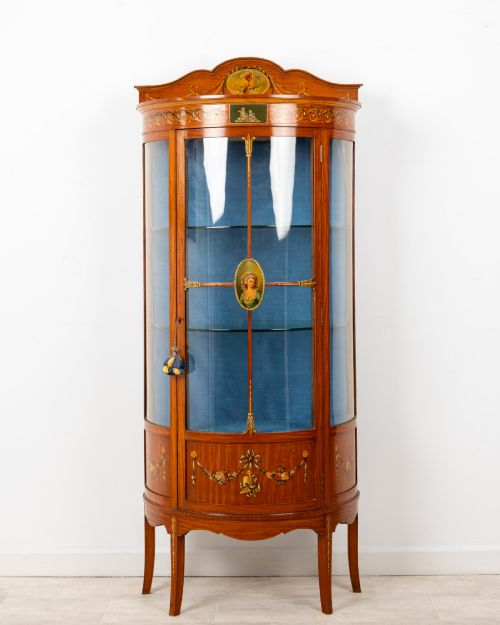
The examples available here stretch across the nineteenth century and the Edwardian period, drawing heavily on French Rococo Revival, Louis XV style, and Sheraton Revival idioms. You will frequently encounter satinwood and mahogany structures featuring curved glass doors, bow fronts, and serpentine shapes.
Origins span both English cabinet-making traditions and French workshop productions, often incorporating classical revival details alongside painted decoration. Pieces range from tall freestanding cabinets to smaller tables designed specifically to display small treasures under glass.
Materials and construction
Cabinet makers utilised choice timber foundations including satinwood, mahogany, and kingwood, frequently shaping the wood into bow fronts or serpentine contours. Glazed panels framed in timber allowed light to enter the interior display space from multiple angles.
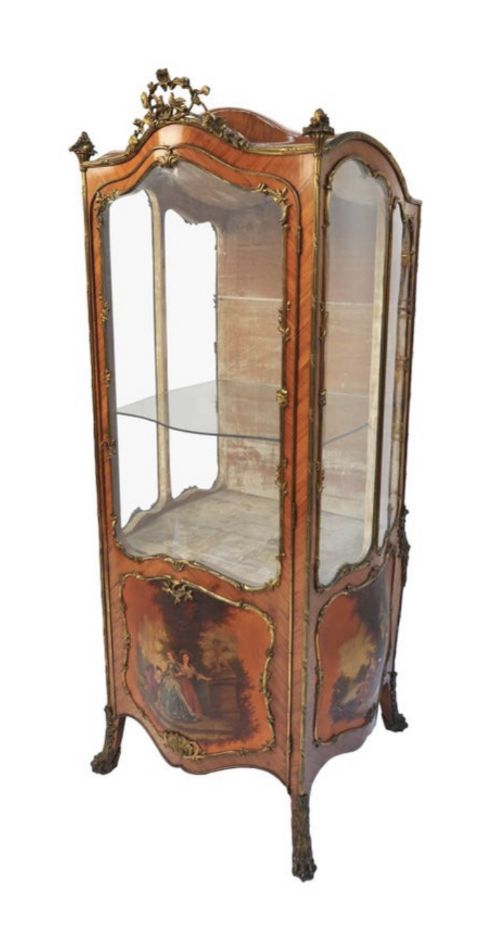
Surface ornament relied upon hand applied floral painting, lacquering, and Vernis Martin techniques alongside delicate inlaid stringing. Mounts cast in gilt bronze or ormolu frequently decorated the corners, feet, and borders of French style cabinets and marble top surfaces.
Assessing quality and craftsmanship
Quality rests upon the crispness of the timber shaping and the finesse of the hand painted decoration on the panels. Superior pieces display fluid brushwork in the floral motifs and pictorial scenes, whereas simpler examples rely on more repetitive mechanical stencilling.
The choice of secondary materials also separates standard production from finer work, seen in the selection of figured veneers, substantial cast gilt bronze mounts, and carefully fitted marble tops. Construction integrity, including the smoothness of door hinges and the tightness of glazed joints, completes the assessment.
The Hand Painted Vitrine Glossary
- Vitrine
- A glass fronted cabinet designed for displaying fine porcelain, curiosities, and small objects of art. These pieces typically feature extensive glazing to maximise visibility from the sides as well as the front.
- Vernis Martin
- A simulated Japanese lacquer technique developed in eighteenth century France and emulated in later revival pieces. The finish uses multiple layers of transparent varnish over painted decoration to create a luminous depth.
- Satinwood
- A lustrous tropical hardwood with a golden yellow sheen that provides a pale canvas for painted decoration. It became particularly popular during the Sheraton revival of the late nineteenth and early twentieth centuries.
- Bijouterie table
- A low display table with a glazed top and sides used for showing jewellery, medals, and small trinkets. These tables often stand on slender legs and feature hinged lids for interior access.
- Ormolu
- Gilt bronze applied as a decorative mount to furniture corners, feet, and friezes. The metal is cast, chased, and gilded to add metallic contrast to the timber and painted surfaces.
Hand Painted Vitrine: Frequently Asked Questions
What is a vitrine used for?
A vitrine is designed to display delicate porcelain, glass, and small decorative objects while protecting them from dust. The glazed panels allow light to enter from multiple angles to highlight the contents.
Historically, these cabinets stood in drawing rooms and parlours where hosts could show off their collected treasures to visiting guests. Today they serve the same function in residential interiors.
How do I tell French and English cabinets apart?
French cabinets often feature more exuberant curving outlines, prominent ormolu mounts, and Vernis Martin painted panels. They frequently lean into Louis XV or Rococo revival aesthetics.
English pieces, particularly those from the Edwardian period, tend to follow Sheraton revival lines with straighter forms, satinwood veneers, and subtle floral garlands painted by hand.
Where should I place a display cabinet?
These cabinets work best in reception rooms, hallways, or living spaces where natural light can pass through the glass doors. Positioning them away from direct sunlight protects both the timber and the painted decoration from fading.
Ensure the floor is level so the doors hang true and the delicate frame does not warp over time under uneven loads.
What is the difference between a cabinet and a bijouterie table?
A cabinet is a tall or medium height freestanding piece featuring vertical glass doors and interior shelves for upright display. It commands more wall presence in a room.
A bijouterie table is low with a horizontal glazed top, specifically built to exhibit flat or small objects viewed from above rather than from the side.