
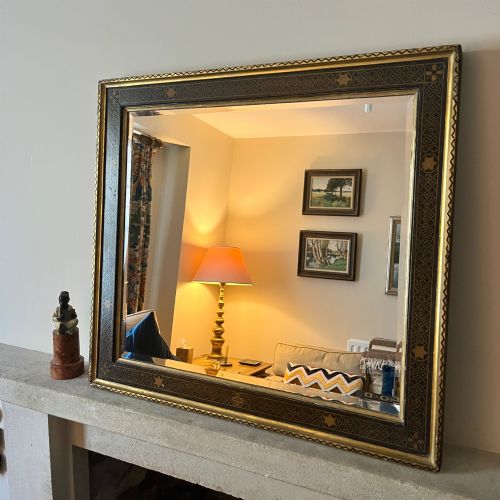
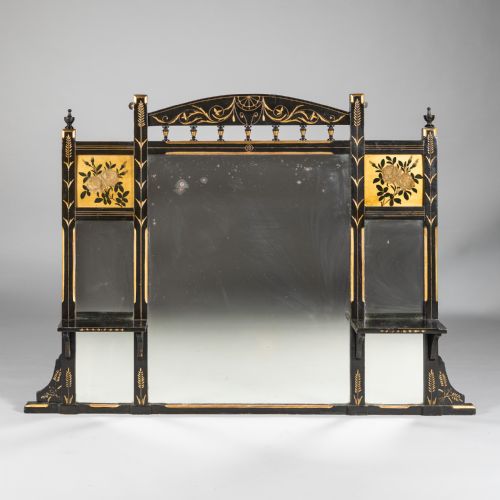


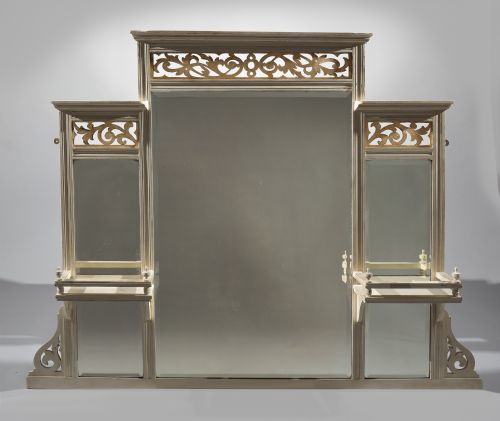


Painted Aesthetic Movement Mirror
A painted aesthetic movement mirror brings rich Victorian character into a room through ebonised wood, gold leaf, and delicate painted details.
Painted Aesthetic Movement Mirror
A painted aesthetic movement mirror represents the late nineteenth-century push for artistic home decoration, drawing on periods from 1880 through 1900. These objects appear primarily as grand overmantel mirrors alongside wall mirrors, with occasional associated side cabinets and display cabinets.
The version most commonly met on this page is the large Victorian overmantel mirror, often spanning significant width above a fireplace. Such pieces combine ebonised wood frames with painted decoration and gilt highlights to create a striking focal point.
Originating firmly in the Victorian era, these pieces reflect the shift towards eclectic artistic interiors. Alongside mirrors, related furniture items incorporate mirror glass and painted panels to complete the aesthetic scheme.
How they were made
Maker's work relied heavily on ebonised wood and mahogany as the structural foundation, treated to mimic expensive ebony. Craftsmen then applied paint and gold leaf or parcel-gilt highlights directly to the frames to catch the light.
Mirror glass was set within these dark wooden surrounds, frequently accompanied by brass fixtures and specialised painted panels. The combination of black timber and metallic leaf defines the core construction technique of the period.
Materials across the inventory include ebonised wood, mahogany, paint, gold leaf, brass, and majolica panels.
What varies in quality
The distinction between standard examples and finer pieces lies in the crispness of the ebonisation and the delicacy of the painted decoration. Superior examples display carefully preserved gold leaf and harmonious painted motifs rather than crude application.
Proportion and scale also dictate the standing of a piece, with larger overmantel mirrors requiring precise framing to maintain structural integrity across wide spans. The integration of auxiliary materials like brass or majolica panels elevates the sophistication of the design.
The Painted Aesthetic Movement Mirror Glossary
- Ebonised Wood
- Timber treated with a dark stain or finish to imitate true ebony, commonly utilised in nineteenth-century furniture frames. This dark finish provides the primary visual contrast for gilt and painted highlights.
- Overmantel Mirror
- A large mirror designed specifically to hang on the wall directly above a fireplace mantelpiece. These substantial items frequently dominate a Victorian reception room.
- Parcel-Gilt
- A decoration technique where only specific portions of an object receive a coating of gold leaf. This selective gilding emphasises carved details and architectural mouldings.
- Aesthetic Movement
- A late nineteenth-century design style prioritizing artistic visual qualities over traditional narrative or moral themes in art and decoration. It favoured flat decorative motifs and dark ebonised surfaces.
- Majolica
- A type of colourful tin-glazed earthenware pottery frequently incorporated into Victorian furniture panels and decorative arts. These ceramic inserts add vibrant colour to dark wooden cabinets.
Painted Aesthetic Movement Mirror: Frequently Asked Questions
Where should I hang a large overmantel mirror?
These mirrors were traditionally designed to sit directly above the fireplace in a Victorian reception room. Placing one in this position anchors the room and reflects light effectively across the space.
Alternatively, a substantial wall mirror works well on any large, uninterrupted expanse of wall in a hallway or drawing room. Ensure the wall structure can support the considerable weight of timber and glass.
How do I care for ebonised wood and gilt?
Dust the ebonised wooden frames regularly with a soft, dry cloth to prevent the buildup of particles. Avoid using modern chemical polishes, which can damage the historic surface and underlying dark finish.
Take particular care around areas of gold leaf or parcel-gilt highlights, as these metallic applications are delicate. Keep the pieces away from direct sunlight and damp conditions to preserve the timber and mirror glass.
What rooms suit aesthetic movement furniture?
The dark ebonised finishes and gilt details pair naturally with period interiors, but they also anchor contemporary spaces with a touch of Victorian contrast. They bring depth to neutral walls and complement rooms furnished with rich textiles.
Pairing a mirror with a matching side cabinet or display piece creates a cohesive period display. The painted decoration bridges the gap between dark furniture and lighter decorative schemes.
How can I date these mirrors?
Dating relies primarily on the stylistic markers of the late nineteenth century, predominantly clustered around 1880 to 1900. Look for the characteristic ebonised and parcel-gilt combination typical of the Victorian aesthetic period.
Cabinet backs, fixings, and the composition of the mirror glass itself offer further clues to the period of manufacture. Most recorded examples trace back to the height of the aesthetic movement in late Victorian England.