

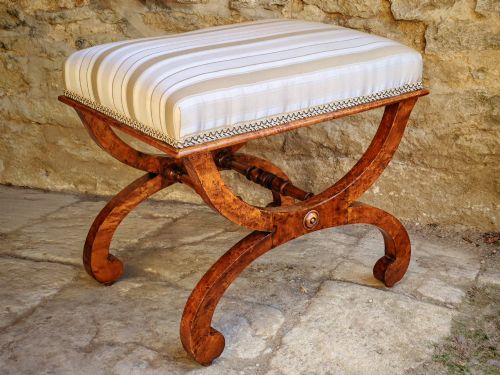


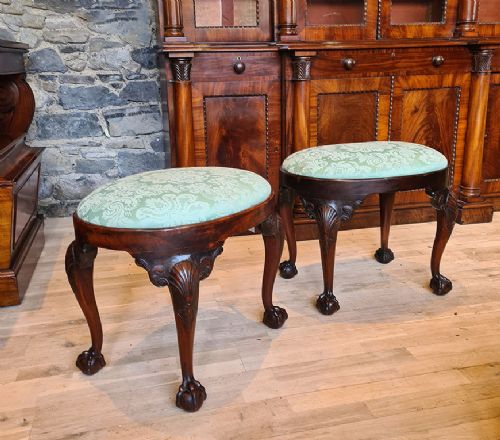


Padded Window Stool
A padded window stool brings low, comfortable seating to sills and hallways, spanning elegant George III mahogany frames to plush Edwardian velvets.
Padded Window Stool
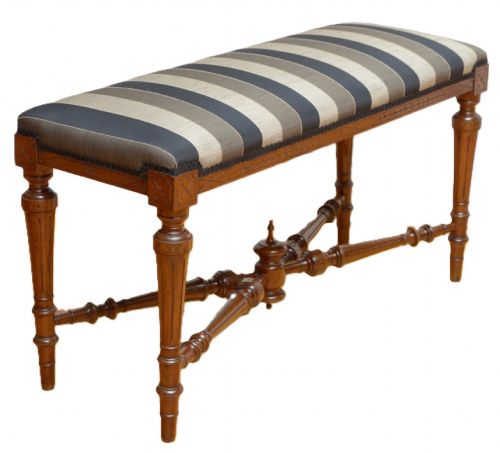
A padded window stool offers a low-profile seat designed to sit beneath glazing or along narrow corridors. These pieces bridge the gap between bench and footstool, often appearing as elongated duet seats or compact X-framed designs.
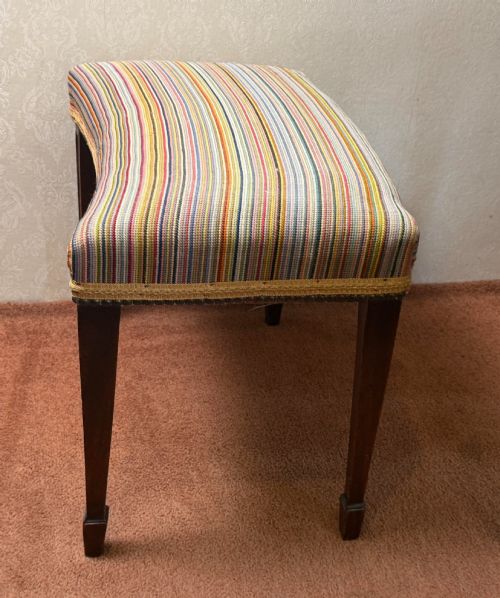
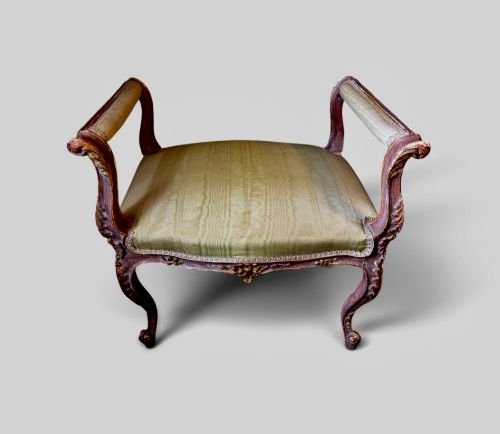
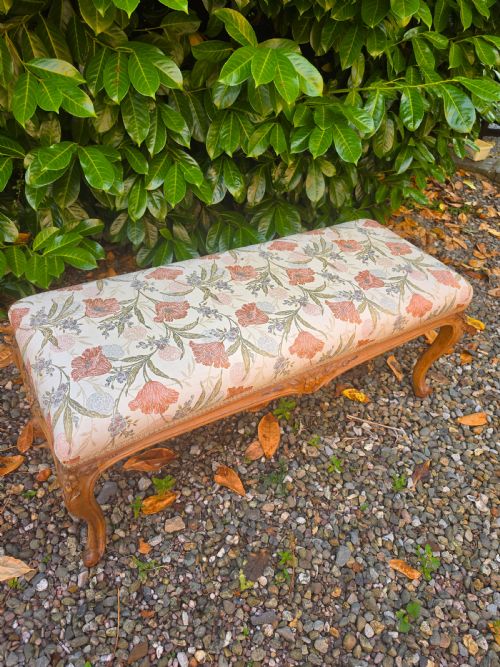
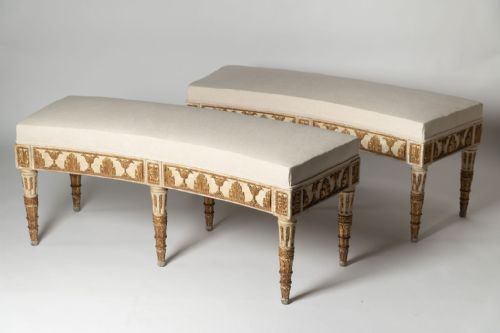
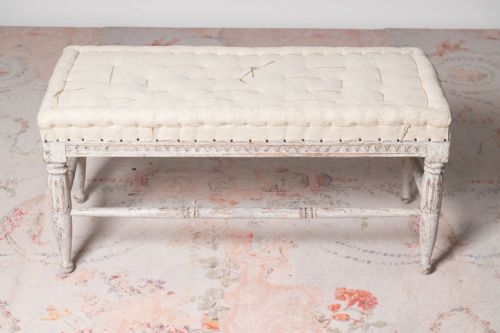
The selections available here span multiple centuries and regional aesthetics, moving from eighteenth-century mahogany frames with square tapering legs to late-nineteenth-century ebonised and walnut iterations. French Normandy oak examples and Italian carved forms also surface alongside straightforward Edwardian piano stools.
Makers historically tailored these benches for specific rooms, resulting in variations like the deep upholstery of a Regency ottoman or the Gothic lines of an oak hall seat. Buyers encounter everything from simple upholstered tops to hinged seats concealing storage within.
Assessing quality in construction and finish
The integrity of the timber frame dictates the longevity of the piece, with tight joinery and crisply carved details separating standard items from superior examples. Hand-carved elements, such as cabriole legs with claw and ball feet or elaborate giltwood ornamentation, reflect higher workshop ambition.
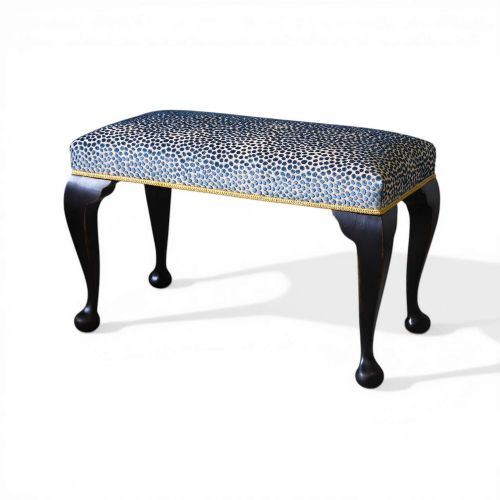
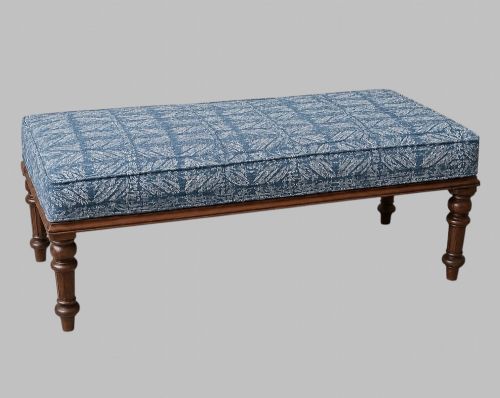
The execution of the upholstery and the choice of covering fabric reveal much about a piece's recent history and standard of restoration. Professional re-upholstery utilising heritage textiles elevates an ordinary bench into a focal point of interior design.
The inventory spans the eighteenth, nineteenth, and early twentieth centuries, including Victorian, Edwardian, and Regency examples.
The Padded Window Stool Glossary
- Duet stool
- An elongated seat designed to accommodate two people, frequently found in musical settings or long window bays.
- Ebonised
- Wood treated with a dark stain or chemical process to imitate ebony, popular during the Victorian and Edwardian periods.
- X-framed
- A seating structure supported by intersecting diagonal legs, often associated with grander historical revival styles.
- Giltwood
- Timber coated with a thin layer of gold leaf or powder, commonly seen on decorative French and Italian frames.
- Ottoman
- A fully upholstered seat or footstool, sometimes featuring a hinged lid for interior storage.
Padded Window Stool: Frequently Asked Questions
Where should I place a padded window stool?
These versatile seats fit naturally beneath low window sills, at the foot of a bed, or along narrow hallways where full-sized chairs obstruct movement. Their low profile ensures they do not block natural light coming through glass.
They also serve well in dressing rooms or beside pianos as duet seating. The narrower proportions allow them to hug walls tightly while offering an accessible resting place.
How do I date a window stool?
Dating relies on examining the timber species, leg profiles, and structural joinery techniques. Eighteenth-century versions often feature straight tapering legs or classical mahogany frames, whereas Victorian pieces frequently display heavier walnut or ebonised surfaces.
Later Edwardian and early twentieth-century examples lean towards lighter woods or revived historical motifs such as Adams style gilding. Upholstery fabrics often reflect later re-covering rather than the original date of manufacture.
Can I use modern fabrics on an antique stool?
Using contemporary designer textiles on older frames is a common practice that breathes new life into historical seating. Many pieces are offered with recent professional upholstery by recognised design houses. n Retaining or selecting appropriate period-sympathetic fabrics ensures the bench maintains its visual balance within a room. The underlying frame remains the primary historical artefact.
What is the difference between a bench and a duet stool?
A bench typically refers to a longer, simpler wooden or upholstered seat intended for hallways or gardens. A duet stool specifically describes a wider seat built to accommodate two musicians side by side at a piano or dressing table. n Many duet stools incorporate hinged seats that lift to reveal sheet music storage inside. Window stools bridge these categories by combining the length of a bench with plush padding.