


Padded Walnut Dressing Seat
A padded walnut dressing seat offers a compact, functional seat for a dressing table, combining timber frames with various textile coverings.
Padded Walnut Dressing Seat
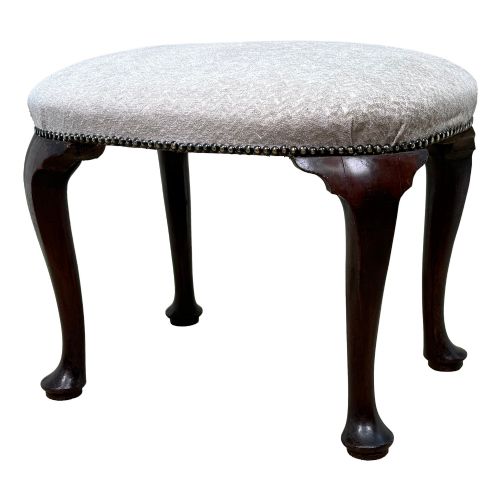
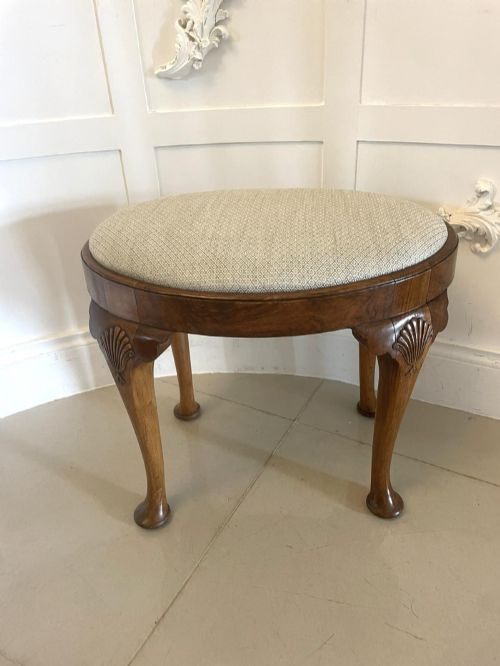
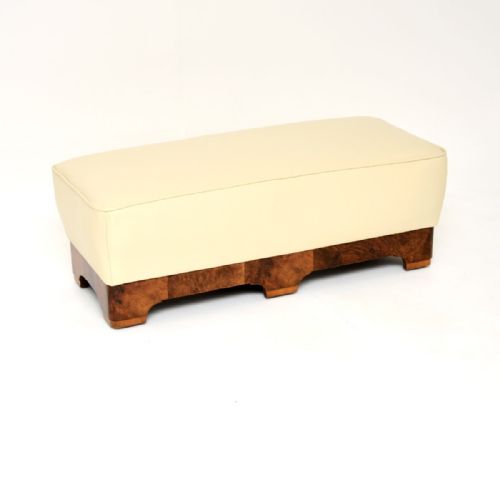
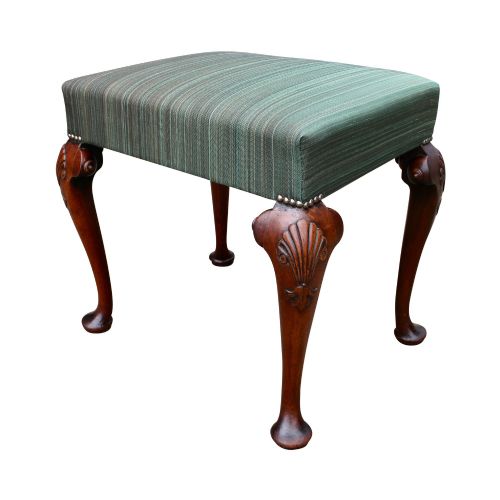
A padded walnut dressing seat is a small seating form designed to sit neatly beneath a dressing table, functioning as a stool, bench, or ottoman. You encounter examples ranging from early eighteenth-century George I pieces to Victorian and Art Deco variations.
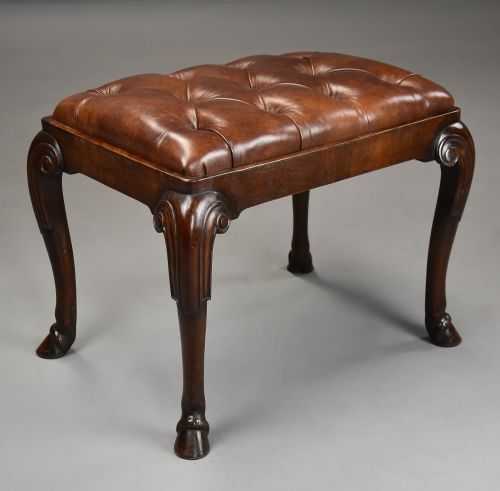
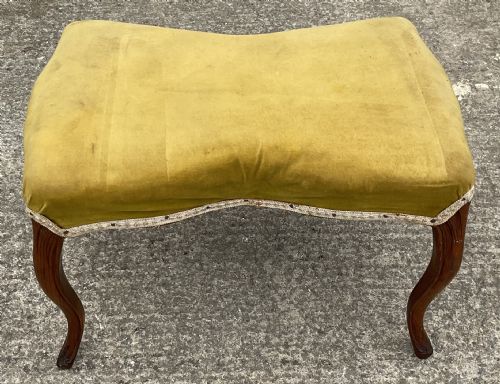
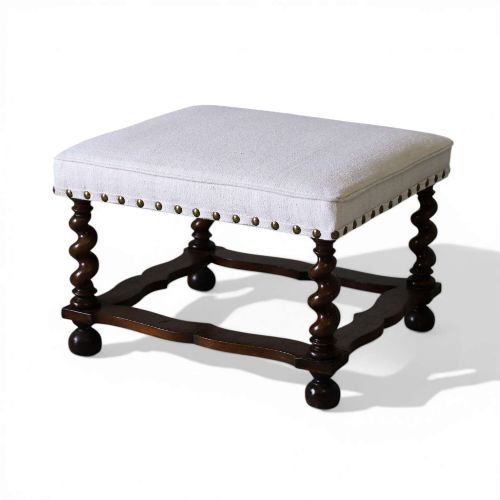
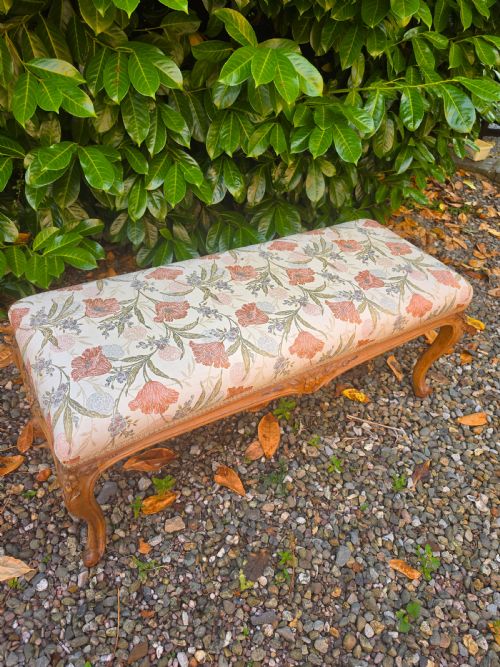
The form appears in oval, rectangular, and square formats, supported by cabriole legs, twisted rope supports, or barley-sugar turnings. Many pieces adopt the Queen Anne style with characteristic curved legs and subtle carving.
Makers shaped these items for bedchambers and dressing rooms, pairing sturdy wood frames with comfortable upholstered pads. The selection here spans multiple periods, showing how the form evolved from formal Georgian designs to later revival interpretations.
What varies in quality
The refinement of the timber and the crispness of the carving determine the distinction between standard and superior pieces. Finer examples show carefully selected burr walnut figure and smoothly turned or carved leg profiles.
Upholstery choices also separate the range, with period-appropriate needlepoint, leather, or textile coverings reflecting the original character more successfully than later replacement covers.
Support styles range from cabriole legs and claw and ball feet to barley-sugar turnings and twisted rope frameworks.
The Padded Walnut Dressing Seat Glossary
- Cabriole leg
- A furniture leg that curves out at the knee and tapers inward to an ankle, often ending in a claw and ball foot. This shape defines many Queen Anne and Victorian revival styles.
- Burr walnut
- A figured wood grain obtained from walnut tree growths, producing intricate circular patterns on table tops and stool frames. Cabinetmakers prized this timber for decorative surfaces.
- Oyster veneer
- Small oval pieces of branch wood sliced to resemble oyster shells and arranged in geometric patterns. The technique appears on stretchers of William and Mary era pieces.
- Needlepoint
- Hand-stitched canvas work used for upholstery on stools and window seats. It provides a textured, decorative surface across the top of the seat.
- Barley-sugar twist
- A spiral turning resembling a twisted rope, used on the legs and stretchers of seventeenth and eighteenth-century furniture. It adds vertical visual interest to the support framework.
Padded Walnut Dressing Seat: Frequently Asked Questions
Where should I place a dressing seat?
These compact stools fit naturally beneath a dressing table or vanity in a bedroom. They also function as occasional seats or window benches in smaller spaces.
Their low profile allows them to slide out of the way when not in use, keeping floor space open.
How do I identify a Queen Anne style stool?
Queen Anne style stools typically feature cabriole legs that curve outward at the knee and taper down to simple feet. The frames often remain unadorned or show subtle carving focused on the corners.
Many pieces from the nineteenth and twentieth centuries revived these eighteenth-century design characteristics.
What materials are used for the upholstery?
Original and restored surfaces utilise a range of textiles including velvet, linen, leather, and tapestry. Some examples feature detailed needlepoint covers worked in wool.
Textiles are stretched over padded bases, occasionally finished with decorative brass elements.
Are these seats suitable for daily use?
Sturdy walnut frames and solid construction make these seats durable for regular seating at a dressing table. Their compact dimensions support comfortable posture during daily grooming routines.
Care should be taken with antique upholstery fabrics to preserve the longevity of older textiles.