



Padded Tub Armchair
These padded tub armchairs offer deep, curved comfort, bridging practical seating and traditional craft across multiple periods.
Padded Tub Armchair
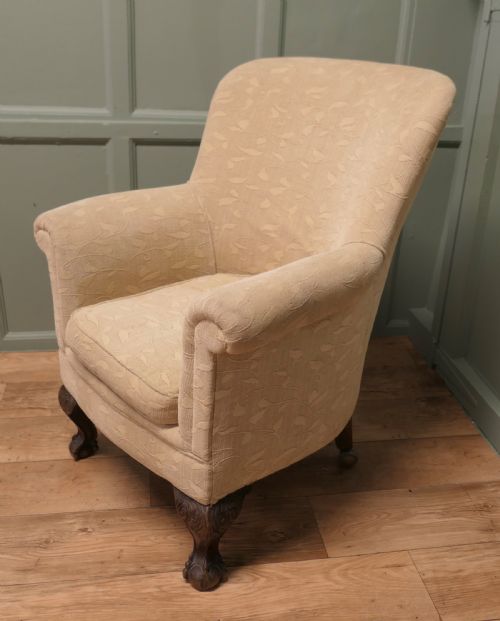
A padded tub armchair combines a continuous curved back and arms into a single embracing enclosure, designed for comfort and extended sitting in libraries, offices, and studies. These pieces appear in forms ranging from compact boudoir chairs to large library armchairs, reflecting the specific functional demands of domestic and professional spaces.
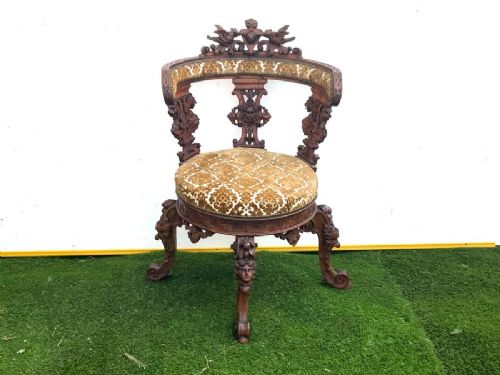
The examples gathered here span from the robust proportions of the Victorian era through Edwardian refinements, alongside earlier influences such as Italian Renaissance Revival and Georgian Revival. Buyers encounter variants executed in mahogany, walnut, and golden oak, often fitted with low profiles suited for desks and dressing tables.
Makers utilised various timber frames to support enclosed upholstered shells, resulting in pieces that function as both occasional seating and dedicated desk chairs. The domestic origins vary from English workshops to continental bentwood production, demonstrating how a singular seating silhouette adapts across different manufacturing traditions.
What varies in quality
The standard of carving and timber selection dictates the primary distinction between simpler utility seating and more ambitious workshop productions. Dense grain in walnut and mahogany frames alongside precise joinery indicates superior initial construction.
The integrity of the internal structure and the execution of the curved wooden shell determine the longevity of the piece. Refined surface finishes and well-executed upholstery work separate standard commercial output from pieces originating in named firms.
Some nineteenth-century readers required a padded tub chair deep enough to shield them from draughts while pondering heavy library volumes.
Hindley And Sons·Thonet
The Padded Tub Armchair Glossary
- Tub armchair
- An upholstered seat with a continuous curved back and arms that form a protective enclosure. This design provides enclosed support characteristic of nineteenth-century reading chairs.
- Bentwood
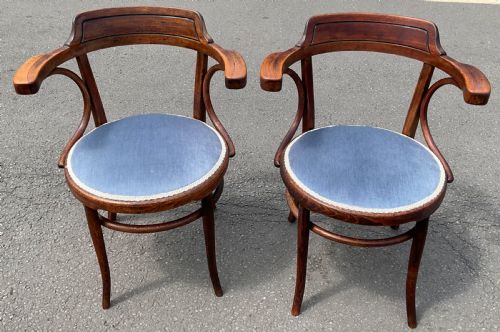
- Wood shaped by exposure to steam and pressure into curved structural components. This technique allows for lightweight yet resilient frames.
- Showwood
- Exposed polished timber frame parts left visible around the upholstered sections. This highlights the grain and carving quality of the wood.
- Bergère
- An enclosed upholstered armchair with wooden framing and traditionally cane or upholstered sides. These pieces often reflect neoclassical or revival influences.
- Smokers bow
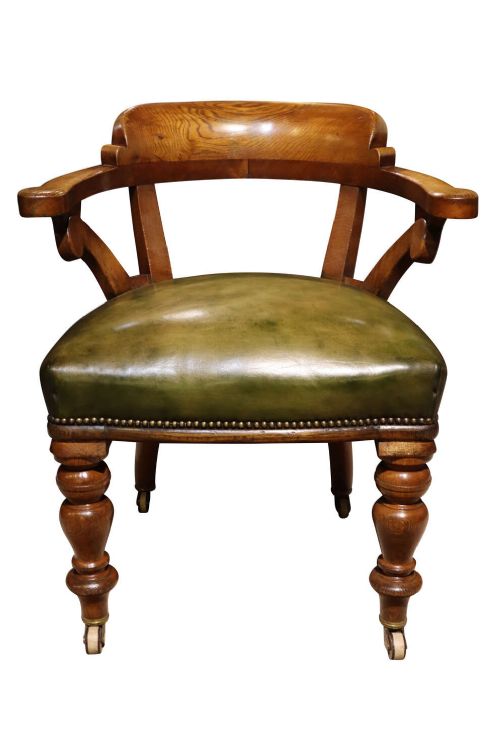
- A sturdy, low-backed wooden armchair with a turned spindle gallery, commonly used in offices and libraries. This form utilises a continuous bent rail for the arms and back.
Padded Tub Armchair: Frequently Asked Questions
How do I identify a Victorian tub armchair?
Victorian examples typically feature dense mahogany or walnut frames combined with deep buttoned or smooth upholstery. The proportions remain heavy and robust to support the enclosed padded shell.
These chairs often display dark wood finishes and substantial turned legs, distinguishing them from lighter Edwardian alternatives.
Were these chairs used at desks?
Many tub armchairs function effectively as desk or library chairs due to their supportive wrap-around backs. Lower profiles allowed them to slide neatly beneath writing tables.
Compact variants served multiple roles in bedrooms and dressing rooms as occasional seating.
What is bentwood construction?
Bentwood involves steaming timber until pliable and bending it into curved furniture components. This method produces strong, continuous lines without traditional joinery.
Pieces utilising this technique often display lightweight profiles and smooth rounded frames.
How do Edwardian chairs differ from Victorian ones?
Edwardian iterations generally present lighter proportions and incorporate inlaid timber decoration or painted surfaces. The overall aesthetic shifts toward boudoir and occasional furniture.
Materials like mahogany remain common, but the execution favours brighter finishes and slender supports.