

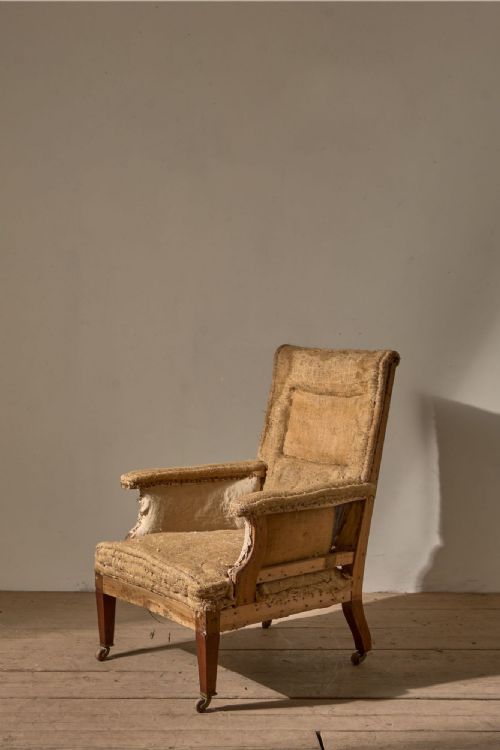
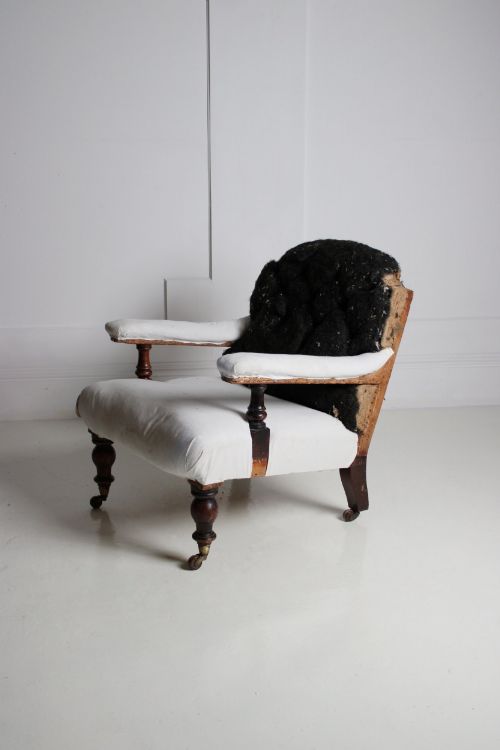
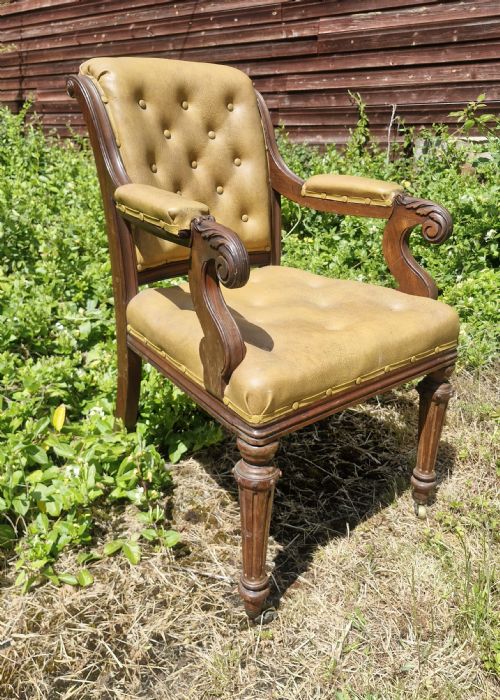


Padded Arm Mahogany Chair
A padded arm mahogany chair brings together timber and textile for daily seating.
Padded Arm Mahogany Chair
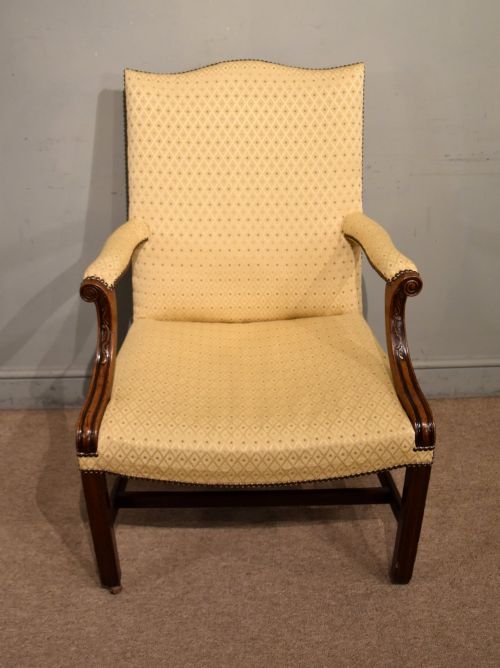
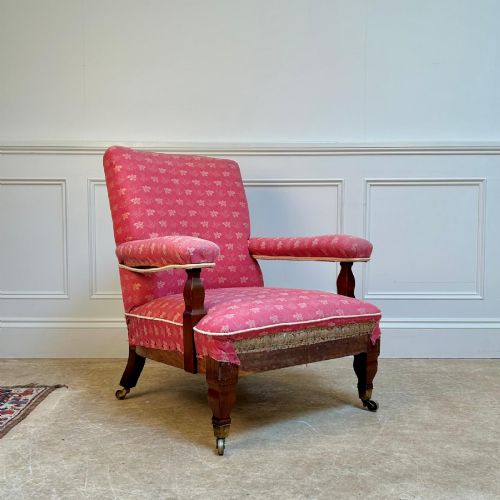
A padded arm mahogany chair unites a dark tropical hardwood frame with cushioned support for the arms, seat and back. You will encounter various forms across this page, ranging from formal library and desk chairs to deep Victorian fireside seats and country house armchairs.
The selection draws on multiple eras, spanning 18th-century Georgian designs through to Victorian and Edwardian examples. Styles include George III, Hepplewhite, and later revivals, reflecting the enduring utility of a mahogany frame paired with soft upholstery.
Most entries function as reading chairs, desk seats, or occasional furniture for the study and drawing room. Their construction balances sturdy timber framing with textile elements designed for comfort.
How they were made
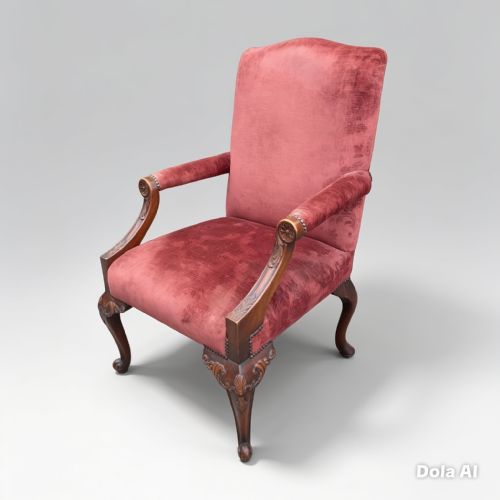
Craftsmen built the primary frames from solid mahogany, often shaping the timber into cabriole legs, carved backs, or show wood surrounds. Wood inlay occasionally enhances the surfaces on later Edwardian pieces.
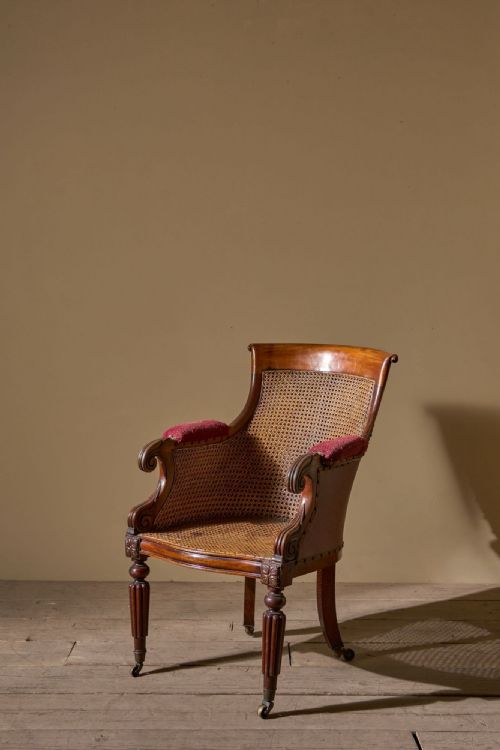
Upholstery techniques involve padding the arms, seats, and backs using fabric, velvet, leather, or specialist upholstery fabric. Brass details and cane work also appear on specific library and bergère models to add texture and support.
The selection includes desk chairs, rocking chairs, library armchairs, and folding steamer chairs.
What varies in quality
The sophistication of the timber carving and the precision of the joinery set the baseline for each piece. Finer examples display crisp detail in the mahogany splats, arm supports, and leg structures.
The integration of the padded elements also dictates the standard of the chair. Superior pieces maintain harmonious proportions between the wooden frame and the upholstered sections, whether finished in leather, velvet, or woven fabric.
Morris And Co·Howard And Sons
The Padded Arm Mahogany Chair Glossary
- Mahogany
- A durable tropical hardwood valued for its rich reddish-brown colour and stability in furniture construction. It forms the primary structure for all items in this selection.
- Gainsborough chair
- A wide, open-armed armchair with a padded seat and back, typically standing on short cabriole or straight legs. This form dates back to the mid-18th century.
- Bergère
- An enclosed upholstered armchair with exposed wooden framing and cane or padded side panels. It offers a deep, comfortable seat.
- Carver chair
- An armchair designed to match a set of dining chairs, usually featuring open arms and a supportive back splat. They often sit at the head of a dining table.
- Show wood
- The polished wooden frame left visible around the upholstered sections of an armchair. It highlights the grain and quality of the mahogany.
Padded Arm Mahogany Chair: Frequently Asked Questions
What is a Gainsborough chair?
A Gainsborough chair is a wide, open-armed seating option featuring a padded back and seat designed for libraries and writing desks during the eighteenth century.
These pieces typically display mahogany frames with short legs and carved arm supports to allow comfortable movement in domestic spaces.
How do I identify a Victorian armchair?
Victorian armchairs often show heavier proportions, darker mahogany frames, and deep upholstery suited for fireside and library use. Balloon backs and cabriole legs frequently appear in this era.
Later Victorian pieces may incorporate button backs, show wood frames, and turned supports characteristic of late nineteenth-century manufacture.
Where were these chairs used?
These chairs served primarily in libraries, studies, drawing rooms, and bedrooms as reading or desk seats. Their padded arms provided sustained comfort for writing and conversation.
Country houses and townhouses alike utilised them in formal and private quarters depending on the scale and style of the frame.
What fabrics cover these chairs?
Original and replacement coverings include leather, velvet, traditional woven textiles, and standard upholstery fabric. Some bergère variations also incorporate cane panels on the sides.
Many older frames have undergone re-upholstery over time to preserve the textile condition while retaining the antique mahogany structure.