
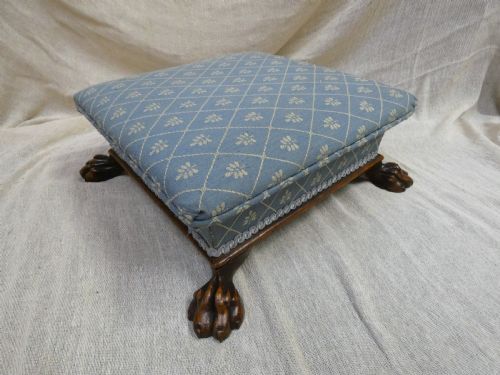
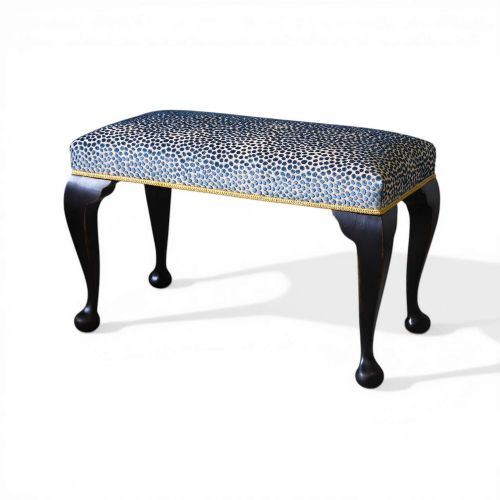
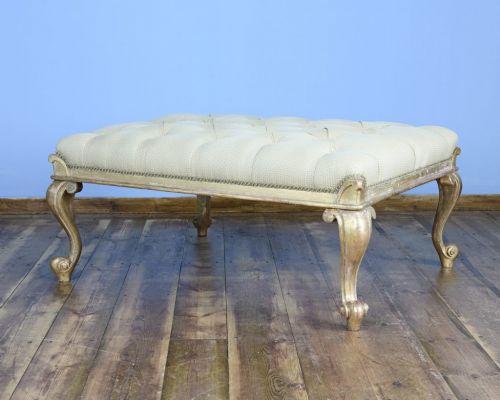
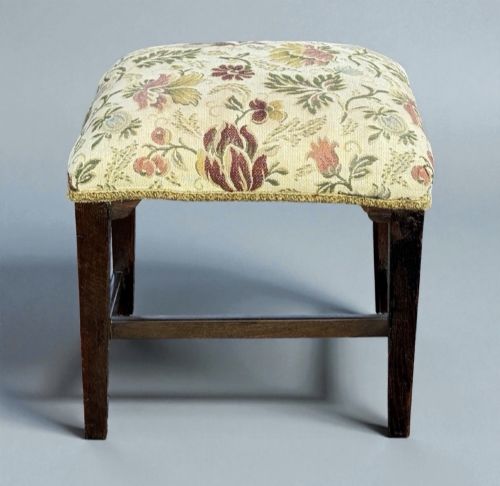


Pad Foot Footstool
These pad foot footstool examples combine solid timber frames with upholstered tops, offering a practical seat or rest for any room.
Pad Foot Footstool
When you search for pad foot footstool, you encounter a variety of forms including footstools, ottomans, and dressing stools spanning multiple eras. The pieces recorded here range from early walnut examples through to Victorian, Edwardian, and later iterations.
You are most likely to meet Victorian and 19th-century variants on this page, alongside pieces from the Georgian, Regency, and Edwardian periods. These objects serve as functional seating or foot rests, often taking square, oval, or long forms.
Makers and designers drew upon historical idioms, producing items in George I, Queen Anne, Chippendale, and Scottish Baronial styles. Materials vary from dense hardwoods to soft textiles, reflecting the domestic requirements of their respective decades.
Materials and construction
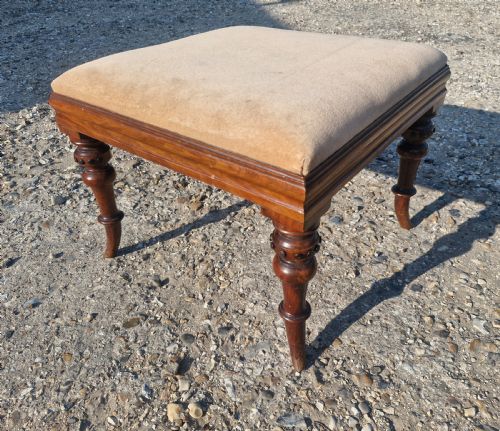
Frames rely heavily on traditional timbers such as mahogany, walnut, rosewood, oak, and beechwood, shaped with turned, carved, or ebonised details. Joinery techniques secure the structural integrity of these low seats, occasionally incorporating brass elements or parcel gilt highlights.
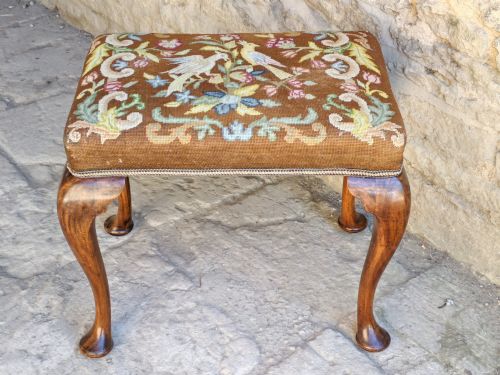
Upholstery forms the upper portion of each piece, utilising textiles like velvet, leather, needlepoint, tapestry, and general upholstery fabric. Craftsmen fitted these covers over padding to create comfortable surfaces for resting feet or sitting.
The listings feature timbers such as mahogany, walnut, rosewood, and oak, paired with textiles including velvet, leather, and tapestry.
Assessing quality in construction and material
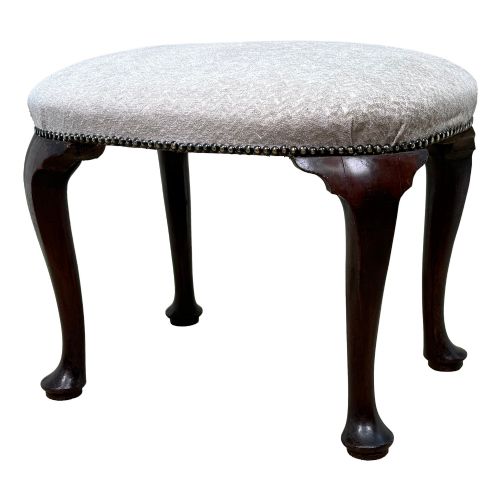
The distinction between standard examples and superior pieces rests on the crispness of the timber carving and the selection of primary woods like figured walnut or dense mahogany. Better items display thoughtful proportion, refined leg shapes such as cabriole or scroll forms, and harmonious upholstery choices.
Finishing work sets the finer objects apart, visible in the smoothness of the turned supports, the tightness of the joinery, and the quality of the textile work on the seat. Secondary woods and internal framing reveal the diligence applied during original manufacture.
The Pad Foot Footstool Glossary
- Cabriole leg
- A furniture leg that curves out and then narrows inward, terminating in a foot such as a pad or claw. This design became popular during the early 18th century.
- Ottoman
- A low, upholstered seat or footstool without a back or arms. These pieces often incorporate internal storage space beneath the hinged top.
- Needlepoint
- A type of canvas work embroidery used historically to cover seat tops and footstools. It provides a durable and decorative surface.
- Ebonised
- Wood treated with a finish to imitate ebony, producing a deep black appearance. This technique was common on Victorian and Edwardian frames.
- X-framed
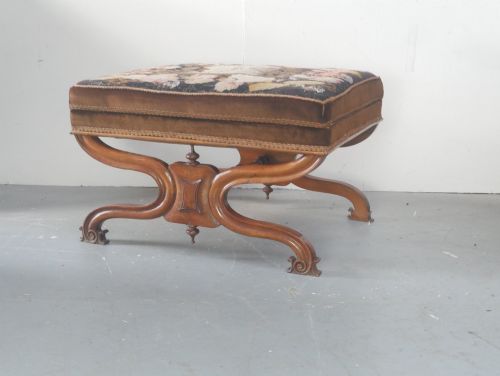
- A structural support formed by two intersecting members shaped like the letter X. This configuration provides stability and a distinct architectural profile.
Pad Foot Footstool: Frequently Asked Questions
What is a pad foot footstool?
A pad foot footstool is a low domestic seating item featuring a rounded foot resting directly on the floor. These pieces support the feet or serve as compact seats.
Craftsmen built them across the Georgian, Victorian, and later periods using various woods and upholstered tops.
How do I date a footstool?
Dating relies on examining the timber species, joinery methods, and stylistic cues present in the frame. Victorian examples often show heavier walnut or mahogany construction with distinct upholstery styles.
Earlier pieces from the 18th century display different proportions and foot designs, such as pad or cabriole configurations.
Where were these stools used?
These items served primarily in parlours, drawing rooms, and bedrooms as auxiliary seating or rests for tired feet. Adjustable versions provided specific support for conditions like gout.
Larger ottoman variants sometimes provided discrete storage for household textiles and accessories.
How do I care for antique upholstery?
Preserving the fabric top involves gentle vacuuming with a soft attachment to remove dust without damaging fragile textiles. Keep the piece away from direct sunlight to prevent fading.
Conditioning wooden frames with appropriate wax maintains the finish without harming surrounding fabric.