
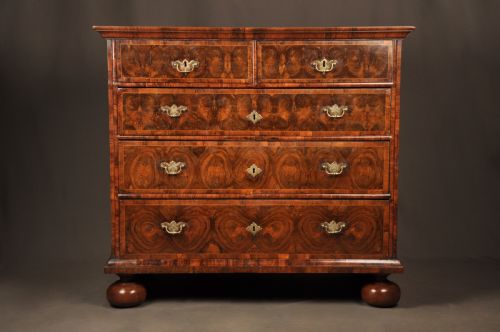

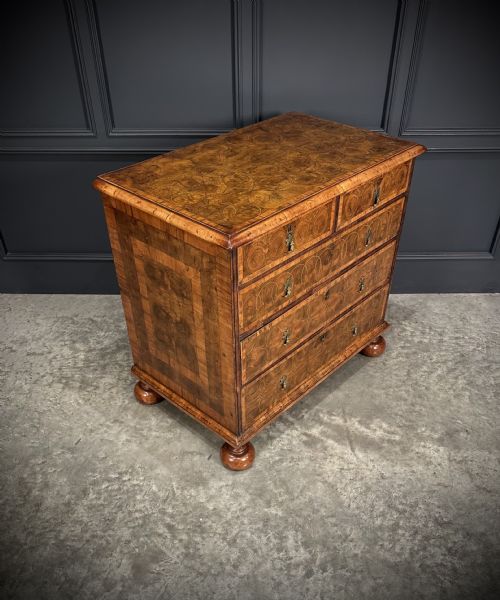


Oyster Veneered Chest
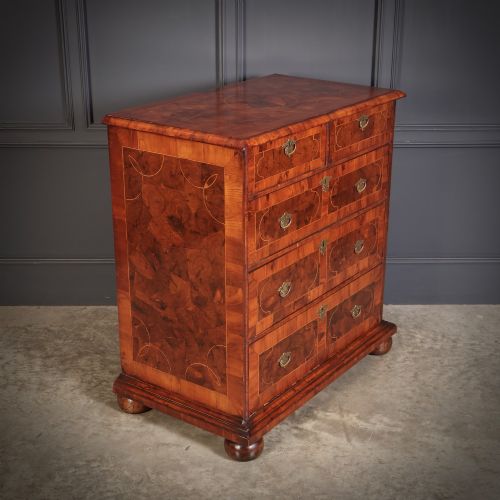
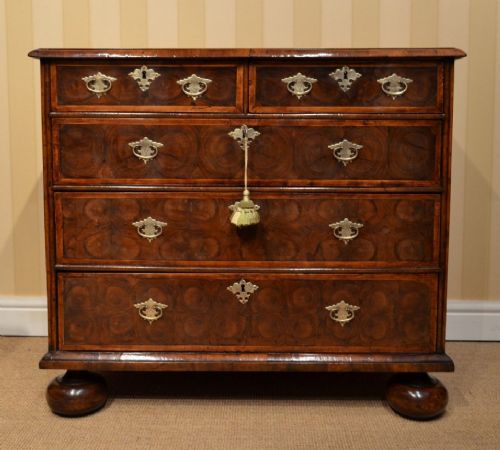
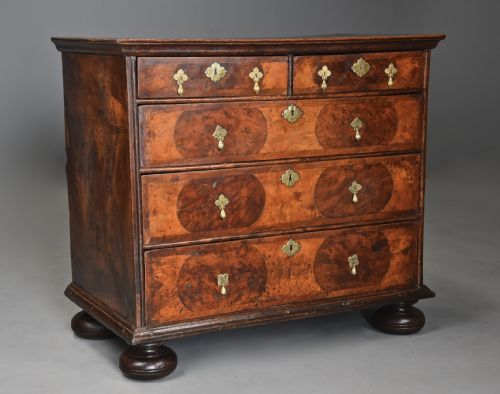
An oyster veneered chest displays circular cross-sections of timber arranged to resemble shells, prized for rich grain patterns.
Oyster Veneered Chest
When you search for an oyster veneered chest, you encounter storage furniture characterised by circular slices of branch wood arranged across drawer fronts and surfaces. These pieces emerge predominantly from the seventeenth century, aligned with the William and Mary and George periods.
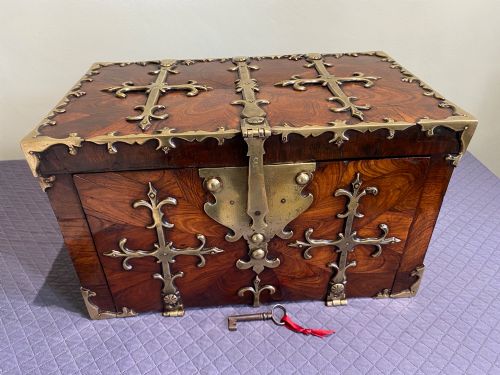
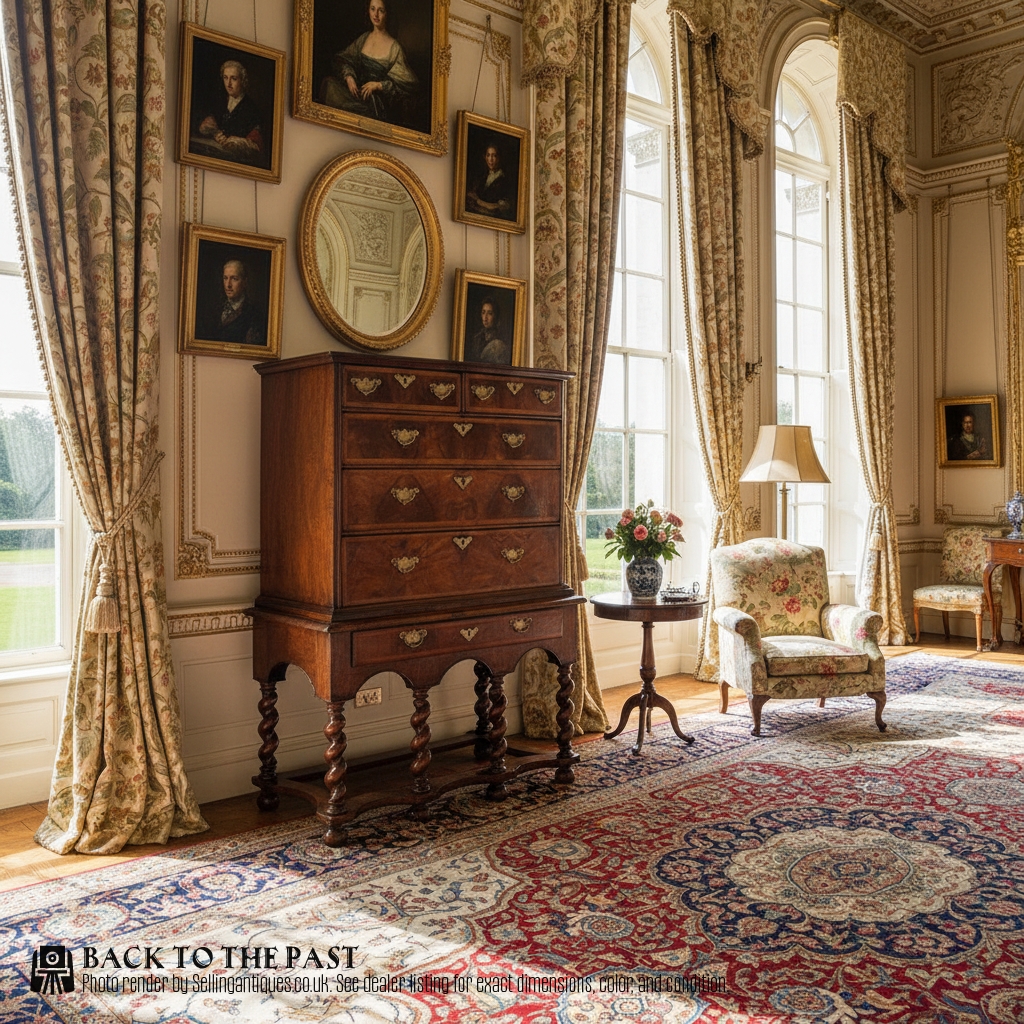
The most common formats on this page are chests of drawers, alongside elevated forms like chests on stand and cabinets on stand. Alongside full-sized storage, the selection includes smaller pieces such as collectors boxes and tea caddies.
Timbers span walnut, olivewood, laburnum, kingwood and yew wood, often accented with boxwood or maple stringing. While seventeenth-century origins dominate, later revivals from the twentieth century also appear.
Materials and construction
Craftsmen sliced small branches diagonally to produce round or oval veneers, laying them in geometric patterns across a primary carcase of oak or soft wood. These delicate roundels required meticulous fitting and cross-banding to prevent warping.
Cabinet makers utilised dense, highly figured timbers such as laburnum, olivewood and walnut to maximise contrast in the grain rings. Contrasting woods provided decorative borders and stringing around the main field of veneer.
Oyster Veneered Chest Retail Price Guide 2026
Typical asking prices for oyster veneered chest among the pieces listed under this phrase on Sellingantiques today, from the lower quarter to the upper quarter. They describe what is for sale here now, not the wider market.
Branch slices were sometimes arranged to mimic the interior patterns of actual shellfish, tricking casual observers into seeing marine life in the timber.
Judging quality in oyster veneer
Quality rests upon the uniformity of the cutting and the preservation of the natural timber figures across the entire surface. Dense, closely packed roundels demonstrate superior technical execution compared to sparsely arranged patterns.
The choice of secondary woods and the complexity of the cross-banding distinguish standard examples from finer works. Surface depth and the retention of original patination elevate individual pieces within the range.
The Oyster Veneered Chest Glossary
- Oyster veneer
- Circular wood veneers cut transversely from small branches to display concentric growth rings. This technique creates a distinctive patterned surface resembling oyster shells.
- Cross-banding
- A decorative border technique where veneer strips are laid perpendicular to the grain of the main panel. It frames the central oyster work on drawer fronts and tabletops.
- Chest on stand
- A storage chest raised upon a separate support frame featuring legs and stretchers. This elevated form provides a lighter visual proportion.
- Stringing
- Thin inlay lines of contrasting wood embedded into the surface. It serves to outline panels and drawers on seventeenth-century furniture.
- Coffre forte
- A strong box or reinforced chest used for securing valuables. These small reinforced containers frequently display elaborate veneer work.
Oyster Veneered Chest: Frequently Asked Questions
What is an oyster veneered chest?
An oyster veneered chest is a storage piece decorated with transverse branch slices that form circular patterns across the timber surfaces.
These pieces date principally from the late seventeenth and early eighteenth centuries, produced during the William and Mary and early Georgian periods.
How do I date an oyster chest?
Dating relies on examining the construction methods, the drawer linings, the handles and the specific timber combinations used by the cabinet maker.
Seventeenth-century examples typically feature oak carcases and hand-cut dovetails, whereas twentieth-century revivals display different interior timber preparation.
Which woods appear in these chests?
Common timbers include walnut, laburnum, olivewood and kingwood, chosen for their distinct growth rings and rich natural colouration.
Makers often combined these with boxwood, yew and oak to create contrast between the central veneer and the surrounding borders.
Where should I place an oyster chest?
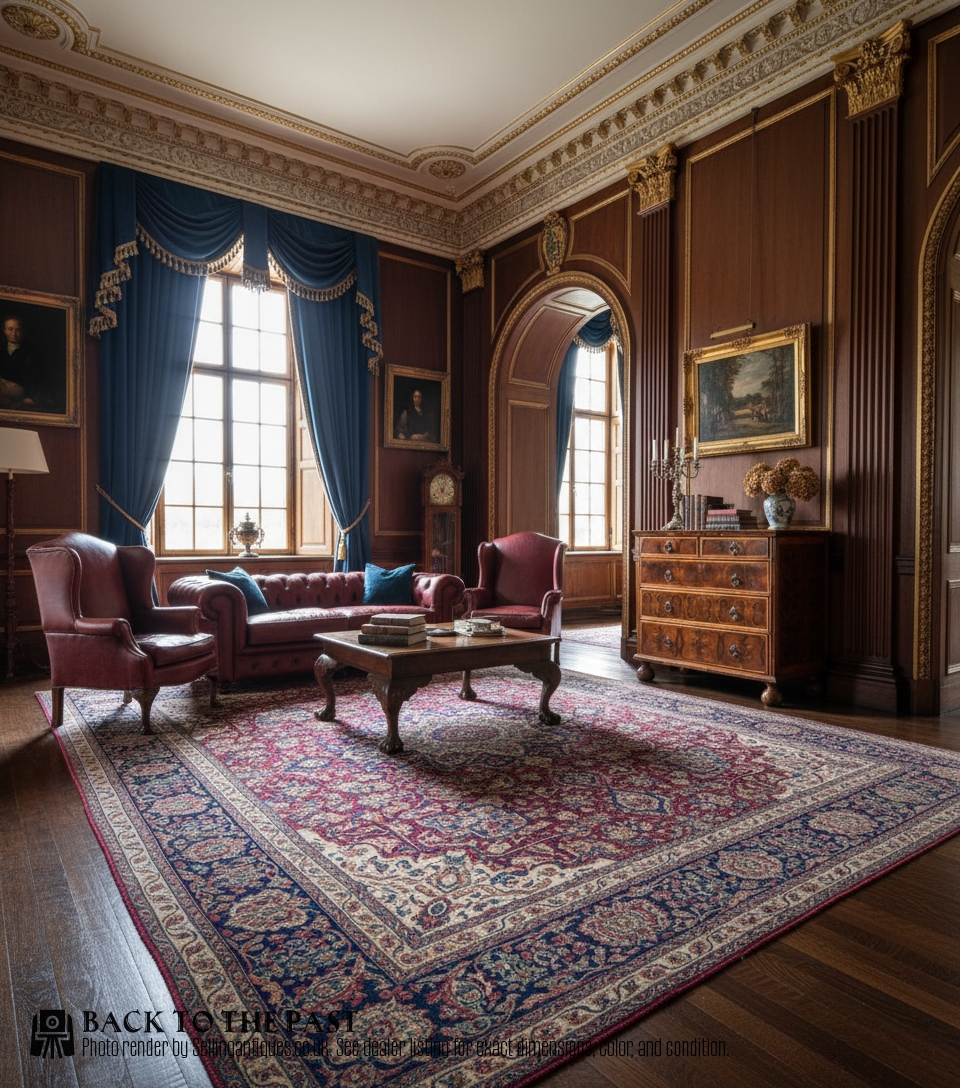
These pieces function well as statement storage items in hallways, living rooms or bedrooms where the patterned surfaces remain visible.
Keeping them away from direct sunlight and heat sources protects the fragile historic veneers from drying and cracking.