

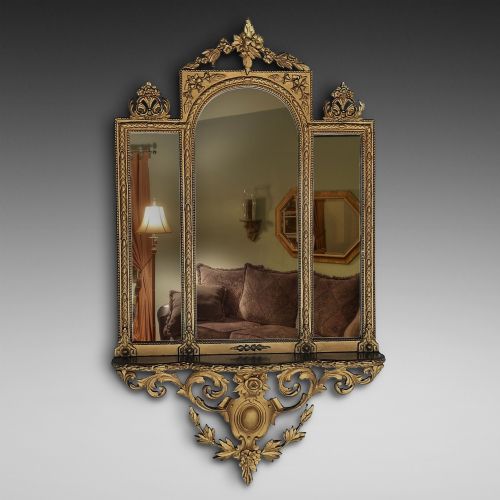
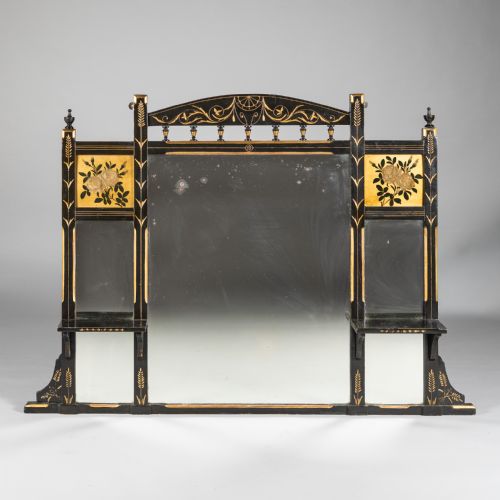


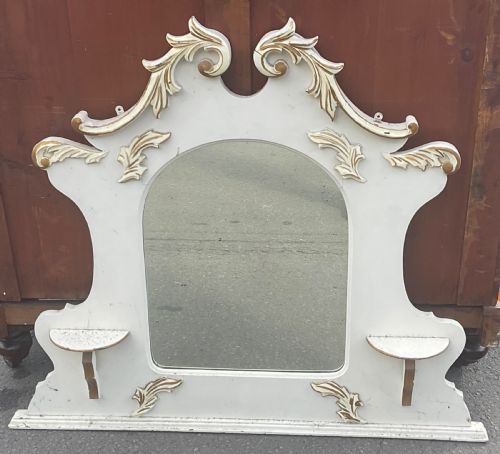


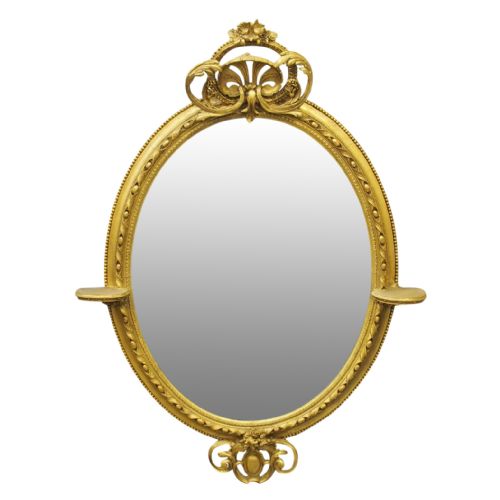

Overmantel Mirror Shelves
Overmantel mirror shelves offer a practical ledge and a reflecting glass, bringing architectural weight to a chimney breast.
Overmantel Mirror Shelves
When you search for overmantel mirror shelves, you encounter large decorative frames designed to sit above a fireplace opening. The pieces span from the early nineteenth century through the Victorian and Edwardian eras, displaying considerable variety in scale and timber.
You meet many Victorian examples in mahogany, oak, and giltwood, alongside Edwardian iterations in painted finishes and ebonised wood. Several incorporate integral brackets or ledges intended for small ornaments.
The form shifts from heavy gilt rococo revival frames to rectilinear aesthetic movement designs and Moorish influenced woodwork. Wall mirrors and display cabinets also appear among the overmantel mirrors on this page.
How they were made
Makers constructed these frames using solid timbers such as mahogany, oak, walnut, and rosewood, frequently applying ebonising or gold leaf to the surfaces. Gesso and carved wooden ornaments provided the intricate relief work seen on Victorian giltwood examples.
Mirror glass sat within rebated frames, secured at the back, while internal brackets and shelves were joined using traditional cabinet-making methods. Painted and lacquered Edwardian surfaces reveal different finishing techniques from the earlier gilded pieces.
Overmantel Mirror Shelves Retail Price Guide 2026
Typical asking prices for overmantel mirror shelves among the pieces listed under this phrase on Sellingantiques today, from the lower quarter to the upper quarter. They describe what is for sale here now, not the wider market.
Listings span from 1800 to 1920, incorporating Victorian, Edwardian, and Aesthetic Movement design idioms.
What varies in quality
The standard of carving and the crispness of the giltwood or parcel-gilt detailing set the finer pieces apart from simpler domestic examples. Depth of moulding and the selection of figured timber veneers indicate the original maker's investment of time and material.
Original mirror glass with authentic foxing differs markedly from later replacements, altering the visual weight and historical integrity of the piece. The structural soundness of the integrated shelves and brackets also governs the overall merit.
Liberty & Co
The Overmantel Mirror Shelves Glossary
- Overmantel
- A mirror or frame made specifically to hang on the wall directly above a fireplace mantelpiece. They often incorporate small shelves for displaying decorative objects.
- Giltwood
- Timber carved and coated with gold leaf or gesso preparations. This finish was widely utilised during the Victorian period for formal reception rooms.
- Ebonised wood
- Timber stained or painted black to imitate ebony. This treatment became popular during the aesthetic movement of the late nineteenth century.
- Fretwork
- Ornamental design created by cutting patterns through thin wood using a scroll saw or piercing technique. This technique appears on several Victorian mahogany frames.
- Parcel-gilt
- A finish where only specific portions of a carved or ebonised wooden surface are highlighted with gold leaf. It creates a subtle contrast against the dark background.
Overmantel Mirror Shelves: Frequently Asked Questions
Where should an overmantel mirror be hung?
These mirrors are traditionally positioned centrally on the chimney breast directly above the fireplace mantelpiece. Their proportions are intended to anchor the visual weight of the hearth below.
Ensure the wall fixings can support the substantial weight of timber, gesso, and glass. Hanging them at the correct height allows the integrated shelves to function properly.
How do I identify a Victorian overmantel?
Victorian examples often display deep mahogany, walnut, or heavy giltwood frames with elaborate carving or aesthetic movement ebonising. Look for period construction methods at the reverse.
Later Edwardian versions tend to be lighter, frequently utilising painted finishes, satinwood inlay, or simpler oak frames.
Can these mirrors be used without a fireplace?
While designed for chimney breasts, many people mount them on plain walls to create the illusion of space and reflect natural light. The integrated shelves remain useful for small decorative items.
Consider the heavy proportions when placing one on a freestanding wall without a mantel to anchor it.
What is the difference between an overmantel and a wall mirror?
Overmantels are specifically proportioned to span the width of a fireplace, often featuring horizontal layouts and built-in ledges for display. Standard wall mirrors may be square, oval, or vertical without shelf elements.
The listings here include both categories, though overmantels dominate the selection.