


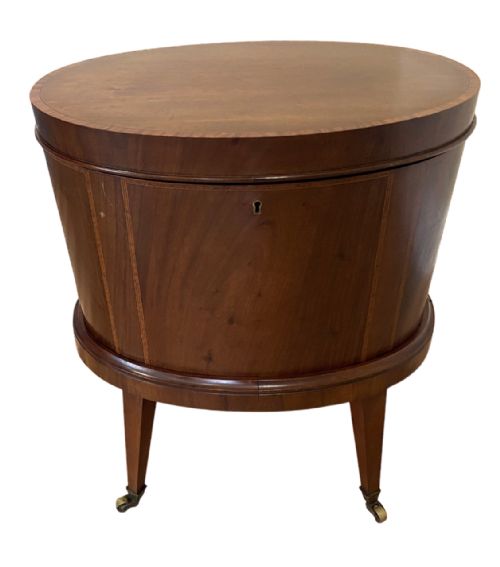
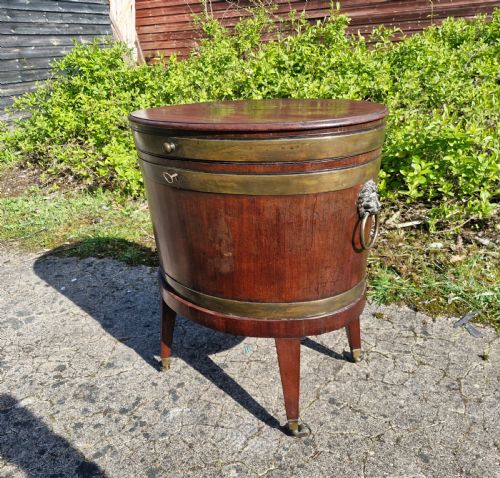


Oval Wine Cooler
An oval wine cooler is a Georgian drinking vessel designed to hold bottles in ice, bringing elegance and historic utility to any dining room.
Identifying your oval wine cooler
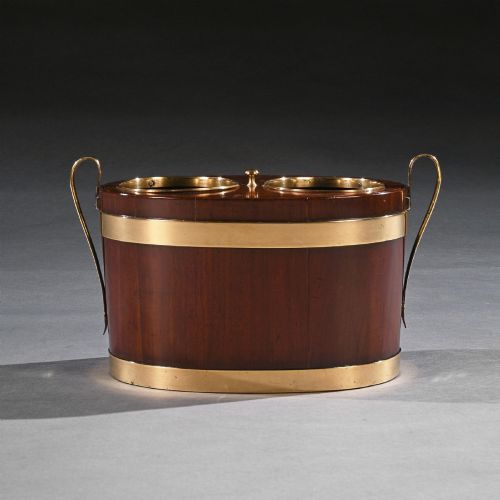
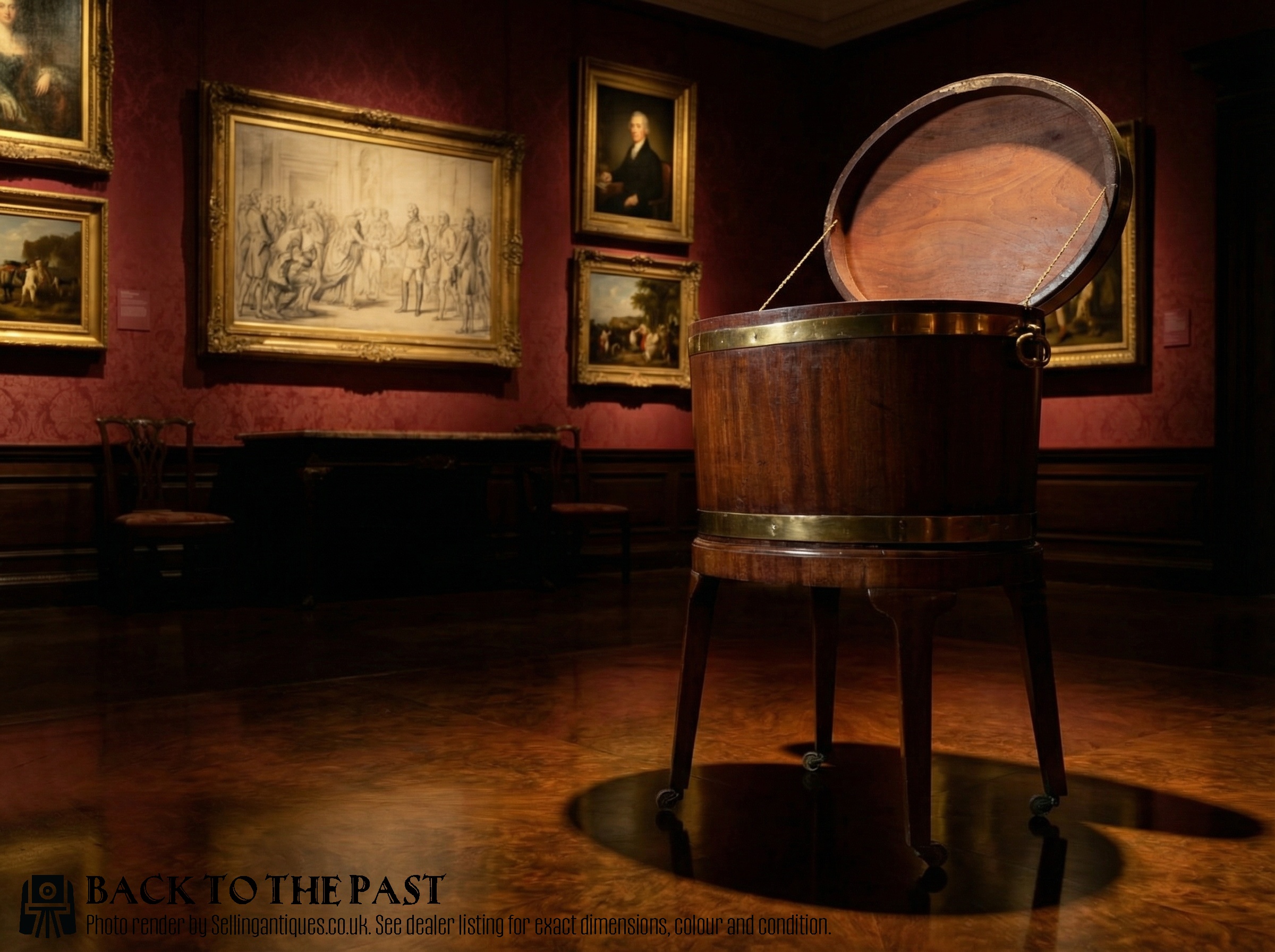
When you search for an oval wine cooler, you encounter vessels predominantly from the Georgian and nineteenth century periods, constructed in rich mahogany, oak, or brass. These pieces were essential dining room furnishings designed to keep wine chilled for guests during lengthy meals.
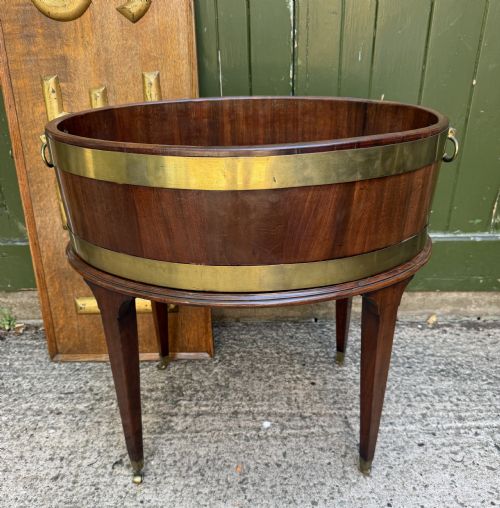
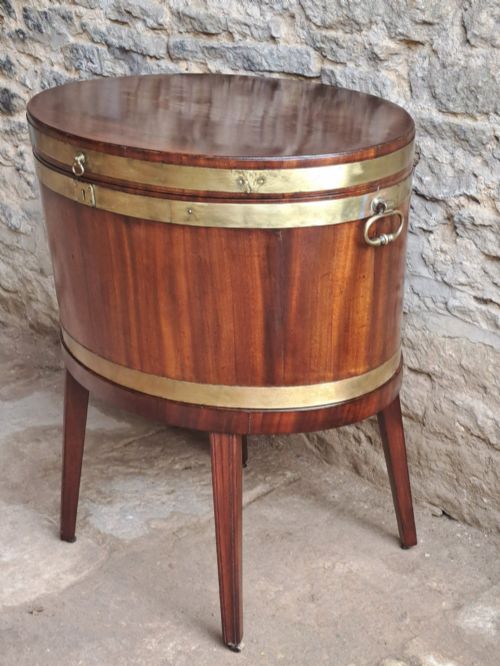
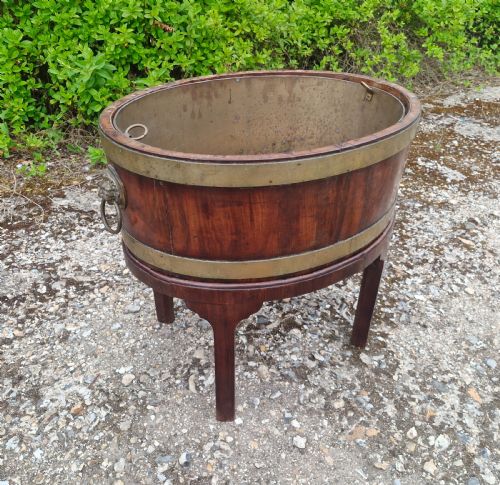
The most common form on this page is the George III mahogany oval wine cooler, frequently bound with brass hoops and lined to hold ice and water securely. Some examples feature dedicated stands with square or turned legs, while others sit directly on the floor or sideboard.
Variations span from simple coopered timber buckets to grander Adams or Sheraton style creations with elaborate bronze mounts or boxwood inlay. Certain forms double as planters or jardinières, reflecting how these vessels adapted for alternative domestic uses over the centuries.
Materials and construction methods
Cabinetmakers built these coolers using traditional cooperage techniques, assembling staves of solid mahogany, elm, or oak and securing them with tight metal bands. This construction method ensured the timber could hold water and ice safely without leaking during use.
Makers applied decorative details such as brass banding, bronze mounts, boxwood inlay, and lead linings to protect the wood and enhance the visual appeal. Figure and grain in the mahogany or elm were chosen carefully to display a rich surface texture.
Retail Price Guide 2026
Typical UK retail prices for oval wine cooler, calculated from the Sellingantiques database of over a million retail prices indexed since 2003. This retail price guide relies exclusively on Sellingantiques data; no external sources or auction records are used, so the figures do not describe the wider market.
Listings feature pieces spanning from 1750 through the Georgian, Regency, and nineteenth century periods, constructed primarily in mahogany, brass, and elm.
Distinctions in craftsmanship
Superior quality shows in the selection of deeply figured timber and the precision of the cooperage, where staves fit tightly together without excessive filler. The weight and finish of the brass bands or bronze mounts also indicate higher workshops.
Original interior lead linings and intact stands add significant integrity to a piece, whereas later alterations or replacements alter the historic standing. The crispness of inlaid details like boxwood lines further separates standard production from finer creations.
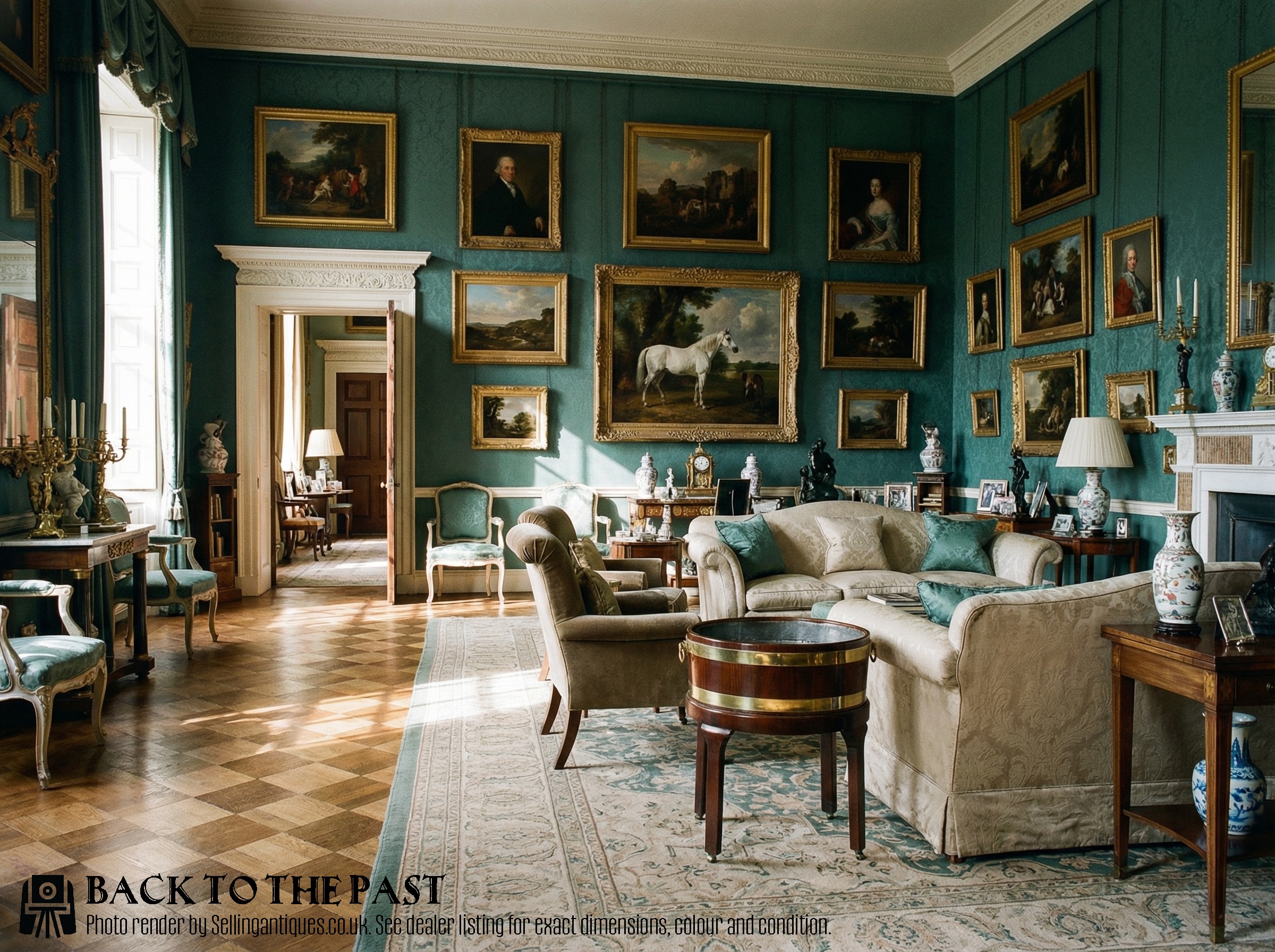
The Oval Wine Cooler Glossary
- Coopered
- Constructed from curved staves of wood joined edge to edge, much like a barrel, to hold liquids securely. This technique defines the body of many wooden coolers.
- Cellarette
- A lockable container or cabinet used to store wine bottles near the dining table before serving. The term often overlaps with wine cooler in period inventories.
- Jardiniere
- An ornamental pot or stand designed to hold plants or flowers indoors. Several metal and wooden wine coolers served this dual purpose.
- Lead lining
- A protective sheet of lead fitted inside the vessel to contain melting ice and water safely. This feature preserves the structural integrity of the outer wood.
- Brass bound
- Secured with fitted bands of brass that encircle the staves. These bands provide both structural reinforcement and decorative contrast against the dark timber.
Frequently Asked Questions
How do I clean an antique wine cooler?
Dust the exterior wood gently with a soft, dry cloth to maintain the surface sheen without stripping the aged patina. Avoid harsh chemical polishes that can damage historic finishes.
For metal mounts or brass bands, use a mild cleaner only if necessary, taking care not to let moisture seep into the surrounding timber staves.
Can I still use an oval wine cooler for ice?
Most surviving pieces retain their original lead linings, but old joints can develop minor seepage after centuries of use. It is safer to place a modern waterproof liner inside if you intend to use actual ice and bottles.
Using a hidden plastic insert protects the fragile historical interior from sudden temperature changes and moisture damage.
How do I tell a George III cooler from a later copy?
Examine the construction methods, timber grain, and hand-cut joinery visible on the underside and interior staves. Georgian examples display authentic wear patterns and hand-beaten brass fixings consistent with the eighteenth century.
Later reproduction pieces often feature machine-cut screws, uniform timber without natural ageing, and modern adhesives that differ significantly from period work.
Where should I place a wine cooler in my home?
These versatile vessels look striking positioned beside a sideboard, beneath a console table, or used independently as a floor-standing focal point in a dining room. Their sculptural oval shape softens rigid room corners.
Keep them away from direct sunlight and strong heat sources like radiators to prevent the dry mahogany or elm staves from cracking.