

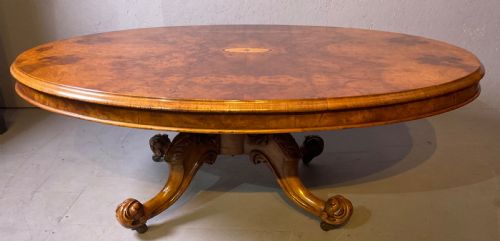


Oval Walnut Low Table
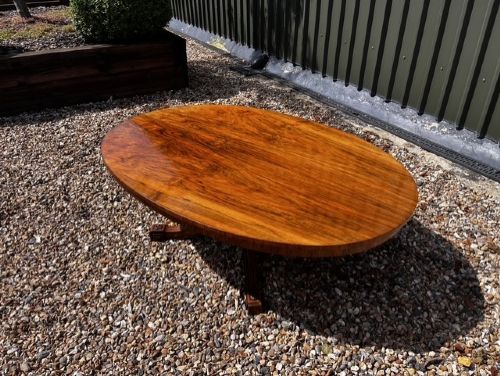
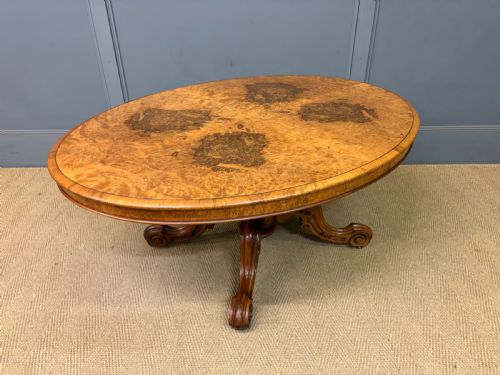
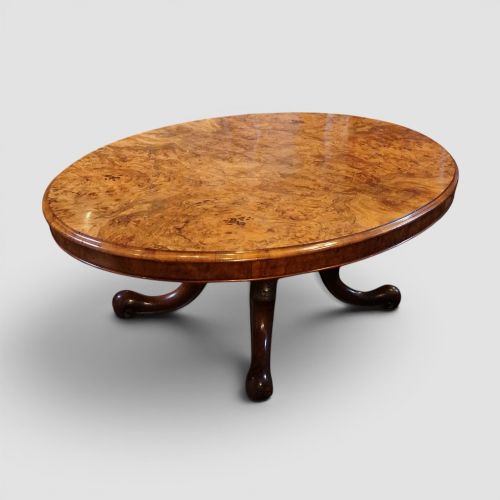
An oval walnut low table brings warmth and rich grain to a room, most commonly found here in Victorian burr walnut.
Oval Walnut Low Table
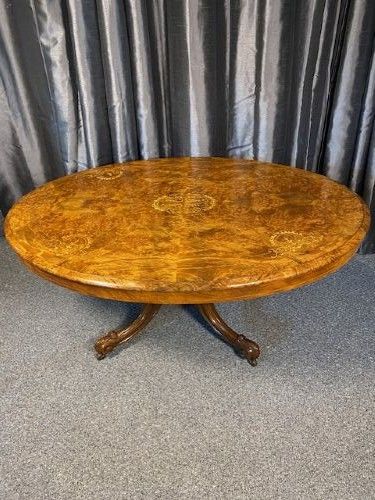
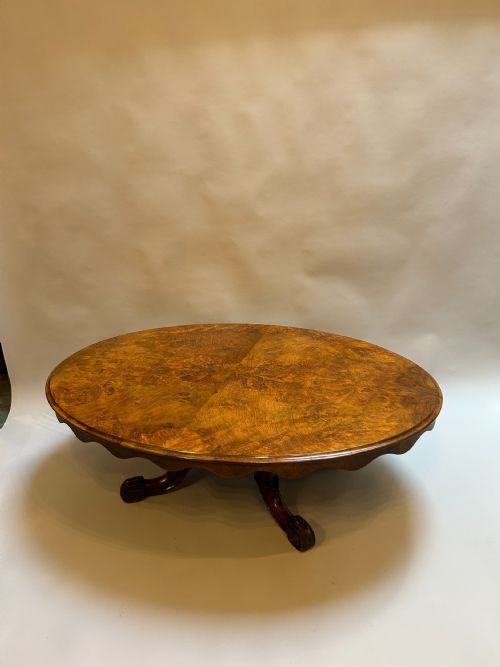
An oval walnut low table is typically encountered as a coffee table or a converted centre table from the Victorian period, alongside occasional later examples from the nineteen thirties. These pieces serve as functional low surfaces in a sitting room, drawing attention through their distinct proportions and rounded forms.
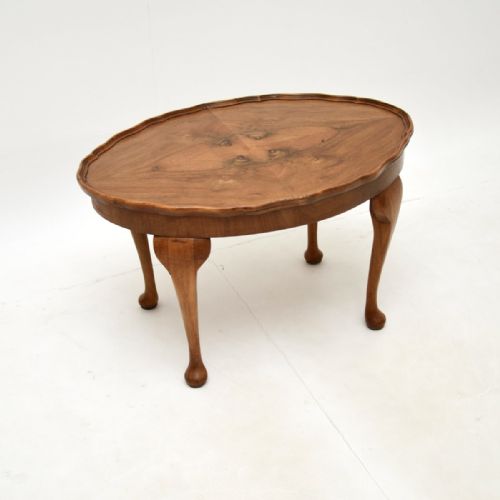
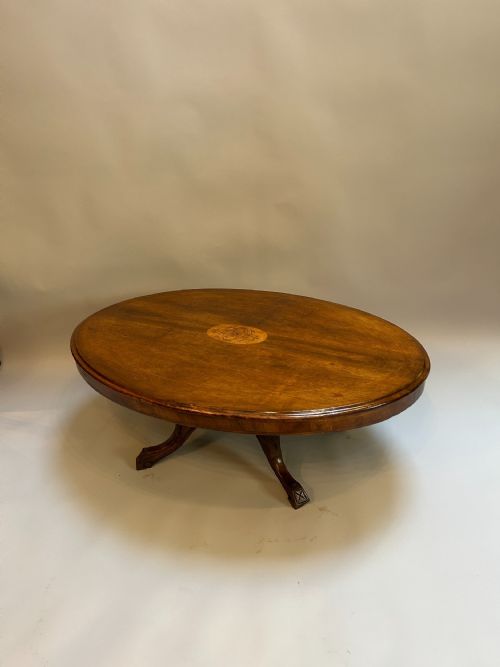
The selection here encompasses various interpretations of the form, ranging from plain timber tops to intricate marquetry and pie crust edges. Buyers frequently encounter nineteenth century burr walnut grain patterns that display intense figuring across the oval surface.
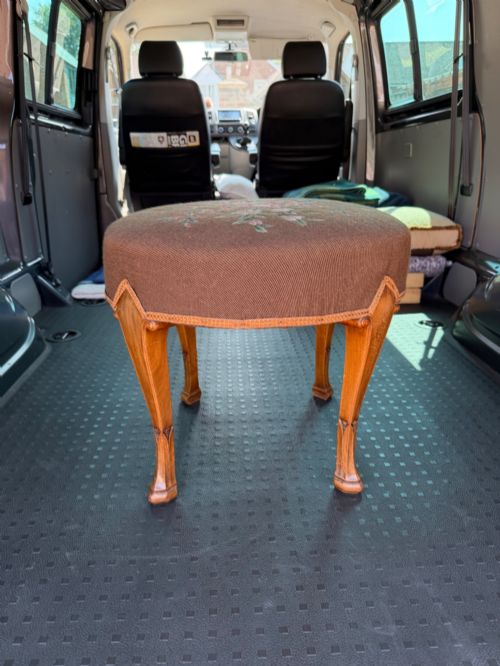
Alongside standard coffee tables, the inventory includes occasional stools and centre tables adapted for low surface use. Styles stretch from Victorian Revival and Queen Anne Revival to French Style and Art Deco, reflecting diverse eras of manufacture.
How they were made
Construction relies heavily on walnut and burr walnut veneers applied to sound timber foundations, often enhanced with boxwood inlay or delicate wood marquetry. Cabinetmakers selected burr sections for their swirling grain patterns, laying them symmetrically across the oval top to create striking visual depth.
Supporting structures utilise hand-carved wooden bases or tripod frames, occasionally paired with modern cast iron supports. Edge treatments such as pie crust moulding demonstrate precise carpentry, while surface decoration incorporates detailed inlay work.
Oval Walnut Low Table Retail Price Guide 2026
Typical asking prices for oval walnut low table among the pieces listed under this phrase on Sellingantiques today, from the lower quarter to the upper quarter. They describe what is for sale here now, not the wider market.
The listings span Victorian, Edwardian, and Art Deco periods, utilising walnut, burr walnut, boxwood, and cast iron.
What varies in quality
Quality in an oval walnut low table rests upon the choice of veneer and the crispness of the carving or inlay. Highly figured burr walnut with balanced grain distribution indicates superior material selection by the maker.
The sophistication of the base construction and the precision of marquetry details further distinguish finer examples. Maker attribution, such as work originating from established London workshops, elevates the standing of a piece.
Holland and Sons
The Oval Walnut Low Table Glossary
- Burr walnut
- A prized wood veneer harvested from the wart-like growths on walnut trees, yielding turbulent and highly decorative grain patterns. It forms the primary visual appeal on many nineteenth century surfaces.
- Marquetry
- The art of applying decorative pieces of veneer to a structure to form intricate pictorial designs or geometric patterns. This technique frequently frames the perimeter of Victorian tabletops.
- Pie crust edge
- A raised, scalloped carved rim running along the edge of a tabletop, reminiscent of traditional pastry crusts. It requires skilled hand-carving directly into the solid timber or thick veneer border.
- Centre table
- A freestanding piece designed to be viewed from all sides, often adapted into a low coffee table for modern domestic use. These pieces typically feature ornate pillar or pedestal supports.
- Boxwood inlay
- Contrasting pale wood inserted into recesses within the darker walnut surface to create sharp linear borders or floral motifs. It provides a crisp visual separation against the rich brown tones of the timber.
Oval Walnut Low Table: Frequently Asked Questions
Are these original low tables?
Many nineteenth century examples began life as taller centre tables or occasional tables before being lowered to function as coffee tables. This adaptation allows period timber to serve contemporary living spaces.
Other pieces retain their original proportions from the early twentieth century or later eras of manufacture.
How do I care for walnut?
Walnut benefits from occasional polishing with appropriate wax to nourish the grain and protect the delicate veneer surface. Direct sunlight should be avoided to prevent the rich brown tones from fading over time.
Using coasters and placemats protects the polish from moisture and heat marks during everyday use.
What is burr walnut?
Burr walnut comes from an excrescence on the tree where the grain grew in a deformed, swirling manner. This produces complex, eye-catching patterns that cabinetmakers prized for decorative tabletops.
Because of its irregularity, it was sliced into thin veneers and applied over stable foundational woods.
How do I date a table?
Dating relies on stylistic clues, construction methods, and the type of secondary woods visible beneath the table. Victorian pieces often display heavier carved bases or rich marquetry, whereas nineteen thirties examples may show simpler Art Deco lines.
Matching the materials and joinery to known historical periods helps narrow down the decade of creation.