





Oval Walnut Accent Tables
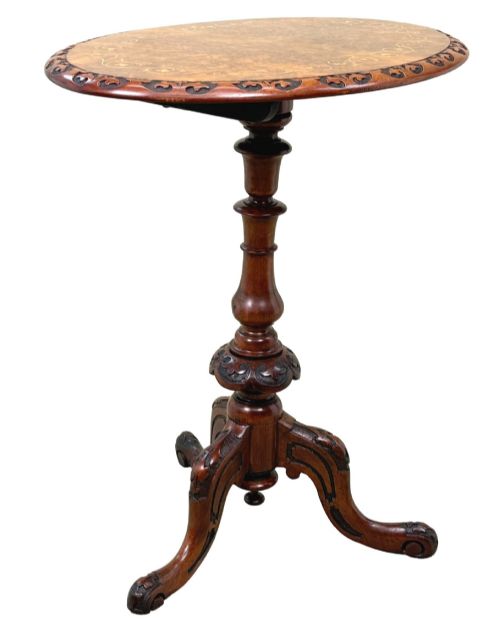
These oval walnut accent tables bring warm timber tones and graceful curved lines to a room, offering practical surface space with distinct period character.
Oval Walnut Accent Tables
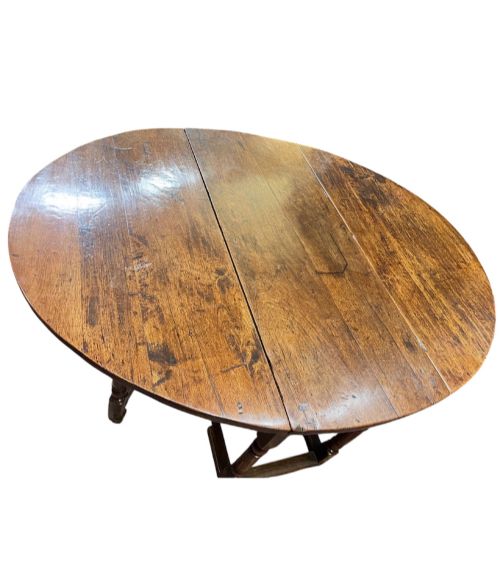
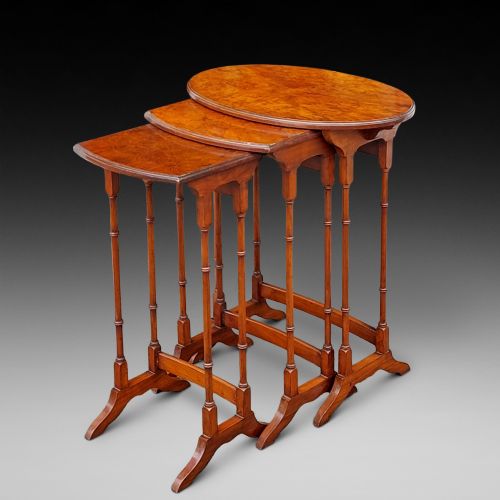
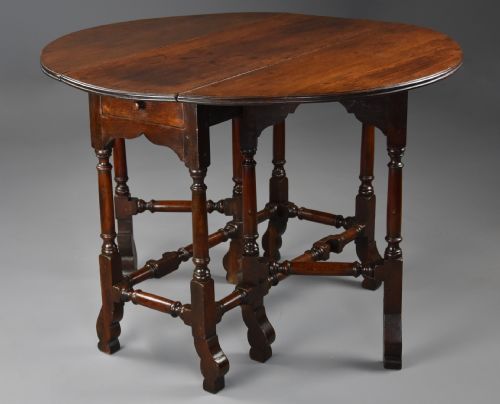
When you search for oval walnut accent tables, you enter a selection spanning the eighteenth, nineteenth and early twentieth centuries. The pieces on this page appear primarily in Victorian and Edwardian guises, alongside earlier gateleg forms and occasional French revival designs.
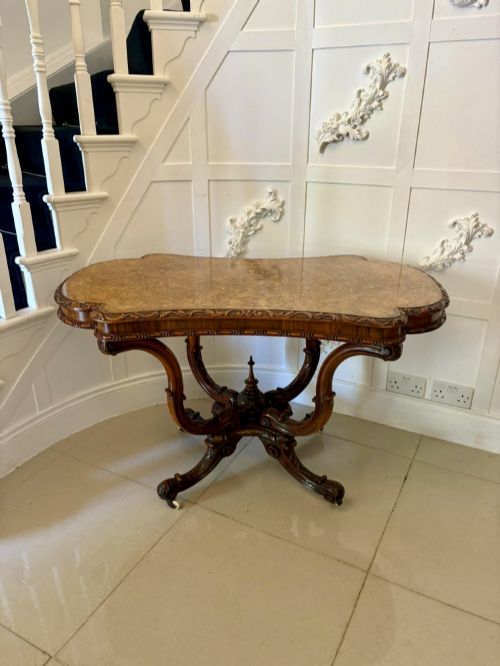
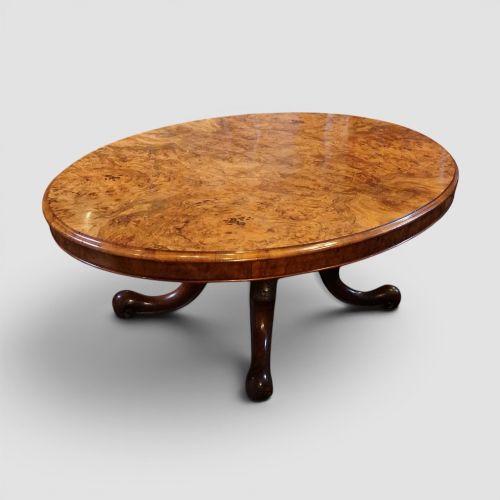
The dominant forms you will encounter are occasional tables, lamp tables and centre tables, accompanied by smaller numbers of Sutherland tables, nests and tiered etageres. These items served functional roles in period drawing rooms and parlours, ranging from tea service to displaying ornaments.
Origins stretch from English workshops to French ateliers, incorporating styles from Georgian simplicity to ornate Victorian marquetry and campaign brass mounts.
Materials and Construction
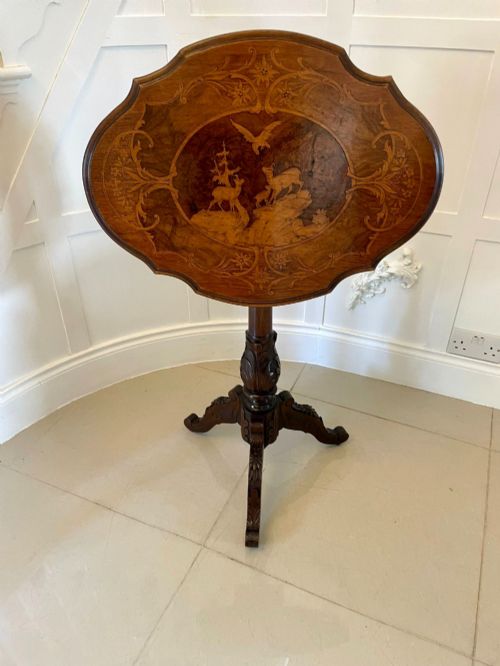
Makers utilised solid walnut and decorative burr walnut veneers over secondary timbers to achieve rich, figured surfaces that caught the light. Marquetry inlay, often employing boxwood and satinwood, added intricate floral and geometric details into the timber tops.
Structural elements frequently incorporated brass mounts, turned columns, stretcher bases and gateleg mechanisms depending on the specific table type. French polishing finished the wood, sealing the grain while deepening the natural warmth of the walnut.
Oval Walnut Accent Tables Retail Price Guide 2026
Typical asking prices for oval walnut accent tables among the pieces listed under this phrase on Sellingantiques today, from the lower quarter to the upper quarter. They describe what is for sale here now, not the wider market.
The listings here feature walnut timber combined with boxwood inlay, brass mounts, and ceramic elements across Victorian and Edwardian periods.
Design and Execution
The distinction between standard examples and superior pieces rests on the choice of timber and the ambition of the joinery. Highly figured burr walnut veneers and precise, multi-wood marquetry inlay mark out the finer productions from plain timber versions.
Proportion and stability dictate the upper tier of these items, where carved pedestals, solid brass fittings, and well-balanced stretcher frames elevate the utility of the table into an accomplished decorative object.
The Oval Walnut Accent Tables Glossary
- Burr walnut
- A wood harvested from the abnormal growth of a walnut tree, yielding highly swirled and mottled grain patterns prized for table tops.
- Marquetry
- Decorative patterns created by fitting small pieces of veneer into a fitted ground, often utilising contrasting woods like boxwood and satinwood.
- Sutherland table
- A narrow dropleaf table with folding leaves supported by swinging legs, designed to occupy minimal space when closed.
- Campaign washstand
- A portable piece fitted with brass mounts intended for travel, featuring compartments and folding elements.
- Gateleg table
- A table with hinged leaves supported by swinging legs that pivot outward to hold the top steady.
Oval Walnut Accent Tables: Frequently Asked Questions
Where should I place an oval walnut accent table?
These tables fit naturally beside seating in a drawing room or study, providing a convenient surface for lamps, books or cups.
Their curved oval profile softens the geometry of a room, making them useful beside armchairs or in hallways.
How do I tell Victorian tables from Edwardian ones?
Victorian examples often feature richer burr walnut veneers, darker finishes and heavier carved pedestals or stretcher bases.
Edwardian pieces generally present lighter satin walnut tones, simpler frames and more restrained inlay work.
What is a Sutherland table used for?
A Sutherland table functions as a versatile tea or occasional table with narrow dropleaves that fold down almost flat.
This folding design allowed Victorian households to tuck the furniture against a wall when floor space was needed.
How do I care for walnut veneer surfaces?
Maintain the French polished finish by dusting with a soft, dry cloth and avoiding direct sunlight or excessive moisture.
Applying a traditional beeswax occasionally helps nourish the timber without building up a sticky residue.