


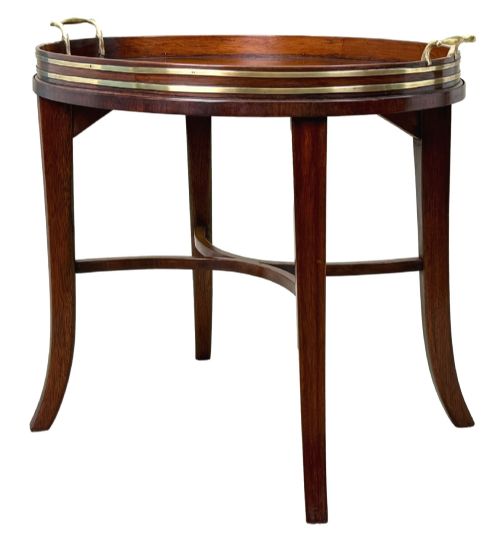
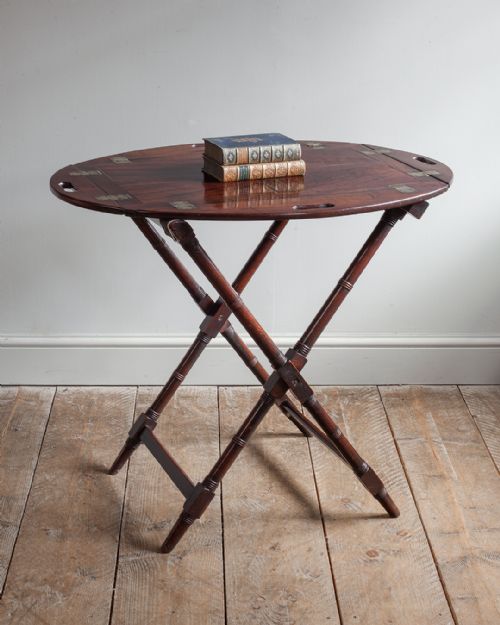


Oval Tray Table Stand
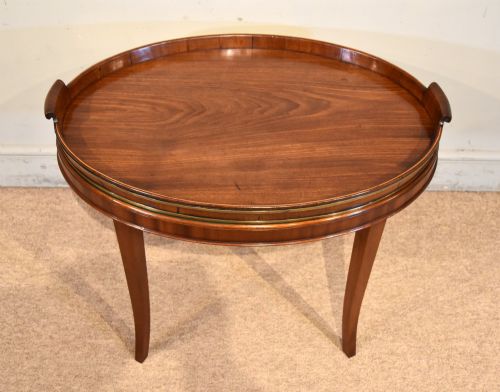
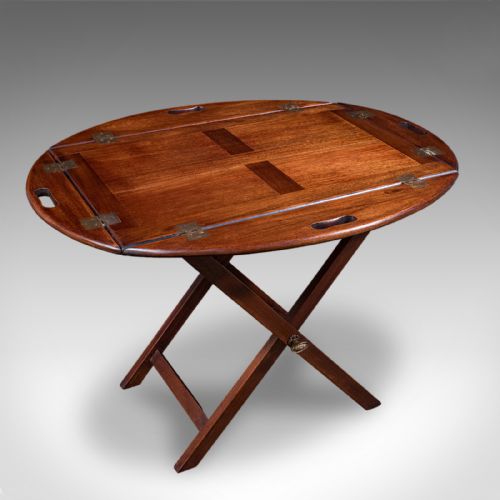
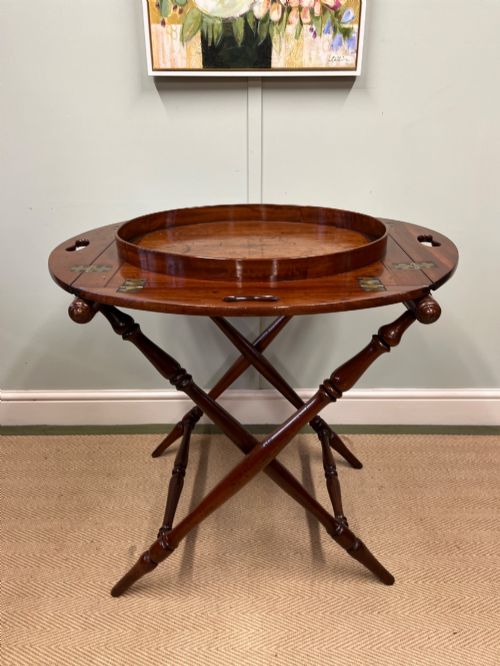
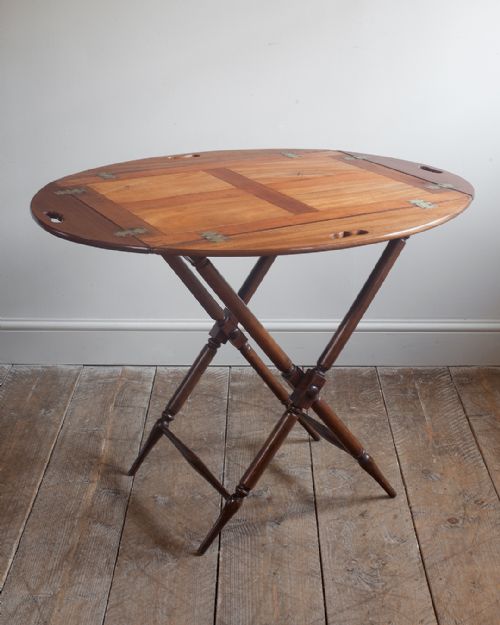
An oval tray table stand is a portable serving surface paired with a folding or fixed support, offering versatile utility and classic proportions for any room.
How they were made
Cabinetmakers constructed these pieces primarily from solid hardwoods such as mahogany and oak, frequently incorporating satinwood for decorative contrast and inlay work. Brass bound decoration sometimes reinforces the tray edges or corners for structural durability.
Specialised surfaces such as papier-mâché appear alongside fine marquetry and timber veneers. Folding mechanisms on the stands utilise hinged wooden supports or canvas webbing to ensure stability when assembled.
What varies in quality
The quality of timber selection and grain figuring dictates much of the visual appeal, with rich Cuban mahogany and detailed satinwood inlay representing finer production standards. Joinery finesse in the tray rim and the snugness of fit upon the stand separate standard utilitarian pieces from superior examples.
Hardware details, including original brass mounts and handles, heavily influence authenticity and finish. The condition of the folding action and the preservation of original polished surfaces determine the desirability of each piece.
Oval Tray Table Stand Retail Price Guide 2026
Typical asking prices for oval tray table stand among the pieces listed under this phrase on Sellingantiques today, from the lower quarter to the upper quarter. They describe what is for sale here now, not the wider market.
Listings feature mahogany, satinwood, oak, and papier-mâché across Georgian, Regency, and Edwardian periods.
Henry Clay
The Oval Tray Table Stand Glossary
- Butler's tray
- A portable serving tray with hinged or fixed sides, designed to be lifted off its support stand. This form originated for domestic service before becoming a permanent fixture in home decor.
- Drop-flap
- A hinged section on the side of a tray or table that can be lowered or raised. It allows the surface area to expand when needed for serving.
- Marquetry
- Decorative woodwork where pieces of contrasting veneer are fitted into a design. Artisans utilise this technique to create intricate patterns on tabletops and trays.
- Papier-mâché
- A composite material made from paper pulp or layers of paper bound with glue. Henry Clay patented a durable version of this material for producing lightweight trays.
- Etagere
- A piece of furniture consisting of a set of open shelves for displaying small objects. These tiers provide additional surface space similar to a side table.
Oval Tray Table Stand: Frequently Asked Questions
What is an oval tray table stand used for?
These pieces serve primarily as movable serving surfaces or occasional coffee tables in domestic spaces. The removable top allows users to carry items easily before placing the tray securely back onto the support stand.
Today, they function effectively as side tables or drinks stands in living rooms and studies. Their dual nature provides both display space and practical utility.
How do I distinguish an 18th-century tray from a later copy?
Early examples often display construction methods typical of the Georgian period, such as hand-cut dovetails and dense Cuban mahogany timber. Examining the timber shrinkage and the wear patterns around the handholds helps indicate genuine age.
Later Edwardian revivals frequently incorporate satinwood inlay and lighter secondary woods. Comparing the patination and hardware against known period pieces clarifies the manufacturing era.
Are the trays removable from the stands?
Most traditional butler's trays lift completely off their folding or fixed bases to allow independent transport. This design reflects their original purpose of carrying items from the kitchen to the dining area.
Some later Edwardian and occasional variants feature secured tops or multi-tiered structures that remain fixed in place. Checking the specific construction reveals whether the top lifts away.
How do I care for a mahogany tray table?
Maintenance involves dusting regularly with a soft, dry cloth and avoiding placement near direct heat sources or strong sunlight. These precautions protect the polished wood finish and prevent the timber from warping.
Applying a traditional beeswax polish occasionally helps nourish the hardwood surface and maintain its sheen. Moisture should be wiped away promptly to protect antique finishes.