


Mahogany Butler Stand
A mahogany butler stand combines a portable serving tray with a folding or fixed base, offering versatile height and surface space for modern living.
Mahogany Butler Stand
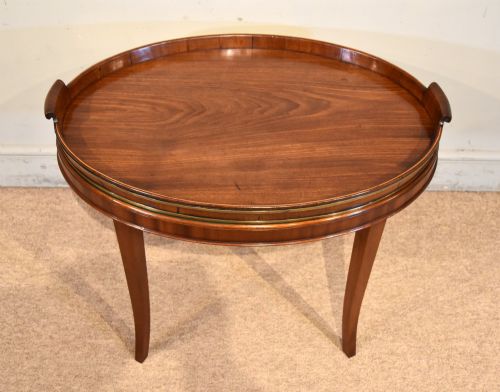
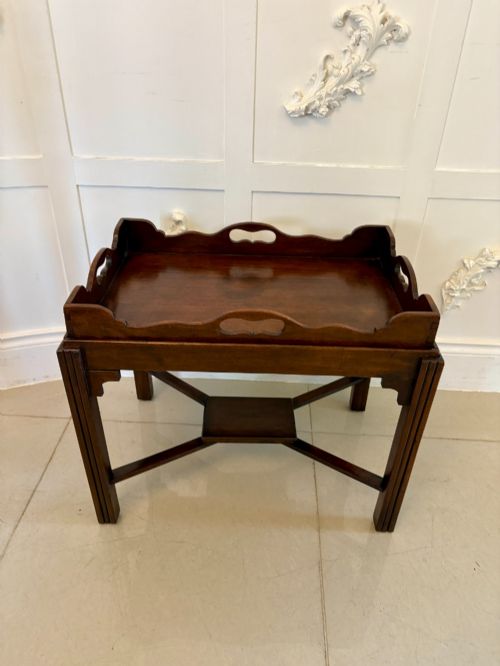
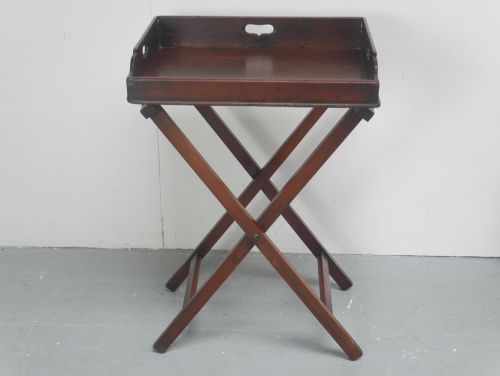
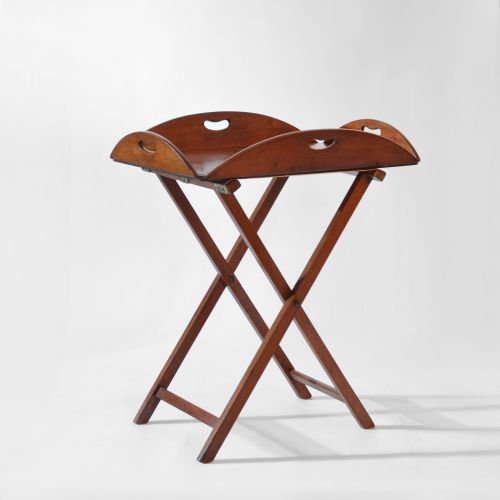
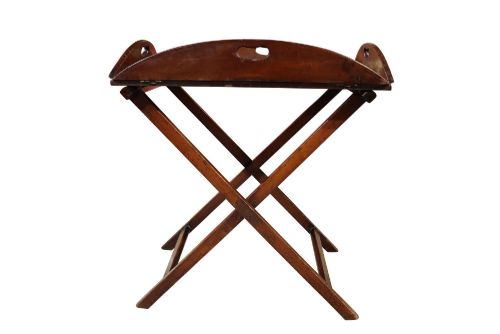
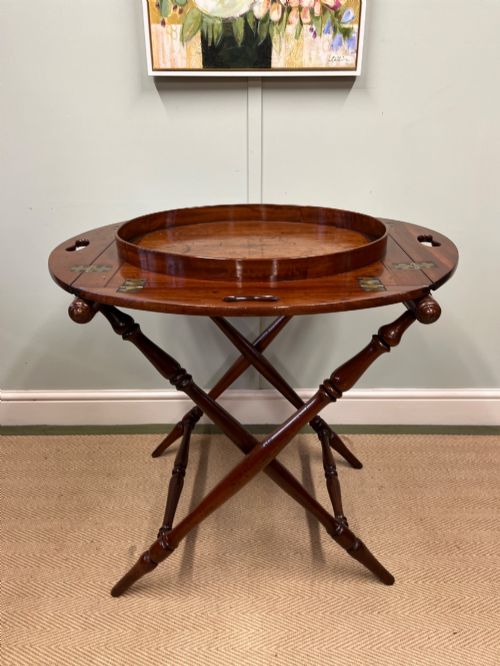
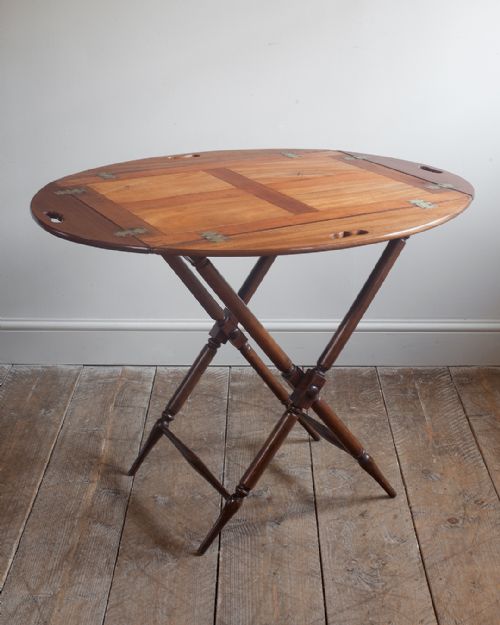
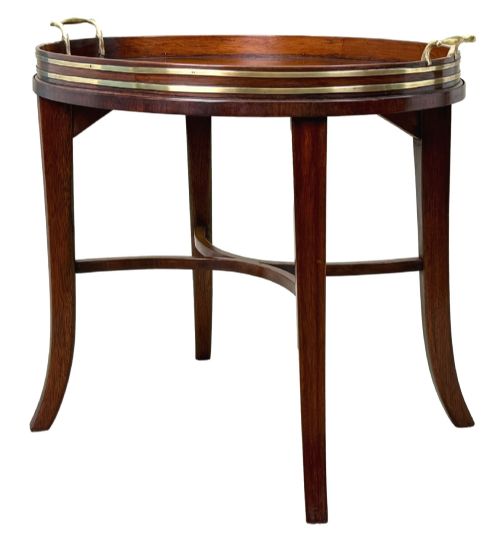
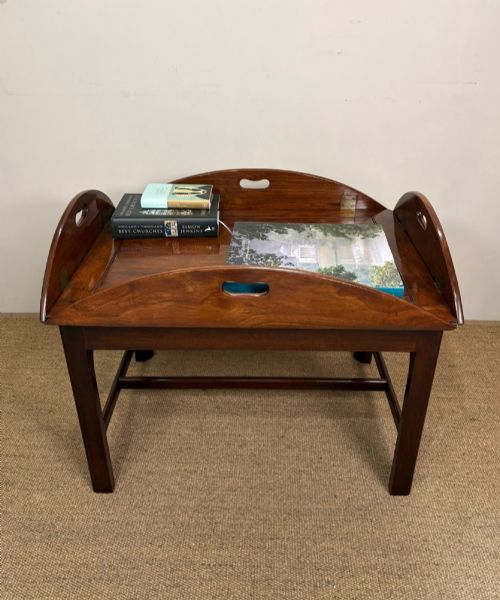
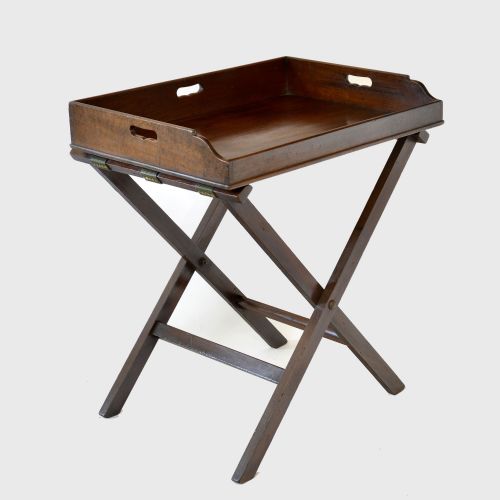
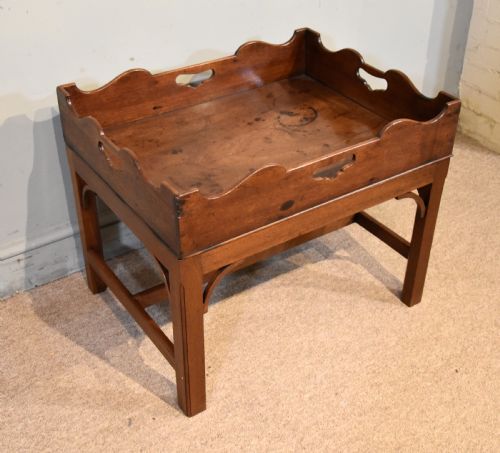
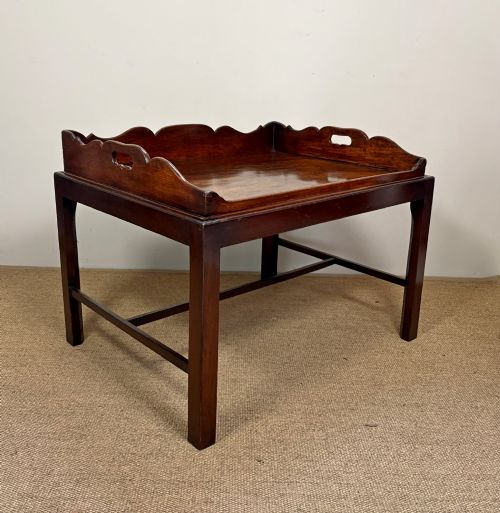
A mahogany butler stand consists of a deep tray resting upon a separate or integrated support, designed originally for domestic service in large households. These pieces appear frequently from the Georgian, Regency, and Victorian eras, often constructed in rectangular or oval formats with shaped sides.
The most common examples encountered on this page date from the eighteenth and nineteenth centuries, spanning George III periods through to Edwardian interpretations. Many retain their original folding stands, though occasional examples feature later bases or static side table configurations.
Materials and Construction
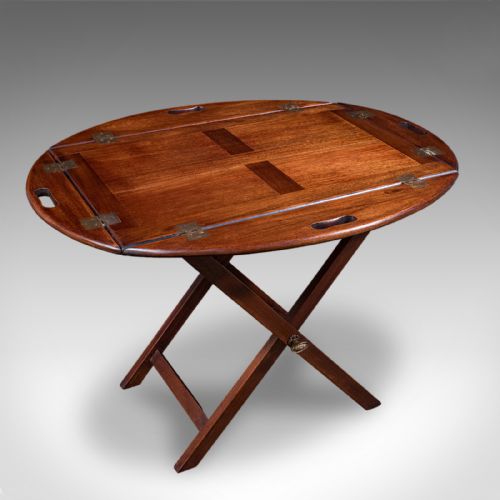
Cabinet makers utilised solid mahogany and occasionally Cuban mahogany for the tray bodies, frequently pairing the timber with secondary woods such as oak for internal framing or structural supports. Brass bound decoration, hinges, and carrying handles appear regularly to reinforce corners and facilitate lifting the tray from its stand.
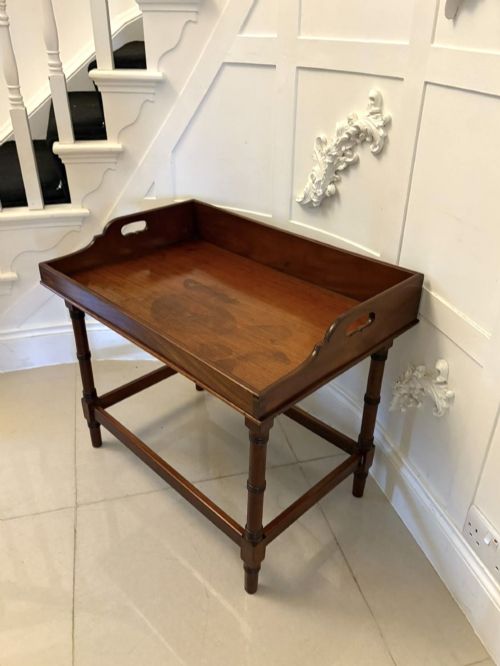
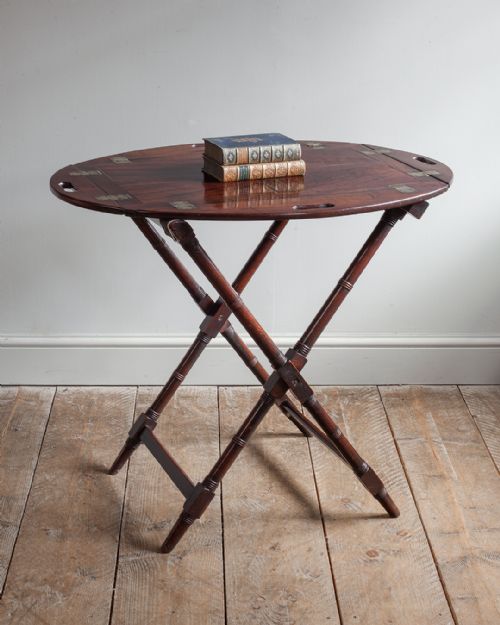
Stands themselves take various structural forms, ranging from simple X-frame folding supports and ring-turned legs to faux bamboo or Chinese Chippendale inspired frames. Some examples incorporate canvas, cotton, or fabric webbing beneath the tray platform to cushion the wood and absorb weight during transit.
Mahogany Butler Stand Retail Price Guide 2026
Typical asking prices for mahogany butler stand among the pieces listed under this phrase on Sellingantiques today, from the lower quarter to the upper quarter. They describe what is for sale here now, not the wider market.
A butler stand once doubled as a mobile cocktail station for Georgian lords who refused to walk for a refill.
Distinction in Craftsmanship
Superior examples display crisp hand-carved finger joints, finely figured timber grain, and retention of original patination acquired through centuries of use. The weight of the timber and the precision of the brass work distinguish bespoke pieces from later reproductions.
The relationship between the tray and its base dictates much of the desirability, with matching original stands commanding higher regard than married components or later replacements. Subtle details such as inlaid satinwood accents or unusual turned leg profiles elevate specific specimens above standard utility items.
The Mahogany Butler Stand Glossary
- Butler tray
- A portable wooden tray with hinged or fixed raised sides featuring cut-out carrying handles. These were traditionally lifted off their bases to carry items between rooms.
- Folding stand
- A collapsible wooden frame designed to support a tray at serving height. Many use an X-frame scissor mechanism for compact storage.
- Patina
- The surface sheen and deep coloration developed by aged mahogany through handling, polishing, and exposure to light over decades.
- Campaign style
- Furniture constructed for travel and military use featuring brass corners, inset handles, and knock-down frames for portability.
- Cheese truckle
- A circular revolving tray or stand used historically for serving cheeses at the dining table.
Mahogany Butler Stand: Frequently Asked Questions
How were butler stands used originally?
Servants used these trays to clear dining tables, transport china or silver, and serve drinks in different rooms of a grand house. The removable top allowed staff to carry provisions efficiently before placing the tray onto its folding stand.
In contemporary spaces, households utilise these same pieces as portable side tables, coffee tables, or drinks trays. Their dual-function design permits easy relocation around a room while maintaining a stable surface.
Are the stands usually original to the trays?
Many surviving pieces retain their original folding bases, particularly those dating from the Georgian and Victorian periods. Because trays experienced heavy handling, stands were occasionally separated or replaced over the centuries.
Collectors look for consistent timber ageing and wear patterns between the upper tray and the lower support. A matched pairing demonstrates the correct historical relationship and structural integrity.
How do I care for antique mahogany?
Maintenance requires simple dusting with a dry lint-free cloth and occasional application of appropriate furniture wax to nourish the grain. Direct sunlight and excessive heat sources should be avoided to prevent timber warping.
Because the surfaces often feature historic patination, harsh chemical cleaners must be avoided. Gentle upkeep preserves the rich colour and historical finish of the wood.
What is the difference between Georgian and Victorian models?
Georgian pieces generally exhibit restrained proportions, fine mahogany figuring, and subtle brass work characteristic of eighteenth-century cabinet making. They frequently feature oval formats with delicate gallery edges.
Victorian iterations tend to be sturdier and heavier, sometimes incorporating elaborate turnings or campaign-style brass reinforcements. Late nineteenth and early twentieth-century versions also introduce alternative woods and revival styles.