



Campaign Furniture Tray
A campaign furniture tray is a portable serving piece built for travel, offering sturdy folding stands and rich timber construction for everyday use.
Campaign Furniture Tray
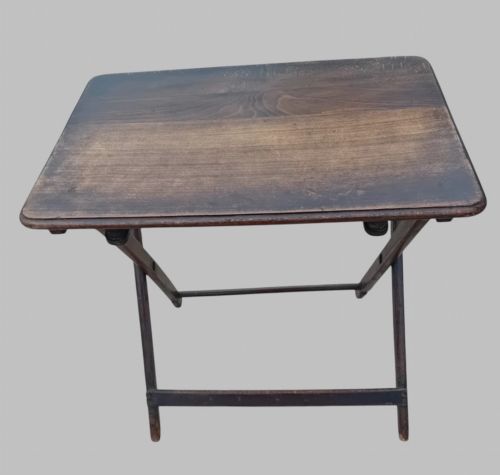
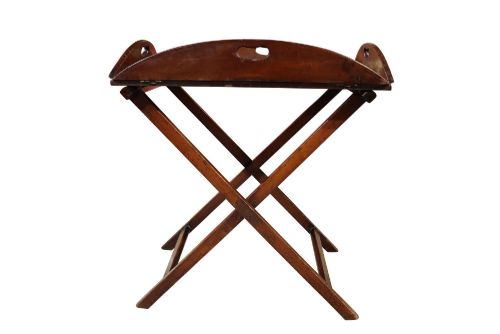
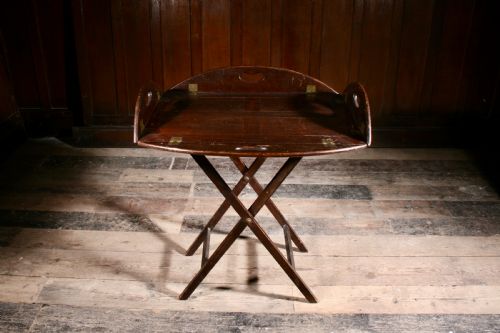
A campaign furniture tray combines a removable wooden tray top with a folding stand, creating a versatile surface for serving or display. These items originate from the practical requirements of military officers on the move, leading to clever designs that pack down easily. Buyers hunting for a campaign furniture tray will find pieces ranging from Georgian and Regency eras up to Edwardian revivals.
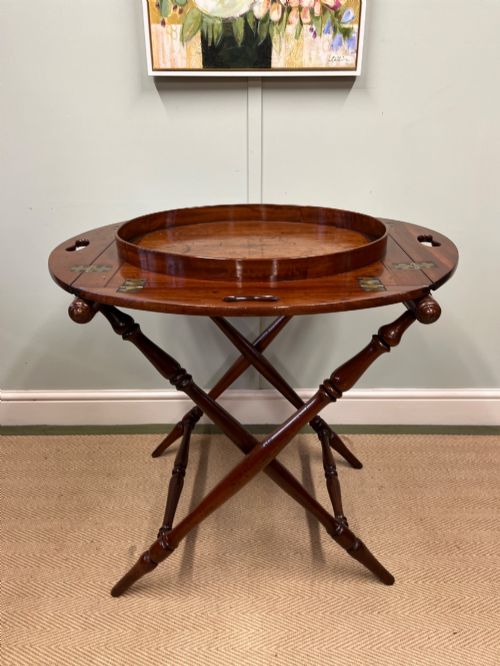
The pieces on this page appear in various forms, including butler tray tables, coffee tables, and occasional tables. Mahogany is the most common timber, often accompanied by oak, beech, and rosewood. Stands are typically folding X-frames designed to support the tray securely while maintaining portability.
Origins stretch across the eighteenth, nineteenth, and early twentieth centuries, alongside revival pieces from the art deco period. Oval and rectangular tray shapes dominate, frequently fitted with carrying handles or hinged sides. Each campaign furniture tray reflects the utilitarian ingenuity of its period.
How they were made
Cabinetmakers constructed these trays using dense hardwoods like mahogany, Cuban mahogany, and rosewood, selected for durability during travel. Oak and beech also appear, particularly in folding stands and later pieces. Timber boards were joined with precise woodworking joints to withstand frequent assembly and dismantling.
Metal hardware plays a crucial role, with brass fittings utilised for hinges, corners, and handles on select trays. These brass elements reinforced vulnerable areas and added structural strength. Folding stands were engineered to lock firmly into position when open and collapse flat when packed.
Campaign Furniture Tray Retail Price Guide 2026
Typical asking prices for campaign furniture tray among the pieces listed under this phrase on Sellingantiques today, from the lower quarter to the upper quarter. They describe what is for sale here now, not the wider market.
Current listings feature pieces spanning the Georgian, Regency, Victorian, and Edwardian periods, constructed in mahogany, oak, beech, and rosewood.
What varies in quality
Quality in a campaign furniture tray rests upon the selection of timber and the tightness of its grain. Superior examples utilise figured mahogany or rich rosewood with deep patination accumulated over centuries. Inferior versions rely on lighter secondary timbers or lack the crispness in edge moulding seen on earlier workshops.
Construction methods distinguish finer pieces from standard utilitarian items. The seamless integration of brass hinges, hand-cut dovetails, and balanced folding stands marks the upper tier of production. A well-made tray feels solid on its stand without excessive wobble in the frame.
The Campaign Furniture Tray Glossary
- Butler's tray
- A portable wooden tray with raised sides, often pierced with handholds, designed to rest upon a folding stand. It functioned as a mobile serving surface in large households.
- Cuban mahogany
- A dense, heavy hardwood prized for its dark colour and rich grain pattern. It was widely used in British cabinetmaking during the eighteenth and nineteenth centuries.
- Campaign style
- Furniture designed to dismantle or fold for easy transport by military officers on campaign. Key characteristics include recessed brass hardware and collapsible supports.
- Folding stand
- A collapsible wooden support frame, typically formed of intersecting legs that cross in an X-shape. It allows the tray top to be removed and stored flat when not in use.
Campaign Furniture Tray: Frequently Asked Questions
How were campaign furniture trays originally used?
These trays served military officers and wealthy households as movable dining and serving stations. The removable top allowed servants to clear meals efficiently.
Once finished, the stands folded away to save space in cramped tents or dining rooms.
Are these trays sturdy enough for daily use?
Most pieces are built from dense hardwoods like mahogany and oak, making them surprisingly robust. Their original purpose demanded durability during rough travel.
Care should be taken with antique hinges and joints to ensure long-term stability in modern homes.
How do I identify a Georgian piece?
Georgian pieces display older timber patination, hand-cut joinery, and simpler utilitarian lines associated with the eighteenth century. Mahogany is standard for this era.
They lack the machine-cut precision and revival styling seen on later Edwardian or art deco interpretations.
What is the difference between a tray table and a coffee table?
Traditional butler trays sit on tall folding stands intended for standing height or low side table use. Converted coffee tables often feature shortened stands or fixed bases.
Original portable pieces maintain the removable top design characteristic of campaign furniture.