




Oval Timber Mirror
An oval timber mirror brings warmth and a softer line to a room, offering everything from carved oak and mahogany to elaborate giltwood.
Oval Timber Mirror
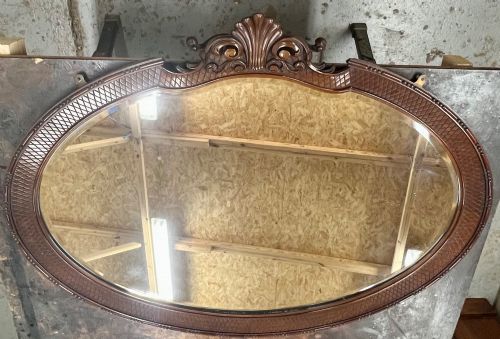
When you search for an oval timber mirror, you encounter pieces designed to hang on walls or stand independently as cheval glasses. The selection spans the Victorian and Edwardian eras, incorporating late nineteenth-century craftsmanship alongside twentieth-century revivals.
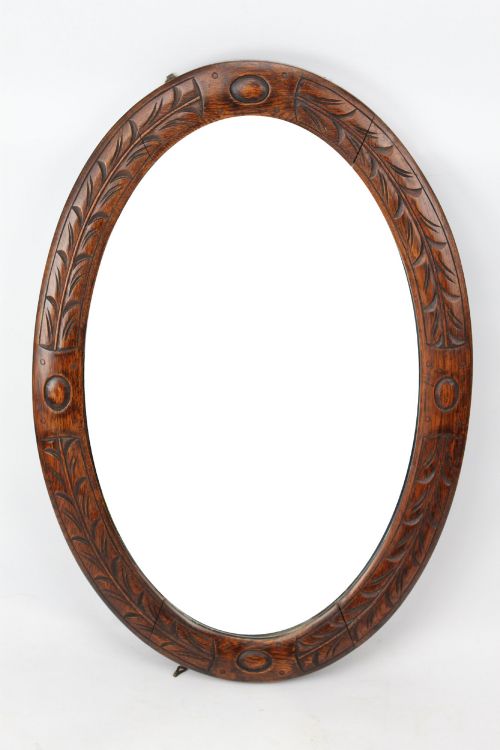
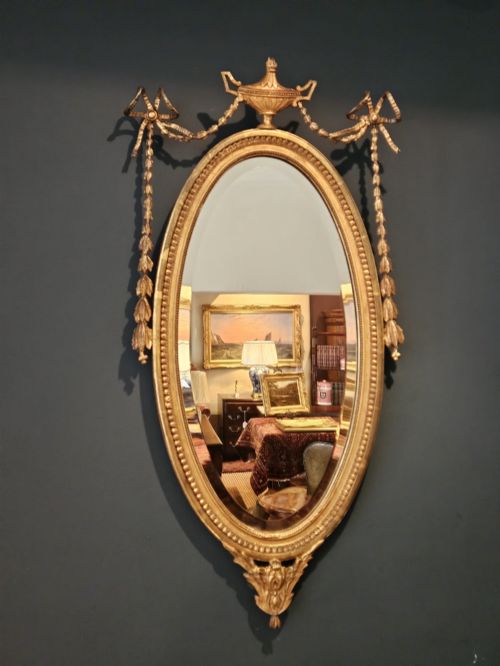
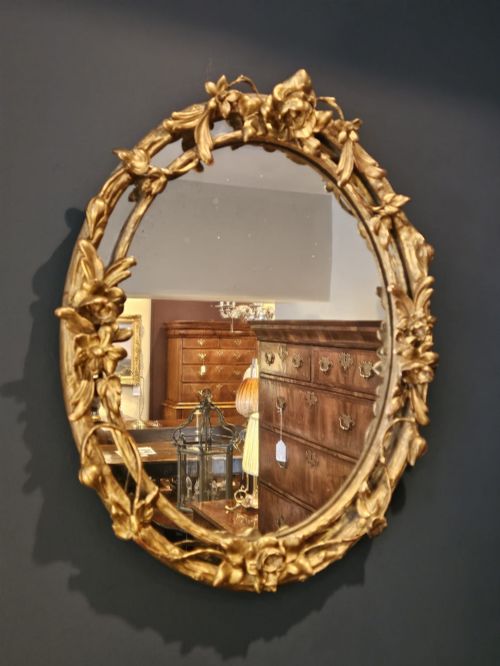
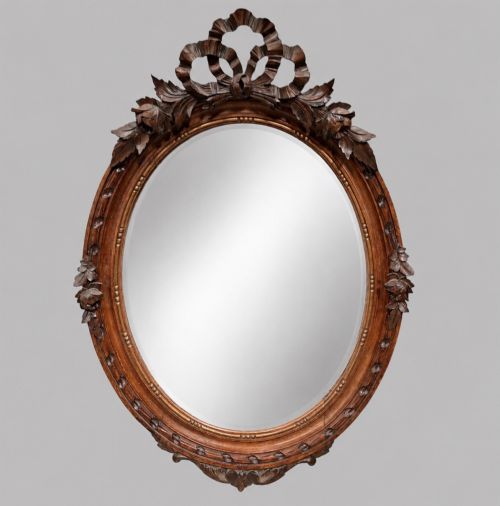
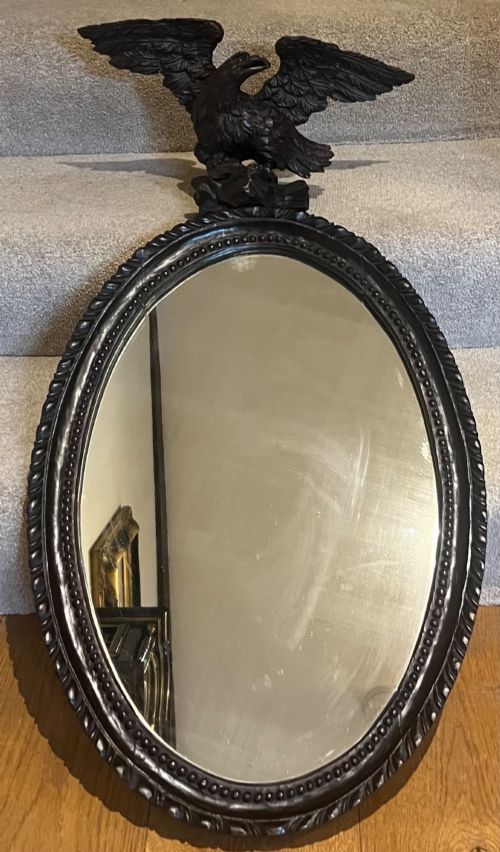
Wall mirrors dominate the selection, frequently featuring carved wood frames in mahogany, walnut, or oak. Giltwood examples appear alongside timber frames, often incorporating decorative motifs such as urn top pediments, rose vines, or carved eagles.
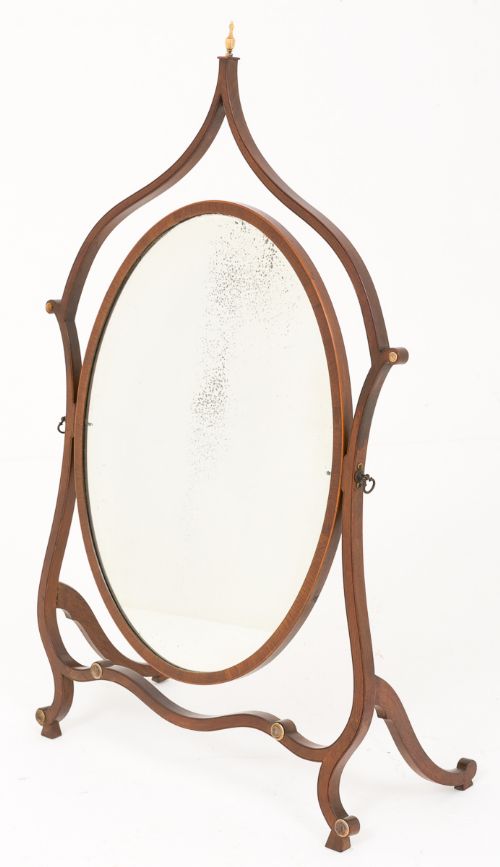
Floor-standing cheval mirrors also feature within the grouping, constructed from mahogany or satinwood with marquetry inlay. These taller pieces reflect the Hepplewhite style and other revival movements popular across the nineteenth and early twentieth centuries.
How they were made
Makers utilised solid timbers including mahogany, walnut, oak, and satinwood, often shaping the frames by hand. Carved wood details, ranging from foliate designs to Black Forest animal motifs, required skilled hand-chiselling before finishing.
Giltwood frames relied on the application of gold leaf over prepared wooden bases, creating a bright reflective surface that contrasted with the dark timber beneath. Marquetry inlay introduced contrasting wood veneers arranged in geometric or pictorial patterns on satinwood surfaces.
Oval Timber Mirror Retail Price Guide 2026
Typical asking prices for oval timber mirror among the pieces listed under this phrase on Sellingantiques today, from the lower quarter to the upper quarter. They describe what is for sale here now, not the wider market.
The listings span multiple periods including Victorian and Edwardian eras, utilising materials such as mahogany, oak, giltwood, and satinwood.
What varies in quality
The depth and crispness of the carving distinguish finer pieces from simpler production, particularly in decorative elements like rose vines, urn pediments, and eagles. Hand-carved walnut and mahogany exhibit sharp detail and careful smoothing that machine work lacks.
The choice of secondary woods and the precision of veneer work determine the calibre of inlaid cheval mirrors. Superior execution shows seamless matching in satinwood panels and robust joinery in the standing frames.
The Oval Timber Mirror Glossary
- Giltwood
- Wood that has been coated with gold leaf or gold paint. This finish creates a luminous border around the mirror glass.
- Cheval mirror
- A freestanding full-length mirror hung in a frame that allows it to swing. These stand on stable floor bases.
- Pediment
- The decorative structure surmounting the top of a mirror frame. Examples include carved urns and crests.
- Marquetry
- Decorative patterns created by fitting together thin veneers of various coloured timbers. This technique decorates satinwood surfaces.
Oval Timber Mirror: Frequently Asked Questions
Where should I hang an oval timber mirror?
An oval mirror suits narrow wall spaces where a rectangular frame might feel too heavy, such as above a fireplace or in a hallway.
The curved outline softens linear room layouts and introduces a traditional focal point without dominating the surrounding furniture.
How do I distinguish Victorian from Edwardian mirrors?
Victorian examples frequently showcase heavier carving, rich mahogany tones, and ornate motifs like giltwood rose vines or eagles. Edwardian pieces often lean towards lighter oak, satinwood, or simpler revival styles.
Examining the depth of the timber work and the specific decorative vocabulary helps assign a piece to its correct era.
What is a Black Forest mirror?
A Black Forest mirror originates from the woodcarving tradition of central Europe, characterised by naturalistic motifs. These pieces often feature deep, elaborate carving depicting animals, foliage, or rustic scenes.
They represent a distinct subset of nineteenth and early twentieth-century decorative woodwork.
Are cheval mirrors stable?
Cheval mirrors utilise a freestanding frame supported by sturdy feet or extended legs. The pivoting mechanism allows the glass to tilt to the desired angle.
Placed on firm flooring, these mirrors remain balanced while providing a full-length reflection.