
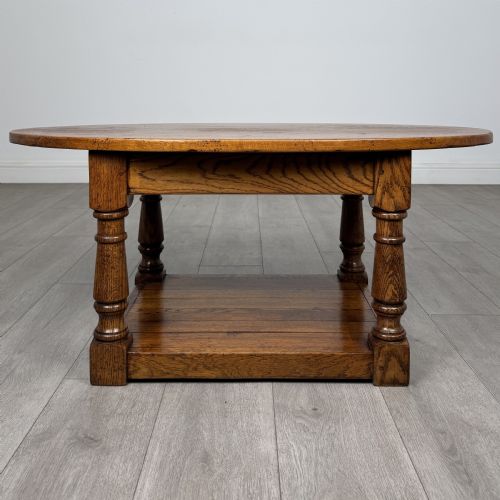


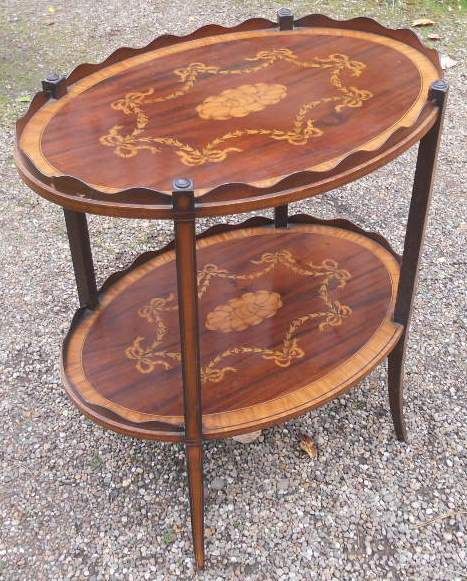


Oval Tiered Coffee Table
These oval tiered coffee table designs span Edwardian and nineteenth-century periods, offering layered surfaces in mahogany, satinwood, and oak for practical everyday rooms.
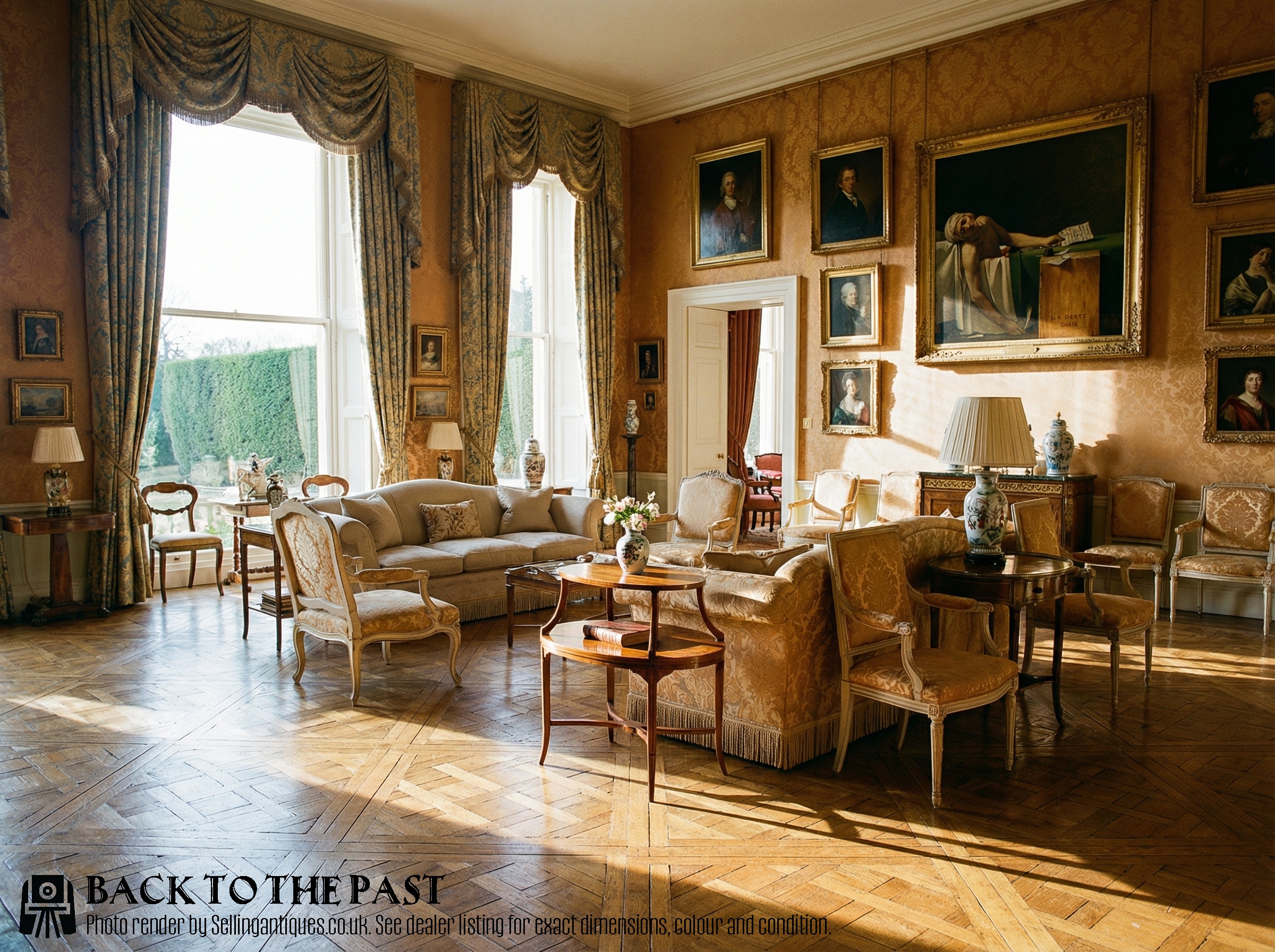
Oval Tiered Coffee Table
An oval tiered coffee table brings stacked surfaces and curved edges into domestic spaces, appearing most frequently in Edwardian mahogany and nineteenth-century forms across our listings. Buyers hunting for an oval tiered coffee table will encounter multi-tiered occasional tables, nested sets, and centre tables that utilise oval tops to soften room layouts.
The materials span mahogany, satinwood, and oak, often detailed with boxwood inlay and brass elements. Makers adapted traditional occasional tables and nests of tables into multi-level formats suitable for modern living arrangements.
How they were made
Cabinet makers built these pieces using timbers like mahogany, satinwood, and oak, frequently incorporating boxwood inlay for decorative contrast. Surfaces were shaped into distinctive oval tops and supported by tiered frames.
Construction techniques involved traditional joinery suited to occasional tables, nests of tables, and centre tables. Selected examples integrate brass hardware alongside timber inlay to define the Edwardian and nineteenth-century styles.
Current listings feature mahogany, satinwood, and oak across Edwardian and nineteenth-century periods, alongside boxwood inlay and brass.
What varies in quality
Quality separates through the crispness of the boxwood inlay and the selection of primary timbers such as figured mahogany or satinwood versus simpler oak. Better examples display refined proportions across their multiple tiers and precise edge work on the oval tops.
Construction integrity in the joints of nests and tiered structures dictates longevity. Pieces retaining their original brass fittings and harmonious timber grain throughout the stacked levels demonstrate superior craftsmanship.
The Oval Tiered Coffee Table Glossary
- Tiered table
- A piece featuring multiple stacked surfaces supported by columns or legs. This design increases usable display area without enlarging the floor footprint.
- Boxwood inlay
- Contrasting pale wood inserted into darker timber surfaces to create linear borders or decorative motifs. It appears frequently in Edwardian Sheraton Revival pieces.
- Satinwood
- A lustrous, fine-grained hardwood with a golden yellow appearance. It was favoured for high-status occasional tables.
- Nest of tables
- A set of graduated tables designed to fit neatly beneath one another. They offer flexible surface space in compact rooms.
Oval Tiered Coffee Table: Frequently Asked Questions
What is an oval tiered coffee table?
An oval tiered coffee table is a multi-level surface featuring curved oval tops, designed to hold objects across stacked platforms.
These pieces typically date from the Edwardian era and the nineteenth century, utilising timbers such as mahogany and oak.
How were these tables used?
They served as occasional tables, centre pieces, or nested sets for holding household items and decorative objects.
The multiple tiers allowed users to display items on upper surfaces while keeping lower levels available for books or smaller accessories.
What materials appear most often?
Mahogany is the predominant timber, accompanied by satinwood and oak across various pieces.
Many examples feature boxwood inlay and brass details that reflect Edwardian Neo-Classical and Sheraton styles.
How do I identify Edwardian examples?
Edwardian pieces often display lighter timbers, delicate boxwood inlay, and Neo-Classical or Sheraton Revival styling.
They frequently take the form of occasional tables, centre tables, or nests with oval tops dating around nineteen hundred to nineteen ten.