

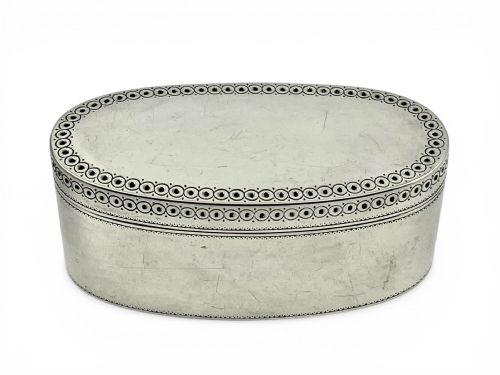


Oval Silver Box
An oval silver box brings domestic history to the palm of the hand, holding everything from snuff and pills to letters and jewellery across multiple centuries.
Oval Silver Box
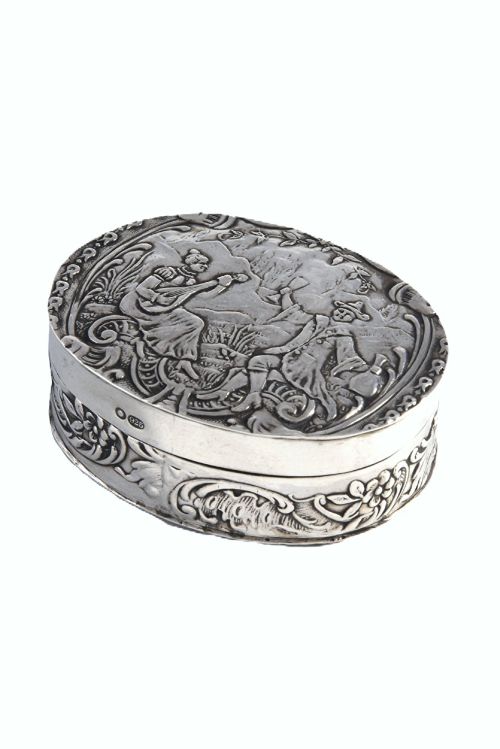
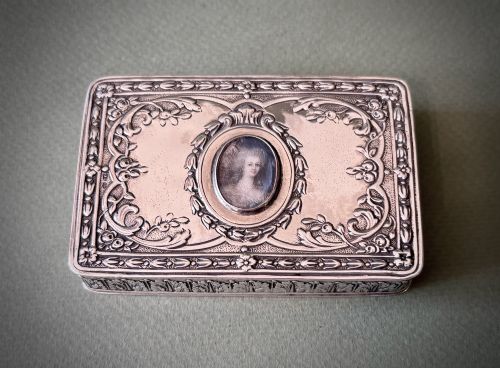
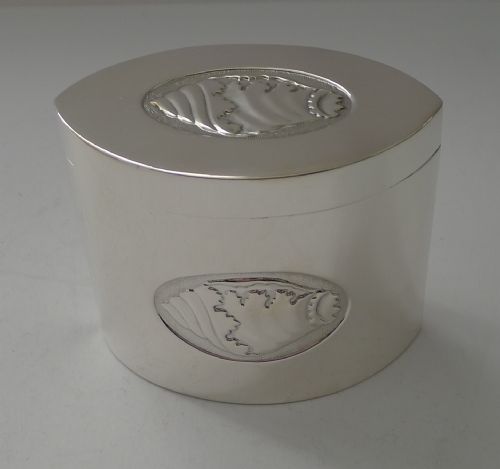
An oval silver box encompasses a diverse group of domestic containers shaped in curves rather than sharp right angles, appearing frequently across Georgian, Victorian, and Edwardian eras. Buyers searching for an oval silver box encounter functional small items such as snuff, patch, and pill boxes alongside larger dressing table trinket containers, jewellery caskets, and tea caddies.
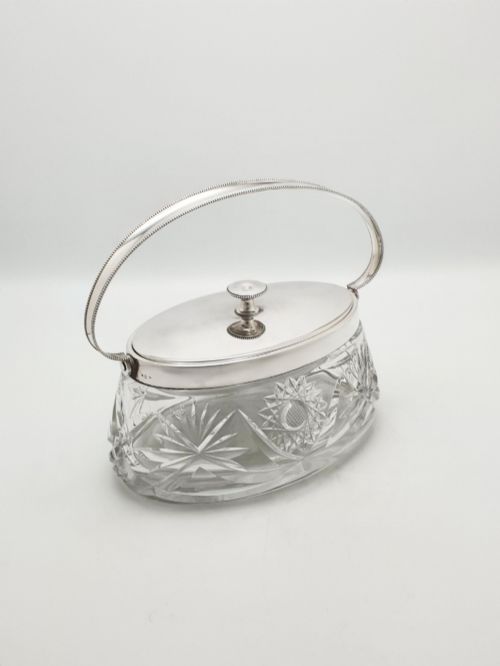
The evidence shows these containers crossing international borders, with Dutch, Danish, French, and Continental workshops sitting alongside English items bearing assay office marks from London, Birmingham, and Chester. Forms span diminutive waistcoat pocket pieces to heavy desk boxes and cut glass biscuit barrels mounted in silver or silver-plated metal.
How they were made
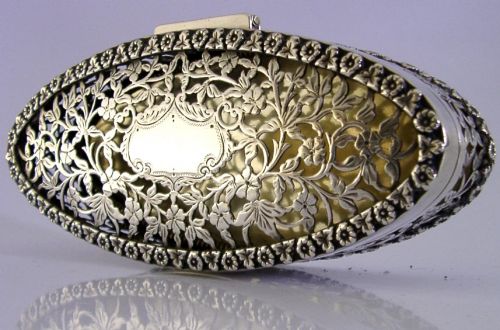
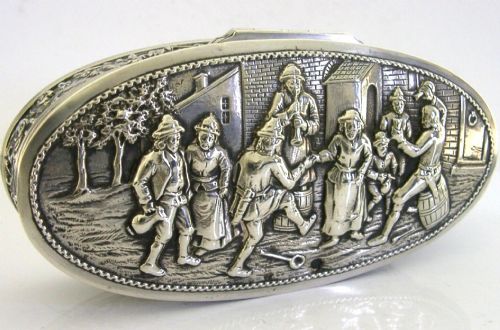
Makers shaped solid sterling silver, silver plate, and silvered metal using techniques such as piercing, embossing, and bright-cut engraving to ornament the curved lids and sides. Many pieces incorporate organic materials alongside the metal, pairing the silver bodies with inset panels of mother of pearl, tortoiseshell, horn, agate, or cut glass.
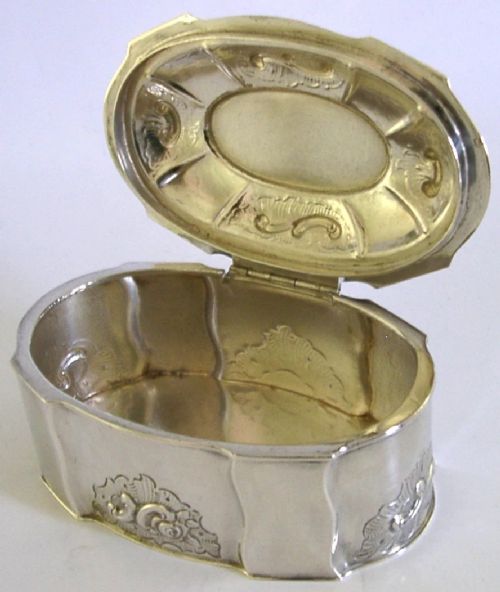
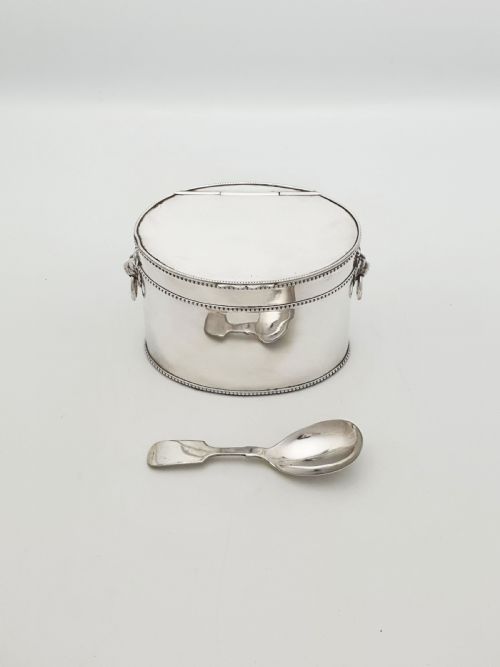
Internal elements often feature gilding to protect the silver from corrosive contents like snuff, while hinged lids rely on flush or barrel joints fitted closely to the curved rims. Larger vessels like tea caddies and biscuit barrels frequently employ cast handles in the form of lions or looping foliage attached securely to the body.
Listings reveal that tortoiseshell and agate frequently accompanied silver in Georgian and Edwardian portable containers.
What varies in quality
The distinction between ordinary and superior pieces rests on the weight of the metal and the crispness of the hand-worked decoration, such as delicate relief cherubs, lion mask mounts, or bright-cut engraving. Substantial gauge silver and robust hinges that maintain a tight, flush closure separate master silversmith output from lighter commercial work.
Materials integrated into the design also dictate the tier of the piece, with translucent green agate, finely figured tortoiseshell, or heavy cut glass elevating the status of the container far above plain stamped metal.
Samuel Pemberton·George Unite·Phipps and Robinson·William Simpson·Elkington and Co·Walker and Hall·Henry Wilkinson·James Deakin and Son·Mappin and Webb
The Oval Silver Box Glossary
- Bright-cut engraving
- A surface decoration technique utilising faceted cuts made with a sharp V-shaped graving tool to catch the light. It creates sparkling geometric or floral patterns popular on late eighteenth-century small boxes.
- Vinaigrette
- A small ornamental box featuring an internal pierced grille that held a sponge soaked in aromatic vinegar. These were carried to counter unpleasant odours in public spaces.
- Patch box
- A diminutive container originally designed to hold small silk or velvet patches worn on the face during the Georgian period. They frequently incorporate mirrors fitted to the interior lid.
- Gilt
- A thin layer of gold applied to the interior surface of a silver vessel. This process prevented the acidic properties of snuff or tobacco from tarnishing and corroding the metal.
- Assay mark
- A stamped symbol indicating the official testing of metal purity by an authorized body such as an assay office. These marks provide reliable evidence of origin year and city.
Oval Silver Box: Frequently Asked Questions
What is an oval silver box used for?
These vessels served various domestic and personal functions depending on their scale, ranging from holding loose tobacco and medicinal pills to preserving dry tea leaves and biscuits.
Smaller examples resided in pockets for daily convenience, while larger dressing table boxes secured jewellery, hairpins, and keepsakes in the bedroom.
How do I date a silver box?
Dating relies heavily upon the stamped hallmarks found on solid silver pieces, which indicate the city of assay and the specific year letter designated by the local office.
Stylistic clues such as Rococo Revival curves or bright-cut engraving further narrow down the decade of manufacture when marks are rubbed or absent.
Can I use an antique silver box daily?
Solid silver and robust plated boxes tolerate regular handling provided they are treated with appropriate care and stored away from abrasive surfaces.
Pieces incorporating delicate organic materials like tortoiseshell or thin horn require gentler treatment to prevent cracking or surface wear.
How do I clean a silver box?
Maintenance involves gentle cleaning with a soft cloth and a reputable silver polish formulated to remove tarnish without stripping away fine engraved details.
Care must be taken around inset materials like agate, mother of pearl, or tortoiseshell, keeping moisture and harsh chemicals away from the organic inserts.