


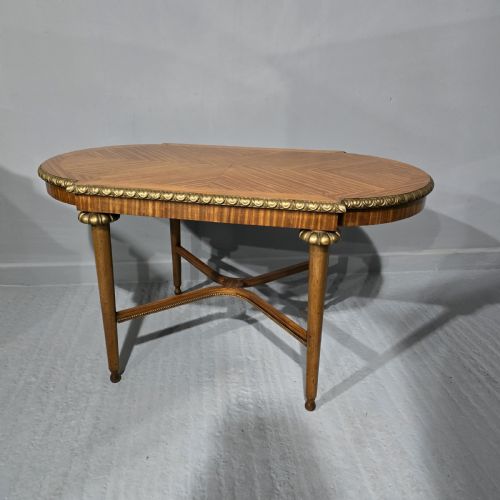

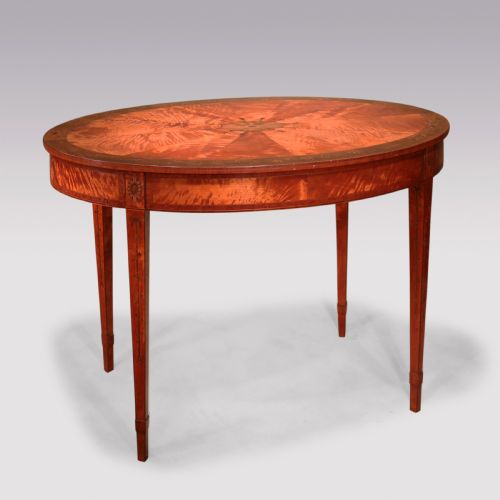


Oval Satinwood Tea Table
An oval satinwood tea table brings light grain and refined proportion to a room, functioning as a polished surface for display.
Oval Satinwood Tea Table
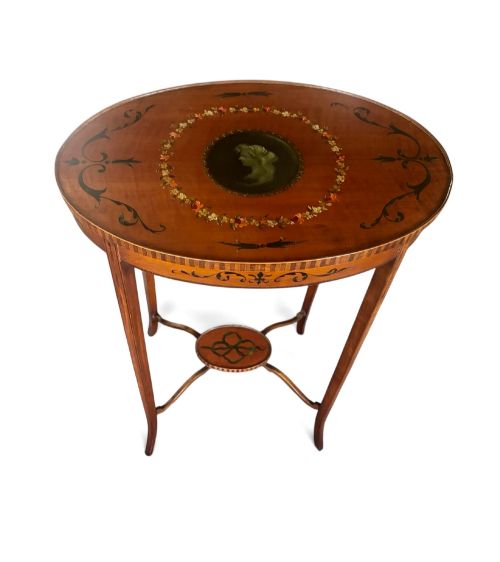
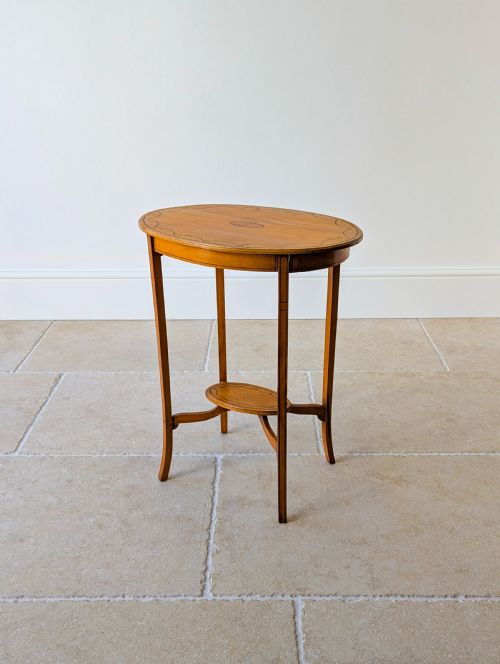
An oval satinwood tea table is an occasional or centre table built during the nineteenth and early twentieth centuries, drawing heavily on earlier eighteenth-century designs. Most examples found on this page date from the Edwardian period or around nineteen hundred, reflecting the revival of Sheraton and Neoclassical styles.
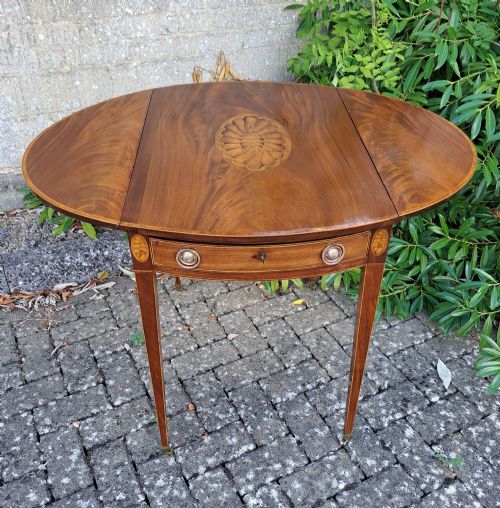
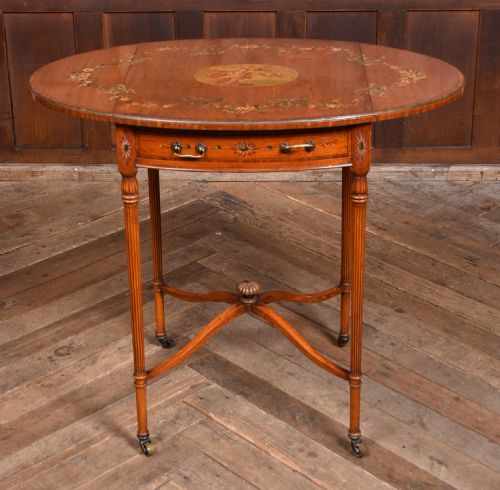
Makers shaped these pieces into various formats, including occasional tables, etageres, drop-leaf coffee tables, and kettlestands. The defining feature remains the curved oval top, which softens the geometry of a traditional room while providing a compact surface for everyday use.
Materials and Construction
Cabinetmakers utilised satinwood as a primary veneer or solid timber, prized for its pale, lustrous grain that catches the light differently depending on the angle. This timber is frequently paired with contrasting mahogany, rosewood, or satin walnut to create borders and structural frames.
Decoration relies on intricate boxwood inlay, bone and ebony details, marquetry, and hand-painted floral or Neoclassical scenes directly onto the wood. Brass fittings and glass trays also appear on tiered etageres and drop-leaf formats, adding functional utility to the cabinetry.
Makers occasionally tucked tiny compartments for bone and ebony counters beneath the polished satinwood surface.
Assessing Quality and Craftsmanship
The standard of a table rests on the precision of its inlay and the crispness of any hand-painted decoration. Finer pieces demonstrate seamless integration between the satinwood veneers and contrasting timbers like boxwood or ebony, whereas lesser examples rely on simpler printed or superficial surface details.
Structural integrity also separates the range, observed in the stability of multi-tiered etageres and the clean movement of drop-leaf mechanisms. The depth of the timber's natural chatoyancy and the retention of original painted details dictate the standing of an individual piece.
Edwards and Roberts of London
The Oval Satinwood Tea Table Glossary
- Satinwood
- A dense, yellowish-brown tropical hardwood with a characteristic reflective sheen that resembles satin. It serves as the primary decorative surface for late eighteenth and Edwardian revival furniture.
- Sheraton Revival
- A late nineteenth and early twentieth-century design movement inspired by the furniture of George Sheraton. It uses classical proportions, delicate inlay, and painted satinwood.
- Etagere
- A set of open shelves or tiered tables designed for displaying small objects or serving tea. These pieces often feature multiple levels supported by slender columns.
- Marquetry
- The art of applying pieces of veneer to a structure to form decorative patterns and pictorial designs. Cabinetmakers use contrasting woods and organic materials for this work.
- Pembroke table
- A small rectangular or oval table with hinged drop-leaves on either side. It was originally designed for breakfast or tea.
Oval Satinwood Tea Table: Frequently Asked Questions
How do I date an oval satinwood table?
Dating relies on stylistic markers and construction methods, distinguishing between original George III pieces and later Edwardian Sheraton Revival interpretations.
Edwardian examples often feature machine-cut veneers, softer painted floral motifs, and lighter secondary woods beneath the polished satinwood surface.
Were these tables actually used for tea?
While earlier formats served practical tea-pouring duties in the drawing room, many Victorian and Edwardian iterations functioned primarily as decorative occasional or centre tables.
The inclusion of lower tiers and delicate painted surfaces suggests they were increasingly intended for displaying porcelain and small ornaments.
How do I care for satinwood furniture?
Satinwood requires protection from direct sunlight and excessive moisture to prevent the pale grain from darkening or the veneer from lifting.
Applying a microcrystalline wax helps maintain the lustre without sealing the timber or damaging historical painted decorations.
What is the difference between an etagere and an occasional table?
An occasional table provides a single primary surface supported by legs, whereas an etagere incorporates multiple tiered shelves for display.
Both formats utilise satinwood veneers and painted decoration, but etageres offer vertical storage space across two or more levels.