





Oval Pier Mirror
An oval pier mirror brings symmetry and reflective depth to a reception room wall, anchored firmly in Georgian and nineteenth-century design.
Oval Pier Mirror
An oval pier mirror hangs traditionally between tall windows or above a console table, reflecting natural light deep into the room. When searching for an oval pier mirror, collectors encounter vertical wall formats designed with distinct proportions and substantial frames.
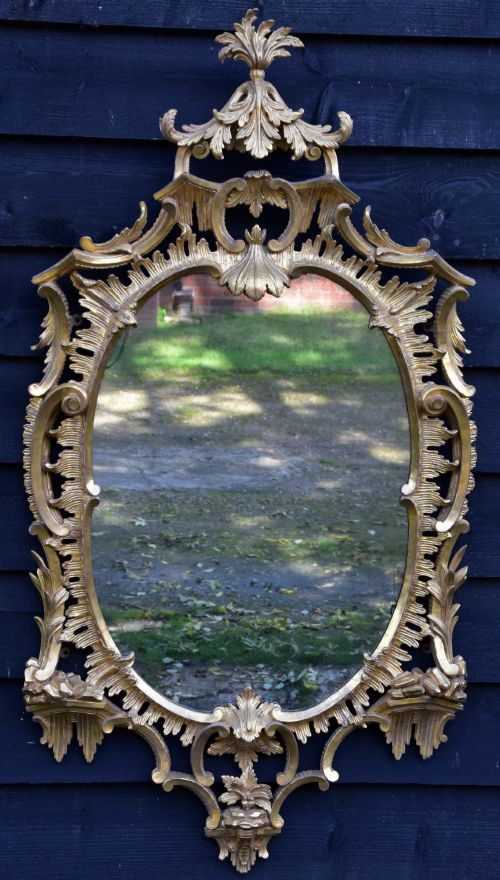
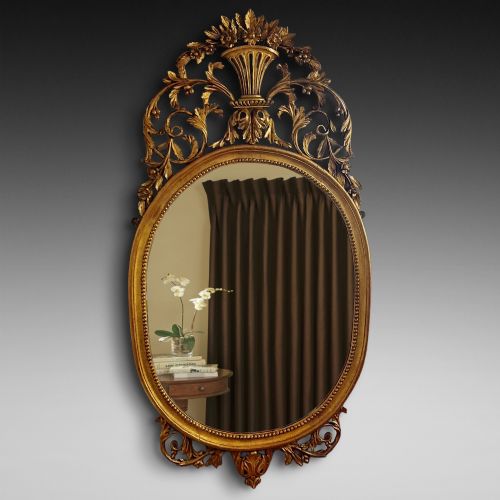
The pieces appearing here span the eighteenth century, the Georgian period, and the nineteenth century, encompassing Georgian Rococo, Adam, and Neoclassical styles. Most examples present giltwood or carved wood surfaces built to suit formal interiors.
Makers and workshops constructed these objects primarily as wall mirrors and hall mirrors, often utilising mirrored glass plates framed in elaborate timber structures. The prevailing forms rely on vertical oval geometries framed by carved ornamentation.
Materials and construction methods
The primary construction relies on carved wood and mahogany, providing a stable structural base for subsequent decorative treatments. Artisans applied gesso over the timber groundwork to create a smooth, receptive surface for fine sculptural detail.
Gold leaf and giltwood finishes were applied painstakingly to the gesso, producing a luminous metallic sheen characteristic of high-status wall furnishings. Original mirror glass plates complete the assembly, fitted securely within the carved wooden rabbets.
Oval Pier Mirror Retail Price Guide 2026
Typical asking prices for oval pier mirror among the pieces listed under this phrase on Sellingantiques today, from the lower quarter to the upper quarter. They describe what is for sale here now, not the wider market.
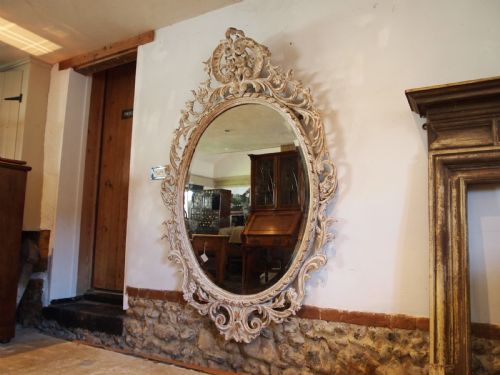
Some tall wall mirrors stretch over two and a half metres high, requiring exceptionally high ceilings and confident installation.
Judging quality and execution
The sophistication of the carving dictates the visual success of the piece, separating standard production from exceptional craftsmanship. Crisp undercut foliage and sharply defined motifs demonstrate superior hand-tooling by skilled artisans.
The integrity of the giltwood surface and the presence of original plate glass contribute significantly to the enduring character of the object. Heavier gilding and well-preserved gesso layers retain their warmth and depth more effectively over centuries.
The Oval Pier Mirror Glossary
- Giltwood
- Timber coated with fine gold leaf applied over a prepared gesso ground. This finish provides the characteristic metallic brilliance seen on formal mirrors.
- Gesso
- A plaster mixture applied to wood frames to create a smooth surface for carving and gilding. It allows for intricate relief work.
- Pier mirror
- A tall mirror designed specifically to hang on the wall space between two windows. They were paired with console tables to maximise interior light.
- Neoclassical
- A decorative style inspired by classical antiquity prevalent during the eighteenth century. It employs symmetry, urn motifs, and restrained ornamentation.
Oval Pier Mirror: Frequently Asked Questions
How do I identify a Georgian frame?
Georgian frames typically exhibit carved giltwood construction with stylistic cues from the Rococo or Neoclassical periods. Look for hand-carved wooden details beneath the gesso rather than moulded composition ornament.
Eighteenth-century examples often display distinct patination on the gilding and heavier timber proportions.
Are nineteenth-century mirrors different?
Nineteenth-century interpretations often scale up in size while continuing the Georgian design vocabulary through revival styles. These pieces utilise similar giltwood and carved wood materials suited to Victorian drawing rooms.
Construction techniques evolved slightly during this era, yet the visual tribute to earlier centuries remained strong.
How should I clean the frame?
Giltwood surfaces require gentle dusting with a soft, dry brush to prevent accumulation without disturbing the delicate gold leaf. Moisture and chemical cleaners must be avoided entirely to protect the underlying gesso.
Professional conservation is recommended for any deeper cleaning or structural stabilization of the timber.